The Frontlines of Journalism: Nadia Bilbassy on Conflict and Credibility
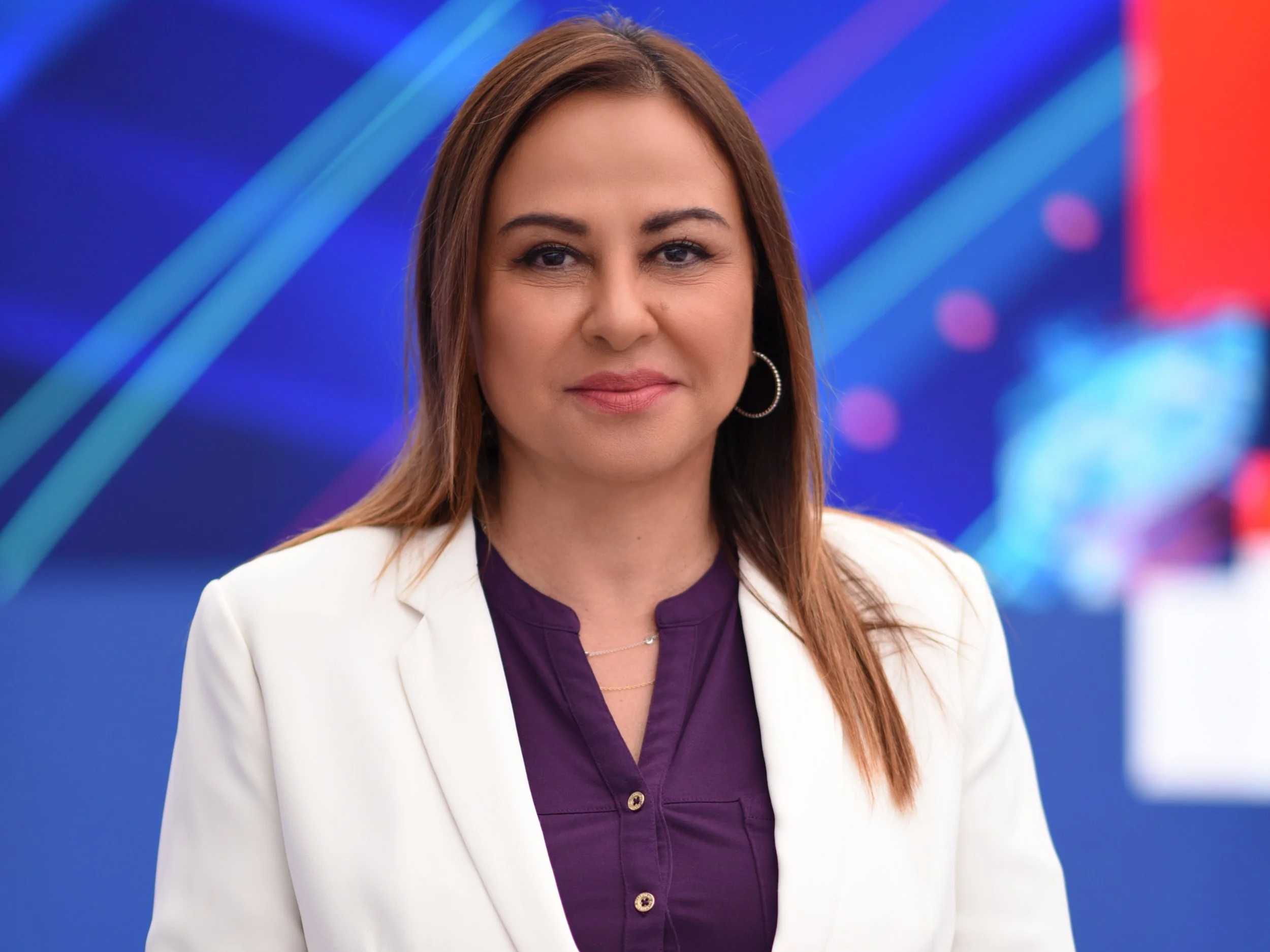
On a recent episode of our Foreign Press Podcast, Alan Herrera, AFPC-USA’s editorial supervisor, spoke with Nadia Bilbassy, the Bureau Chief for Al Arabiya News Channel and the outlet’s chief White House Correspondent.
During the conversation, Bilbassy reflected on a groundbreaking career that has taken her from some of the world’s most dangerous conflict zones to the center of U.S. foreign policy reporting in Washington. Drawing on decades of experience covering wars, diplomacy, and political upheaval, Bilbassy discusses what reporting from places like Sudan, Rwanda, Somalia, and Iraq taught her about journalism, responsibility, and the human cost of conflict. She also explored her role as a pioneering Arab journalist reporting from Africa for a major Arab television network, the evolution of journalism in the digital age, and the growing challenges posed by misinformation, polarization, and social media. Bilbassy offers insights into how Arab audiences view the United States, the complexities of covering American foreign policy for international viewers, and the realities of war reporting from both the battlefield and the diplomatic arena.
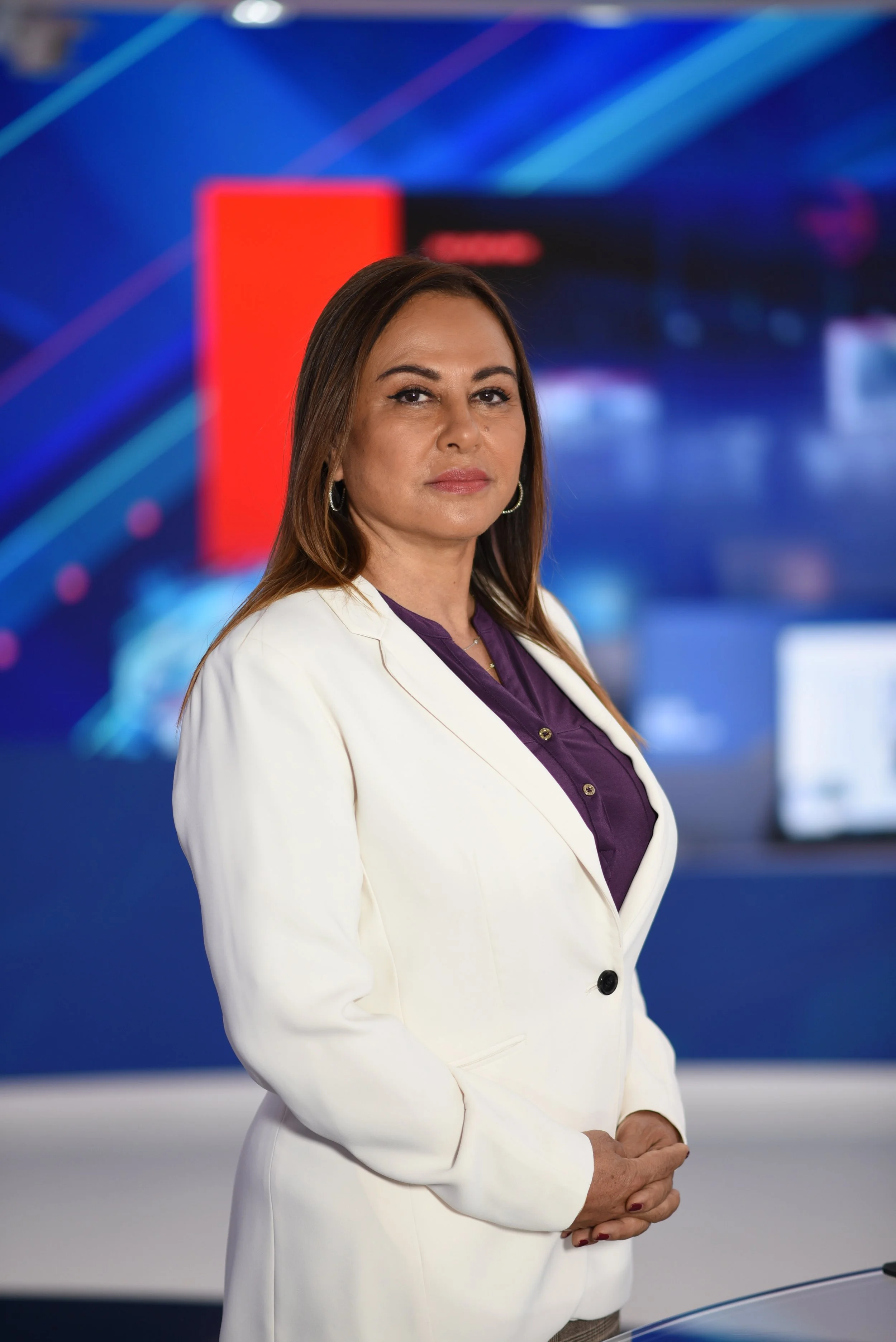
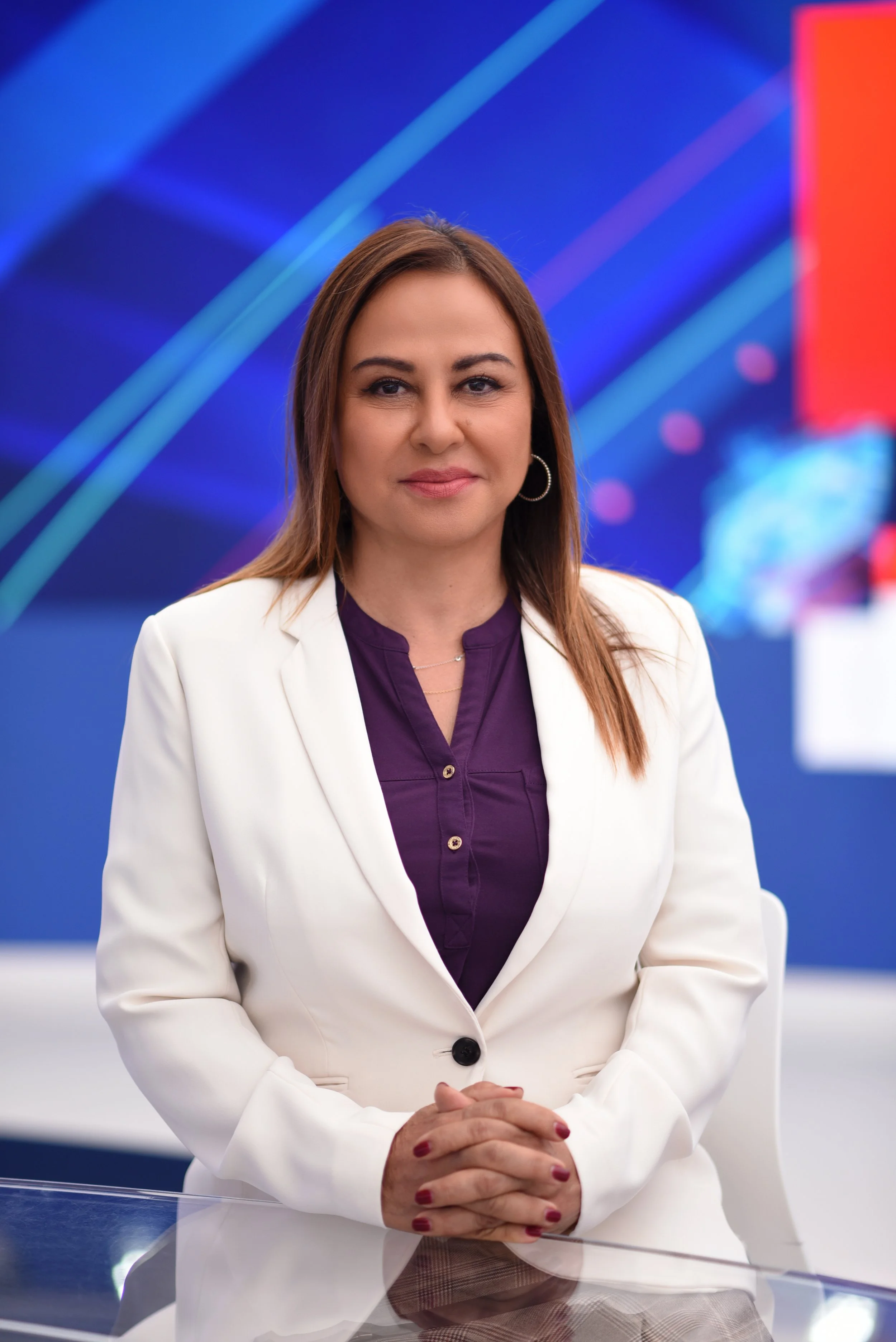
Bilbassy is currently the President of the Foreign Press Group of the White House Correspondents Association (WHCA). As a supplement to this interview, AFPC-USA is including the speech she gave ahead of this year’s White House Correspondents Association dinner. The text is below.
–––
Good evening everyone,
It’s a privilege to stand before you this week, a week that celebrates one of the most enduring and consequential ideas in democratic society: the freedom to speak, to question, and to report without fear. As President of the WHFPG covering the White House, I’m especially honored to welcome you to this gathering of US officials, from the WH, State Depart, Congress, ambassadors, colleagues, and friends from across the world. This moment, just ahead of the White House Correspondents’ Dinner, gives us something rare: a pause. A chance to reflect not only on the work we do, but on why it matters, and why it must continue to matter.
Let me begin with gratitude.
We are deeply thankful to our partners in the European Union for hosting us this week and for joining us in this shared effort. This is more than a logistical collaboration; it is a statement of values. The EU has long positioned itself as a defender of democratic norms, including freedom of expression and press independence. By bringing us together, they reinforce something essential: that these principles do not belong to any one country. They are global, interconnected, and worth defending together. So tonight, we acknowledge and appreciate that partnership. It is meaningful, and it is timely.
If we are honest, this is not an easy time to be a journalist. Across continents, the pressures are mounting. Access is restricted. Trust is strained. Disinformation spreads faster than truth. In some places, reporters face harassment, detention, or worse simply for doing their jobs, journalists paid the ultimate price: death, in Gaza, Lebanon, and Ukraine and elsewhere. Even in established democracies, the relationship between power and the press is often tense, sometimes adversarial, sometimes fragile.
But perhaps that tension is not a flaw. Perhaps it is the point. The role of journalism has never been to comfort power. It has been to question it. To test it. To hold it accountable in the full view of the public. That is not always welcomed. It is rarely easy. And it is never risk-free.
Yet it is essential.
The First Amendment, which we celebrate this week, is not just a constitutional provision, it is a philosophy. It asserts that truth does not emerge from silence or control, but from openness and challenge. It assumes that free people deserve access to information, even when that information is inconvenient or uncomfortable.
For those of us who are foreign journalists, this principle carries an added dimension. We stand at a unique intersection. We are observers of American democracy, but also interpreters of it for audiences around the world. We bring different perspectives, different questions, and sometimes different expectations. That diversity is not a complication; it is a strength. It reminds us that the story of democracy is not confined within national borders. It is watched, studied, and learned from globally. And it means that when we defend press freedom here, we are also reinforcing it elsewhere.
At the same time, we must acknowledge something equally important: the responsibility that comes with this freedom. Credibility is our currency. Without it, the protections we rely on begin to erode. In an era of polarization and information overload, accuracy, fairness, and integrity are not optional, they are foundational. We cannot demand trust; we must earn it. Every day. Story by story. That is the quiet, unglamorous part of journalism. But it is also the most important.
So, as we move toward the dinner this weekend, an event that mixes tradition, humor, and a certain amount of spectacle, let’s carry this perspective with us. Yes, we will celebrate. Yes, we will enjoy the moment. But we should also remember what underpins it: a system that allows journalists to gather in the open, to question leaders directly, to publish freely, and to do so without fear of reprisal. That is not universal. It is not guaranteed. And it should never be taken for granted.
Tonight is not just a prelude to a dinner. It is a reaffirmation. A reaffirmation that freedom of expression is worth protecting. That journalism, even at its most challenging, is worth doing. And that standing up to power, calmly, professionally, persistently, is not an act of opposition, but an act of public service.
So, to our colleagues, to our hosts in the European Union, and to everyone gathered here: thank you.
Thank you for your work. Thank you for your partnership. And thank you for your commitment to the principles that bring us together. Let’s carry them forward, this week and beyond.