Inside S&P Global’s Approach to Media, AI and Reputation: A Conversation with Christina Twomey
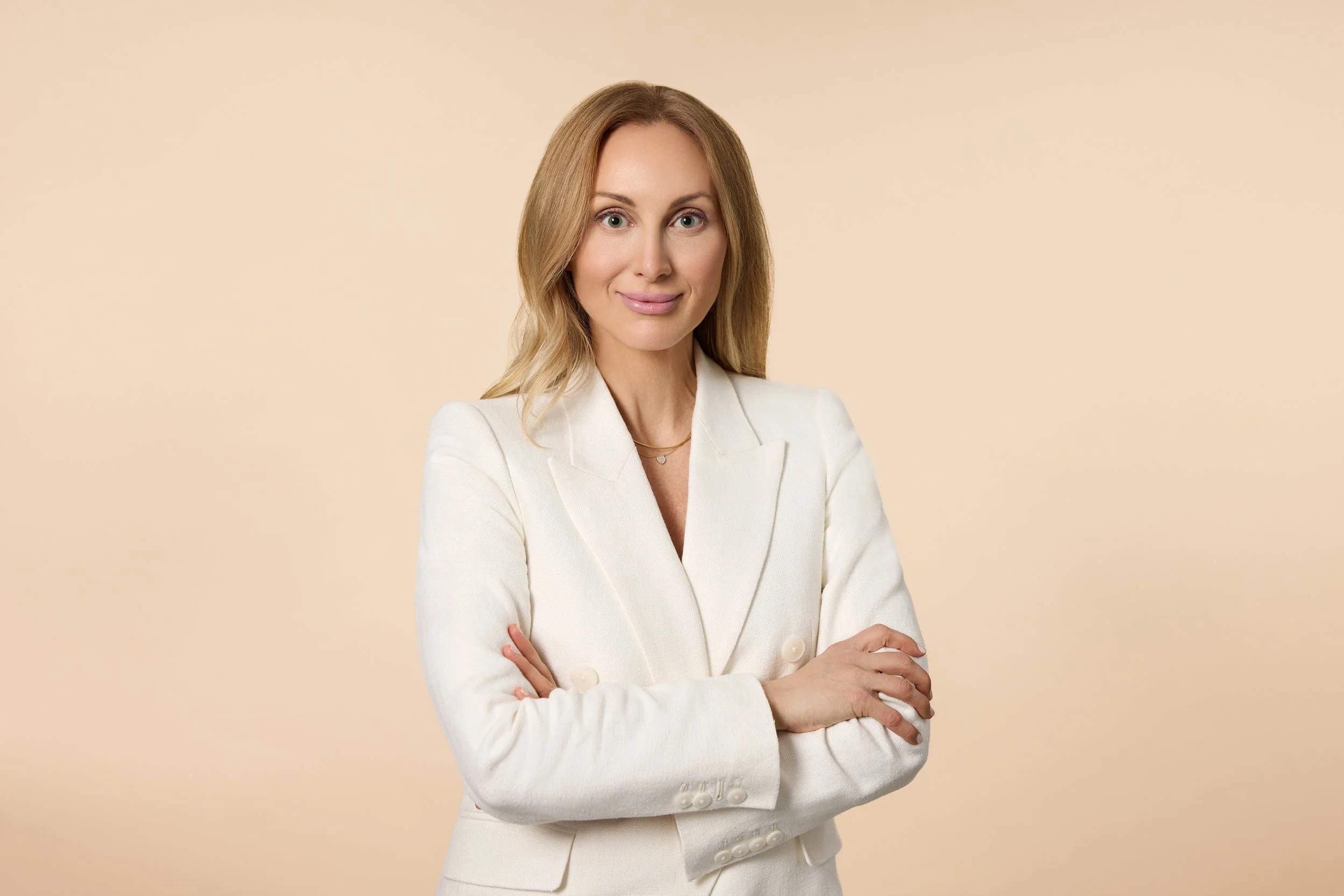
On the latest episode of our Foreign Press Podcast, journalist Roseanne Gerin, an assistant editor at the newsletter Trade Strategies Today, spoke with Christina Twomey, Chief Communications Officer of S&P Global, about journalism and communications. Twomey previously served as Global Head of Communications for S&P Global, responsible for strategy and messaging, media relations, communications agency governance, crisis and issues management, and internal communications.
Twomey reflected on stepping into the chief communications officer role in November 2024, describing the move as both professionally rewarding and significant for the communications field more broadly. She said she has “always been a huge believer that communications should have a seat at the table,” not simply executing decisions but actively shaping strategy, managing reputation, and addressing reputational risk at the highest levels of leadership. She argued that communications professionals are most effective when they are “closer … to how the decisions are made” and able to help “influence how the decisions are made.”
Twomey said her promotion marked a milestone because it was, to her knowledge, the first time the company had a chief communications officer reporting directly to the CEO. She described the elevation as “a huge privilege” not only personally, but also for her team and the broader communications function. Twomey emphasized that the change reflects a larger industry trend rather than an isolated example. She pointed to research from Korn Ferry showing that 47 percent of chief communications officers now report directly to CEOs, representing a “seven- or eight-point gain” from the previous year. According to her, that data demonstrates how the profession is “raising the game” and responding to the increasingly complex information environment companies operate in today.
Twomey discussed how working for a company operating in more than 190 countries shapes both her communications strategy and day-to-day responsibilities. She said it is “absolutely critical” for the company to maintain a “very coherent enterprise narrative” with messaging that is “clear and consistent,” while still respecting regional context and the needs of multicultural audiences. She explained that global communications requires navigating multiple overlapping areas at once, saying her role sits “at the nexus” of communications, public affairs, policy, geopolitics, reputational risk, and corporate strategy. According to Twomey, managing communications in a global environment (especially during periods of heightened geopolitical tension) depends heavily on “really thoughtful governance, accountability, and really smart human judgment.”
Christina Twomey
While noting that artificial intelligence would come up later in the conversation, she stressed the importance of human wisdom and judgment in maintaining organizational credibility. Much of her philosophy, she said, ultimately comes down to trust. Twomey referenced a framework from Frances Frei describing a “trust triangle,” arguing that people trust institutions when they experience “authenticity,” believe in leaders’ “logic and judgment,” and feel there is “true empathy for their needs and success.” She said those principles (“authenticity, logic, and empathy”) strongly shape how she approaches relationship-building with stakeholders, including journalists around the world. Maintaining trust, she argued, requires helping audiences understand not only what the company is doing, but also how it serves customers and broader stakeholder interests. Twomey also emphasized the importance of message discipline in global communications. One of her team’s “mantras,” she explained, is the idea that organizations need “fewer actually clearer messages” that can “travel globally and ring true across the board,” rather than highly fragmented messaging that risks “accidentally creating noise.” At the same time, she acknowledged the challenge of balancing consistency with cultural sensitivity, saying communicators must remain “deeply respectful” of regional nuances and recognize that the same message “might land differently” depending on the audience.
Twomey said that as the information environment has become increasingly fragmented and fast-moving, S&P Global’s media engagement strategy has focused on helping journalists “better navigate that complex environment” while ensuring they have “every opportunity to get the story right.” She explained that the company approaches media relations as a service-oriented function aimed at supporting reporters as they work through complicated financial, economic, and geopolitical topics. Twomey emphasized that S&P Global sees itself as “completely unbiased” and “apolitical,” relying on its data, intellectual property, benchmarks, and analytical opinions to create “greater transparency for well-informed decision-making.” She said that mission begins with how the company engages with journalists directly. She said the goal is to work with reporters “in service to them” and help “fuel their stories” in a way that enables them to report accurately and effectively to “world audiences.”
Twomey said that despite the rise of digital communication, strong in-person relationships with journalists remain “very, very important.” She explained that her team frequently discusses the need to “get out from our desks” and “keep it old school in the best sense” by meeting reporters face-to-face, grabbing coffee, and taking time to understand what journalists are actually working on and what broader themes they are following. According to Twomey, relationship building has become “absolutely paramount” in today’s media landscape, “probably more so than ever,” precisely because so much communication now happens online. She stressed that communicators need to build trust through consistency and service, explaining that good relationships are “table stakes, but they’re earned, not a given.” She said communications professionals must “show up day in and day out” by maintaining relationships, sharing information in “a very accessible way,” and making sure interactions are genuinely valuable rather than wasting reporters’ time.
Twomey repeatedly emphasized the importance of being “in service” to journalists and understanding how corporate communications teams can help support their work. Twomey also spoke about the importance of “meeting folks where they are,” pointing to the company’s involvement with foreign press groups and industry organizations. She described a series of media-only gatherings held over the past year in cities including Singapore, London, and New York City, which operated under Chatham House rules and brought together reporters from major outlets, trade publications, and foreign press organizations. She said many of the gatherings felt “like a bit of a reunion of friends,” noting that she has “literally grown up with a lot of these reporters” as journalists moved between outlets, independent platforms, and back into traditional media over the years. Ultimately, she framed those enduring professional relationships as essential to helping both communicators and journalists continue producing “really excellent top-notch work together.”
Twomey noted the communications landscape in 2026 is being reshaped by the collision of geopolitics and artificial intelligence, creating what she described as “immediate on a dime reputational exposures” for companies, institutions, and even governments — often “before facts are fully formed.” She explained that modern crises now unfold at extraordinary speed, forcing communications leaders to react “thoughtfully and quickly” while still ensuring they are delivering “factual information as soon as we can” to stakeholders. The challenge today is managing situations where only fragments of information are available while simultaneously protecting an organization’s reputation in real time. One of the biggest changes she identified was the dramatic escalation of cyber-related threats driven by advances in AI. Referencing developments from companies like Anthropic, she said new technologies have become “a game changer” for corporate cyber preparedness. Twomey described the shift in urgency by saying that what might once have ranked “at a three” on the crisis “Richter scale” now feels “at a nine or a 10” because of what these tools “could do in the wrong hands.” She stressed that communications teams now have to operate with far greater vigilance and preparedness than they did even five years ago, especially as AI systems become increasingly sophisticated and accessible.
Additionally, Twomey highlighted the rapid rise of “very realistic deep fakes,” false information, and misleading content spreading across social media and digital platforms. She warned that communicators are now dealing with “a lot of proliferation” of content that is either “false or misleading” or “downright disingenuous,” making it much harder to distinguish reality from fabrication. As chief communications officer, she said part of her responsibility is ensuring that her team remains fully trained to “spot these things” and help protect both the company and its stakeholders from reputational harm. She described the realism and scale of AI-generated misinformation as “another game changer,” emphasizing once again that modern crisis management increasingly comes down to preparation, vigilance, and strong human judgment.
Twomey explained that balancing transparency with legal and regulatory constraints during a crisis depends heavily on having strong internal systems already in place before problems emerge. She described building what she called a “reputational risk framework” alongside a senior colleague from the legal team while she was global head of S&P Global Ratings in 2018. According to Twomey, the company at the time had been “a bit reactive” when dealing with reputational risks and crises, prompting the team to create a more strategic and proactive structure. The framework included active monitoring systems, internal communications channels, clearly defined roles, and what she described as essentially a “SWAT team” designed to respond quickly and effectively to emerging issues. The goal, she said, was to move from reacting after crises erupted to “highly proactive” risk management that could “see around corners” and help journalists get stories “as accurate as possible” without “moving too fast and conflating things or politicizing things.” Twomey called the effort “a huge win” that later expanded across the entire enterprise as she moved into broader leadership roles, eventually becoming “a hallmark” of how the company now approaches reputational risk management. She said the experience taught her that communications leaders need much more than “a plan on a Word doc or an Excel spreadsheet.”
Instead, she argued, companies need a “well-oiled framework” and strong cross-functional coordination to respond effectively during crises. Twomey also emphasized the importance of close partnerships between communications, legal, compliance, and business leaders. Those “guardrails,” she said, are “absolutely critical” to preserving credibility and reducing uncertainty while still serving stakeholders and supporting accurate reporting. She noted that reputational risk has become such an important issue internally that it is now one of the primary topics she discusses with the company’s board of directors. Ultimately, Twomey framed crisis communications not as protecting the company for its own sake, but as ensuring organizations “show up in the world in a way” that helps “get the story right.”
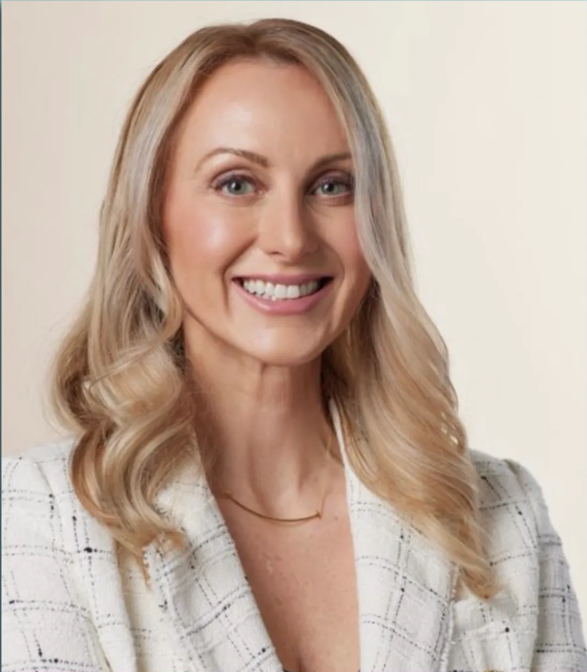
Christina Twomey
Twomey said artificial intelligence has fundamentally transformed communications work since her previous interview, explaining that S&P Global had an early advantage because of its 2018 acquisition of Kensho, which she described as the company’s “internal innovation arm.” Because of that acquisition, she said S&P had already been operating at “the cutting edge, the bleeding edge” of AI development long before generative AI became mainstream. Initially, Twomey said the communications team viewed AI primarily as “an efficiency play,” a way to eliminate repetitive tasks and “free up the capacity” for more strategic and creative work. But she explained that the role of AI has evolved dramatically since then. Today, she no longer sees AI simply as “a tool and capabilities prompts,” but rather as “a communications operating model.” AI, she said, is now embedded “across how we plan, analyze, draft, measure everything that we’re doing.”
Twomey argued that communications teams that fail to integrate AI deeply into their workflows risk falling behind because “the world has already changed.” One of the biggest shifts, she said, is that communicators must now think not only about human audiences, but also about “LLMs and agents as an audience.” That shift is changing “how we are crafting content,” where organizations “need to show up,” and even how companies maintain trust, not just with people, but with AI systems themselves. She acknowledged that the idea of maintaining trust with “agents” sounds “a little bit mind-bending,” but insisted “this reality is here.” Despite AI’s rapid evolution, Twomey repeatedly emphasized the continuing importance of core communications and journalism skills, especially strong writing. She praised “people who can tell a really good, compelling story in a crisp, clear way,” arguing that AI “on its own cannot turn out” that level of quality “not today, not soon.”
She also encouraged communications professionals to adopt “the mindset of a journalist,” including “picking up the phone,” “knocking on doors,” and finding “the real story” behind events. According to Twomey, AI should function as “a force multiplier” rather than a replacement for human judgment and storytelling ability. Twomey said she has also become increasingly interested in AI as a “thought partner,” not merely an automation tool. She described conversations with students at Boston University about using AI to “pressure test strategy,” evaluate risks, and even create “virtual round tables” and “virtual focus groups” to generate smarter and more creative ideas. She stressed that communications leaders now have “a huge opportunity and real obligation” to keep learning continuously as AI capabilities evolve. She said she deliberately blocks out time to study new AI tools and ensure both she and her team remain “at the cutting edge” of technological change.
On the subject of her career progression, Twomey shared that many of the biggest opportunities in her career initially felt intimidating. She admitted there were moments when she thought, “Oh my gosh, I don’t know if I can do that,” but said she learned to give herself “the mental permission to try it.” For Twomey, the mindset was never about certainty or fearlessness, but rather about “working really hard, seizing an opportunity,” and “reserving the right to go and try it and find out.” She explained that she always approached new roles knowing that if something truly did not work, she could “step back or step sideways or step out.” But she added that, so far, she has “never stepped back or sideways or out” and instead found that continually stretching herself helped her career “leapfrog, leaps and bounds.” As her career advanced into executive leadership, Twomey said her focus shifted increasingly toward supporting and developing the people around her. She described one of the central measures of leadership success as “how I show up for my people.”
A major part of her leadership philosophy, she said, involves identifying “the intersection points” between what employees genuinely enjoy doing, where “their talents lie,” and what the business actually needs. When those things align, she said, she has repeatedly seen people “light up,” something that gives her “a lot of joy.” Twomey explained that her growing responsibilities, including leading the company’s Office of the CEO and overseeing a global communications team, have made mentorship and talent development even more important. She now spends significant time thinking about “how I help my leaders, my leadership team continue to rise up.” Trust emerged once again as a central theme in her leadership philosophy. Twomey connected her “why not me” mindset to trusting oneself, but also to trusting others. She said she gives her teams “the autonomy to make decisions, to move, to grow,” while trusting that they will involve her when necessary. At the same time, she emphasized maintaining “very high standards” for herself and for her team. She said the communications group has spent years “raising our own bar, raising our own game,” which she sees as essential given the “very slim margin of error” in their industry. Despite the pressure and high expectations, Twomey stressed the importance of maintaining a strong culture and enjoying the work. She said effective leadership also means helping people “have some fun in the process,” creating an environment where high performance and personal fulfillment can coexist.
Twomey also emphasized that despite rapid technological change, the most important element in communications and journalism remains human connection. Reflecting on the themes discussed throughout the conversation, she repeatedly stressed the importance of “relationships, relationships, relationships.” She observed that those relationships have become even more valuable in a world shaped by “increased AI and automation and fractured information and disinformation.” While technology continues to transform communications, she said, “the relationships matter” and added that she believes “they will always matter.” Twomey expressed gratitude for the relationships she and her team have built with journalists and media professionals, calling them “absolutely paramount.” She said communications and journalism are part of a broader shared ecosystem centered on “stewardship,” particularly stewardship of trust, accuracy, and credibility. She said communicators and journalists collectively share responsibility for “getting the stories right” and for delivering “engaging, meaningful, accurate stories” that allow audiences, readers, and stakeholders to make “well-informed decisions.”
Twomey advised foreign correspondents covering U.S. economic and financial issues to remain firmly grounded in accuracy, context, and transparency, describing herself as “a complete purist” when it comes to journalism and data. “Facts are facts, data is data,” she said, emphasizing that “attribution matters” and “context matters” above all else. Speaking from the perspective of S&P Global (a company centered on “data and analytical opinion benchmarks”), Twomey argued that the core responsibility of reporters is to represent “the facts and the data and the storytelling” as accurately as possible, regardless of the political or market differences among global audiences. She encouraged journalists to be very clear about “who you are and what your goals are,” and to communicate those intentions transparently to readers “in as unbiased a way as possible.” Once reporters provide factual information and proper context, audiences should be trusted to “interpret the information on their own and make their own decisions.” Twomey also drew a distinction between objective reporting and advocacy, saying that this separation is “the difference between truly great news reporting and advocacy.” She expressed admiration for journalists who maintain that standard.

Twomey said international reporters covering U.S. financial institutions should focus heavily on methodology, context, and precision, especially when reporting on organizations like S&P Global whose ratings and indices can influence global policy debates and markets. She reiterated that S&P Global views itself as “a completely unbiased nonpartisan organization,” emphasizing that its “data, analysis, [and] analytical opinions” are designed to promote “market transparency.” Twomey explained that the company’s ratings and index businesses form “part of our market infrastructure,” with their research and opinions serving as tools used by market participants worldwide. Because of that influence, she argued that journalists covering the company should pay close attention to “our published methodology and the appropriate context” behind any ratings or analytical conclusions. Twomey stressed that S&P Global tries to provide reporters with extensive supporting information, including “the full context” and “all the disclosures,” so journalists can see “the line-by-line methodology” that led to a particular analytical opinion.
Twomey also urged reporters to apply what she called “a clarity lens” when covering complex financial issues that cross different regulatory and market systems. The ultimate goal, she said, should be “accurate understanding,” particularly for international audiences interpreting U.S. financial developments through very different economic and political contexts. She warned against oversimplifying or shortening technical material in ways that distort meaning. It is “really important,” she said, that information be “cited appropriately and not paraphrased or truncated,” because otherwise “the reporter might get the context of the story wrong.”
Asked which emerging trends foreign correspondents should monitor most closely in 2026, Twomey immediately pointed to artificial intelligence, calling AI “huge” and noting that “agentic” systems are already reshaping industries. She predicted that quantum computing would be “a fast follow,” adding that businesses and institutions are still trying to “wrap our heads around that.” Beyond technology itself, Twomey said she is especially focused on how finance is evolving. She highlighted the growing convergence between traditional finance—or “TradFi”—and decentralized finance, commonly known as DeFi. According to Twomey, established financial institutions are increasingly “edging into the DeFi space” and moving toward “on chain always on twenty four seven ways that money moves and deals are done.” She described that transformation as “really fascinating,” saying it reflects “the future of finance moving from something that's more institutionalized to always on.”
Twomey also expressed strong interest in the broader societal implications of decentralized finance, stablecoins, and cryptocurrency. She said she is particularly compelled by the potential impact on populations that remain “unbanked or underbanked” around the world. In her view, blockchain-based financial systems could help bring more people into the global economy by reducing barriers and cutting “staggeringly high transaction fees” associated with traditional money transfers. She argued that these developments are “full of really, really interesting stories” and deserve “a lot more institutional and tier one mainstream news coverage.” Twomey noted that S&P Global itself has become increasingly involved in this space, pointing to the company’s “cutting edge” stablecoin assessments and initiatives within its ratings and index businesses related to on-chain finance. She also identified private markets and private credit as major areas reporters should watch closely. Twomey said the “flow of capital between public and private markets” represents another important conversation about “the future of finance” and the growing demand for transparency.
Finally, Twomey highlighted a statistic that particularly stood out to her: a recent S&P Global research report estimating that the private credit market is approaching $2 trillion. Twomey admitted she “almost fell out of my chair” when reading the figure because she had not realized “how huge that market is becoming.” She concluded by encouraging correspondents covering global finance and markets to pay close attention to these rapidly evolving sectors, saying they are likely to produce “phenomenal stories” in the years ahead.