Podcast Transcript — What Hormuz Means for Asia's Energy Security
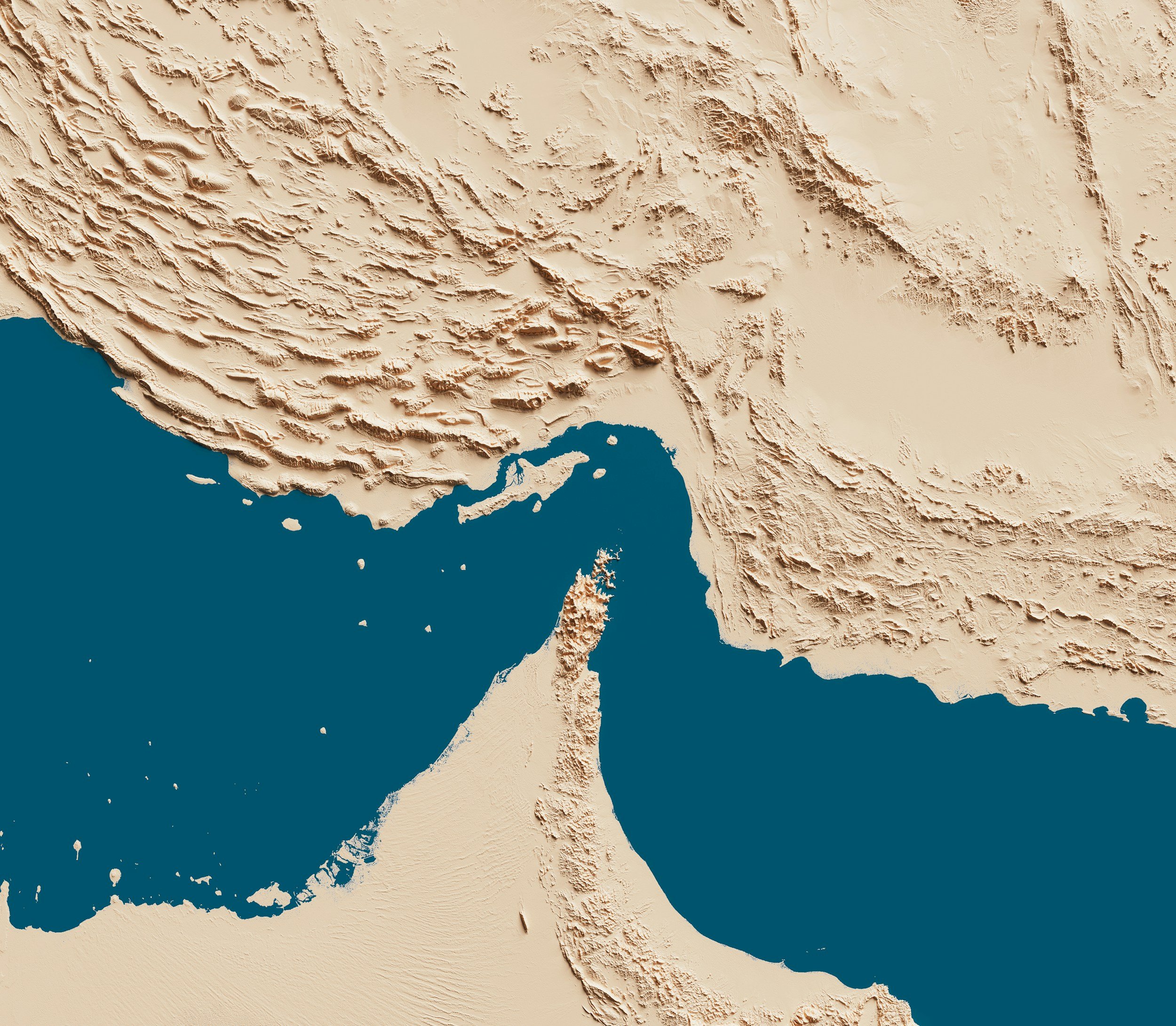
The Association of Foreign Press Correspondents in the United States (AFPC-USA) hosted a Foreign Press Podcast episode in partnership with the Hinrich Foundation titled, “What Hormuz Means for Asia’s Energy Security.”
In a recent paper for the Hinrich Foundation, co-authored with Lynn Hughes, ImportGenius research director William George argued that the blockade of the Strait of Hormuz underscored the importance of energy security and diversified supply chains in an increasingly multipolar world. The disruption affected major Asian economies in different ways: China was largely shielded by its substantial energy reserves, while Japan's reliance on US-linked energy supplies left it less exposed to Gulf disruptions. Vietnam, however, faced greater vulnerability because of its dependence on Gulf imports of crude oil, naphtha, and ethylene that support manufacturing for both US and Chinese markets. The authors suggested that those pressures could push Vietnam toward deeper adoption of Chinese renewable energy technologies and electric vehicles.
George spoke about his findings with journalist Roseanne Gerin, an assistant editor at the newsletter Trade Strategies Today, who has worked in journalism for more than 25 years.
This podcast episode was produced in partnership with the Hinrich Foundation. AFPC-USA is solely responsible for the content of this episode. The learning takeaways are available HERE.
Roseanne Gerin: Welcome to the Foreign Press Podcast, an educational program from the Association of Foreign Press Correspondents in the USA, produced in partnership with the Hinrich Foundation, an independent Asia-based philanthropic organization dedicated to advancing mutually beneficial and sustainable global trade. AFPC-USA is solely responsible for the content of this episode. I'm Roseanne Gerin, an assistant editor at the newsletter Trade Strategies Today.
On today's program, we're looking at one of the most consequential trade disruptions of the decade: the twin US-Iran blockades of the Strait of Hormuz, and how they're reshaping energy security, petrochemical supply chains, and economic resilience across Asia. Joining me is William George, director of research at the trade intelligence platform ImportGenius and co-author of the new Hinrich Foundation white paper, “How the Hormuz blockade hits Asia: Evaluating the chokepoint effect on China, Japan, and Vietnam.” His report provides a timely look at how a single maritime chokepoint can destabilize the world's most dynamic economies.
William, welcome to the program.
William George: Thank you, Roseanne. Glad to be here and excited to get into it.
Roseanne Gerin: Let's start with China, because your report makes clear that Beijing entered this crisis with the deepest buffers and the most diversified energy strategy. You described the Hormuz crisis as a “polycrisis” with cascading, mutually reinforcing effects. What makes this disruption fundamentally different from past Persian Gulf shocks?

William George
William George: Sure. So first, the reason that I went for the “polycrisis” framing was essentially as a shorthand for a problem that's so deep and so far-reaching that it's almost impossible to really get a handle on it. The closure of the Hormuz and the resulting logistics, plastics, and energy crisis is just one cluster of concerns raised by the Iran war. Other concerns with similarly far-reaching repercussions can be thought of as questions like: Have US bases and Gulf states contributed to the defense of their host nations or have they become liabilities? Can the US be relied upon to maintain stocks of hardware necessary for defense and critical territories? What is the nature of a conflict in which there's a parity in sensing and battlefield awareness between all combatants? And I think most fundamentally, what does being a rational actor look like in a multipolar world, and how does this impact diplomacy, trade policy, and foreign investment?
But more directly to the question: So, previous Persian Gulf shocks, particularly the ‘67 closure of the Suez [Canal], have had transformational impacts on trade, inflation, and perspectives on energy sovereignty. And these have been immense, like encouraging the development of the largest vessels shipyards have ever produced in order to more economically carry larger volumes of crude over longer distances. And also, much of today's electric-vehicle tech stems from research in the ‘70s motivated by energy insecurity. But no previous shock has ever called US power and hegemonic influence into question to the same degree or so thoroughly cut off an unbypassable trade route. And also, supply chain interdependence and civilizational reliance on power and plastics have never been higher.
So, we're also seeing principles like freedom of navigation being threatened with the imposition of closures, tolling regimes, and blockades, and this is novel to the post-World War II international order. Basically, we've never seen a pressure point as serious as this hit in a time of such deep global reliance on the smooth functioning of trade.
Roseanne Gerin: Before we go deeper into the country-level findings, I want to ask briefly about your methodology. This report draws on translated customs records, ImportGenius microdata, and government trade statistics. How did you gather, verify, and synthesize such a wide range of documents and shipment records to reach your conclusions?
William George: Well, thank you. So, we like to describe ImportGenius as a US-based trade data aggregator, and that means that synthesizing a wide range of data sources like this is what we do. At our core, ImportGenius collects highly granular shipment-level data for 30 countries. And as the head of our research department, a large amount of my work involves verifying our data as much as possible and deriving useful insights from it. So, we work with all kinds of higher-level, more aggregated sources of data for macroeconomic validation. These are datasets like UN [United Nations] Comtrade data, US trade Census [Bureau] data, and the equivalent data for many other countries, notably in this case, including China and Japan. These datasets aren't always perfect, and the motivations of countries can have serious impacts on data visibility. For instance, Chinese statistical trade data doesn't show that any imports of oil from Iran are occurring at all.
Also, this data is limited to what countries are able to see. Illicit shipments of electronic cigarettes into the US from China are often declared as flashlights or as portable phone chargers. And at a broader level, the trade war’s tariffs have created incentives for both Chinese exporters and US importers to declare the lowest values possible for their goods. And this has contributed to an ever-widening gap between China's declared export volumes to the US and the US’ declared export volumes from China in terms of US dollars. Now that being said, these datasets tend to be quite good once various outliers — and these can include, like, shipments of steel where somebody left a finger on the zero key while logging them and reported a declared mass greater than that of the sum — once those are accounted for. There's an art and a science to it, and that really comes down to locating the most reliable possible datasets, getting them into alignment, and then figuring out what stories they're prepared to help you tell.
So, we do a lot of micro-analysis, and that looks like looking specifically at small clusters of trade records to analyze corporate activity. But what we really love to do is use country-level statistical data, like we did for this report, to get a top-level view of a trade flow, and then, where possible, use this granular, shipment-level data to really zoom in. And this not only provides a second validation of the top-level data, particularly for cases where the data comes from two different countries, like using Vietnamese shipping data to look at Vietnamese exports of plastic products to the US, and then pairing that with US trade Census data tracking imports the same goods from Vietnam. But it also allows us to identify these specific companies and players related to a trade flow, and that's where you can get a lot of the exciting and actionable information we packed into the report.
Roseanne Gerin: Returning to the China analysis, one of the biggest factors you highlight is the country's massive crude oil stockpile. China holds an estimated 1.4 billion barrels of crude in state and commercial inventories, more than the US, Japan, and OECD [Organisation for Economic Co-operation and Development] Europe combined. What does that stockpile actually buy China in terms of time, leverage, and insulation?
William George: So, in raw terms, the stockpile buys China around six to nine months of breathing room. That's imagining a complete cutoff, though. If China continues aggressively sourcing barrels at current market rates, they can supplement their strategic reserve drawdowns, and they can limit those to a trickle compared to the publicly visible drawdowns of the US and Japanese strategic reserves. But they've apparently chosen a middle ground. So, we know, as of two days ago, that Chinese crude imports in May fell to their lowest levels since October 2017. This is far from nothing, but that represents roughly a three-million-barrel-a-day decline from their February demand. This is sort of a threading of the needle: sustained demand at skyrocketing costs until the internal calculus no longer aligned. So, one aspect of this is it very clearly demonstrates the flexibility afforded by the stockpile, and also analysts are pointing out that this decreased demand is, in effect, subsidizing oil prices globally. It's having a lowering effect because that three-million-[barrel]-a-day decline can be spread out across other countries that need the oil.
The strategy also means that given the way that other international strategic reserves are to some degree subsidizing lower energy prices as well — specifically the US and Japan — the marginal value of the Chinese reserves will be substantially higher when US and Japanese drawdowns drain their respective reserves to the level that they're willing to get them down to, and oil prices are forced to reckon with actual availability and demand. And this is where the leverage really comes into play, and China will be afforded a lot more latitude to move in these markets and also possibly provide shipments to nations in the region because it won't be under as much pressure from unserved domestic demand.
How this all shakes out remains to be seen, and it's getting increasingly hazy, as I think we can see from the statements being made by the Trump administration on volumes of oil exiting Iran recently. But it may also mean that despite the US' ostensible status as a net exporter of energy, the US could feel the pinch before China does and could be forced to make diplomatic concessions or risky escalations in order to resolve it.
Roseanne Gerin: ImportGenius data at the time of your May 2026 report shows PetroChina, China's largest oil and gas company, significantly increasing pipeline imports from Kazakhstan at nearly US$100 a barrel. What does that surge tell us about China's crisis behavior and its willingness to pay for redundancy?
William George: So, we saw that near the end of March, PetroChina was suddenly importing record pipeline volumes from Kazakhstan and paying record prices to do so. Now, it's worth stating that these volumes are small compared to China's overall import volume, but granular trade data is not available for China. So, we sourced this data from Kazakhstan. And with PetroChina being state-owned, that data serves as a microcosm of China's overall oil policy in late March and provides a glimpse into an otherwise highly opaque world.
What would be fascinating now that the reporting covering Chinese May volumes has come out would be to rerun this analysis with more recent Kazakhstan data and see if Chinese pipeline demand has remained at those levels, but the drop-off has been in seaborne demand, which I think is likely. In terms of crisis behavior though, this tells you that China's immediate response was to further cement the existing advantage conveyed by their reserve as they watched the scramble for crude unfold.
We can now see that China has decided it's time to begin at a much lower rate than the US and Japan, relying on the leverage that their stockpile affords them. How much of this is calculated to lower the burden on their neighbors, particularly Vietnam and the Philippines, is hard to say from an external perspective, but it's definitely helping take the heat off of the oil markets at the moment.
Roseanne Gerin: China's coal-to-chemicals industry is unique globally. How much does this capacity blunt the impact of losing Gulf-sourced naphtha, which is a key feedstock for plastics and petrochemicals, and gas-derived feedstocks?
William George: So, this was one of the more fascinating things to look at while we were working on the paper. China's coal-to-chemicals industry is currently unique, but it isn't unique historically. The technology was first proven in Germany during World War II, where they had significant domestic coal reserves but an increasingly tenuous ability to supply crude. And that, I think, helps really illustrate the point that this is not about sole reliance, but it's about strategic diversification.
Coal-to-chemicals is dirty, and it's also quite expensive. It doesn't become economically viable without alternate feedstocks, crude oil being pretty pricey. So, oil needs to be above US$70 per barrel at minimum to make this economically viable, and the industry in China has also benefited from substantial government subsidies. Now, in comparison to neighbors, India and Indonesia, who are also oil importers with significant coal reserves, have failed to justify the industry economically.
Right now, though, the combination of high oil prices and really limited access to naphtha, plastics, and key petrochemicals like propylene and ethylene, this means that the bet on coal-to-chemicals as an initially pricey means of strategic diversification is paying off. It's difficult to say precisely what volumes are being produced domestically, but there are some figures. So, of China's 30 million yearly tons of PVC [polyvinyl chloride] production, roughly 10 million tons are ethylene-based and imported from the Hormuz, and 20 million tons are carbide-based, produced from coal-derived acetylene. So, that gives you a sense immediately of some of the volumes that can be produced here. And further reporting indicates that China's coal-to-chemicals industry is already consuming more coal annually than Europe's total consumption — just that one industry alone.
Now, not all of this is being used to make plastics. Due to petrochemical magic, it's possible to output aviation fuel and also, in particular, natural gas. Natural gas is being heavily targeted by the Chinese industry as a key coal-to-chemicals output since it's cheaper than non-pipeline natural gas imports, if you discount environmental costs, and it's also immune to maritime disruption. The economic viability likely vanishes rapidly when you consider liquefying that gas and transferring it via maritime routes. So, this is purely for domestic stability.
As far as the overall strategy and the impact on blunting the lack of Gulf-sourced naphtha, really, the proof here is in the pudding. We can look at declarations of force majeure by Chinese petrochemical and plastics companies, and they're very limited. Stories like what we've seen coming out of Japan tied to petrochemical shortages don't seem to be emerging from China, and Chinese prices for key petrochemicals like ethylene-based PVC have come down substantially from their late-March peaks — over US$300 a ton down in the case of ethylene-based PVC. And this is being driven by the availability of this carbide coal route-based PVC, and I think this is probably recurring throughout the market. These prices are well above pre-Hormuz closure levels, but you can see this industry is bringing parity between the ethylene-derived PVC and the carbide-derived PVC, which is having a stabilizing effect on the market.
Roseanne Gerin: Your report notes that Japanese manufacturers are already sourcing petrochemicals from China to compensate for their own shortages. Is China emerging as Asia's de facto petrochemical stabilizer, and what are the geopolitical implications?
William George: So, yes, markedly clearly, yes. And this has been a sore point for some Japanese politicians and members of industry. There's really a concern that this could serve as an entry point for this Chinese coal-to-chemicals industry into Japanese petrochemical supply chains in a way that will enable them to permanently suppress Japanese producers even after the current disruption is resolved.
But this is far from limited to Japan. This is like a global backstop for these chemicals, and Japan is maybe not even the most salient example. So, if we go back to the PVC sector, with thanks owed to recent research posted by ICIS [Independent Commodity Intelligence Services], Chinese firms have been taking substantial advantage of the naphtha squeeze throughout Asia, particularly in India and Vietnam. This carbide-based, coal-originating PVC is suddenly massively profitable. With ethylene-based PVC, actually, the manufacturers have been forced to cut runs due to running out of naphtha, and at the prices that they're being forced to sell at, with skyrocketing naphtha costs, some of them are actually operating at a loss.
So, the longer this disruption lasts, the more profitable and competitive these coal-to-chemicals outputs will be, and the more they'll be able to establish themselves in new markets and new supply chains where they previously were not economically viable. Now, whether or not this has the flexibility to plug all of the necessary gaps in petrochemical intermediate supply chains remains to be seen, but it's been a very effective band-aid so far. Prices are way, way up, but supplies have yet to collapse.
And I mentioned earlier that this was a dirty industry, so let me put some numbers to that. In the PVC example, carbide-based PVC is roughly three to five times more carbon-intensive than ethylene-based production. But we're definitely begging and not choosing right now, and this industry is currently staunching a lot of what would otherwise be tremendous bleeding and disruption in prices and supply chains.
When naphtha supplies become available again from the Gulf, the industry will lose some of its edge, and there are also long-term regulatory questions about the economic and environmental viability of certain aspects of coal-to-chemicals in China, but nobody who's in sourcing or in government right now is likely to forget what's gotten them through this.
Roseanne Gerin: You draw a sharp contrast between China's insulation and Japan's vulnerabilities. So, let's turn to Japan, where the picture looks very different, especially when it comes to petrochemicals and manufacturing. Japan secured about 60% of its crude needs for May through US and Russian supply, but historically, 70% of its crude transited Hormuz. How sustainable is Japan's current strategy of relying on alternative suppliers, subsidies, and stockpiles?
William George: Well, we can definitely say that Japan's strategy has gotten them this far into what's already unprecedented territory. Since writing the white paper during the first few days of May though, naphtha shortages have become a significant domestic issue in Japan. Inventories of plastics vary greatly product by product, with outages of various products and intermediates having surprising, sometimes actually surreal, impacts on store shelves. Some goods are missing, some packaging is black and white, devoid of color. That color vanished along with certain ingredients necessary for the coloring of ink.
So, the most significant petrochemical shortages in Japan so far, though, have been really in price increases, and that's in goods like rice bags and construction materials, which are in some cases up over 30% on pre-crisis levels. Japan has been heavily relying on drawdowns from its strategic petroleum reserve to get it through this. Recent data from Kpler indicates that Japan has used between a third and a quarter of its reserves in around two and a half months.
Imports of US-origin crude are slated to help fill in this gap or potentially even cover all these shortfalls, but we need to remember the US is also rapidly burning through its strategic reserves as well, and the logistical footprint of crude shipments from the US Gulf Coast to Japan is very, very different from that of Middle Eastern crude to Japan. For one, shipments take nearly twice as long to get to Japan, even when transiting the Panama Canal. And also, making this even worse, supertankers like very large and ultra-large crude carriers, those are too large to transit the canal. So, this means that the marginal cost of crude transit from the US to Japan is much higher than for the Middle Eastern route. And that's even before accounting for the Panama Canal Authority's water budget, which has been tenuous recently and is likely to be further stressed by this year's developing El Niño pattern.
This is really something that we don't think about a lot, but there's a key difference from the Suez here, which is that the Panama Canal Authority is limited by the water it has in its reserves since it's a freshwater canal, and it has to maintain sufficient domestic levels. And each vessel transit is just gallons and gallons of water being discharged that can't be reclaimed. So, that also adds to costs.
Now routing carriers, larger carriers — these VLCCs [very large crude carriers] — around the tip of South America, that would triple the typical Middle Eastern transit time from 20 days to 60-plus. So, it's important to remember that the Asian reliance on Middle Eastern crude and petrochemicals is in large part driven by trade’s need to follow the path of least economic resistance. This is not an accident. It's due to economic efficiency. And when trade is undisrupted, this keeps prices lower for everybody. But when it is, we discover just how fragile a lot of the prices that we take for granted truly are.
So, if Japan becomes reliant on US crude for any significant period of time, particularly if the US also begins draining its reserves and global energy markets push crude levels higher, prices will rise throughout nearly all sectors of the economy very rapidly.
Roseanne Gerin: Several Japanese ethylene plants have cut production, and naphtha spot prices have doubled. Which downstream industries are most exposed to these petrochemical shortages, and how quickly do these shocks ripple into manufacturing?
William George: So, it’s valuable to note that the production cuts have occurred in order to help plants avoid a complete shutdown. These shutdowns can require months to recover from, and in some industries, they may actually destroy industrial components and require replacements. It's an imprecise analogy, but you can think of a glass bottle foundry where stopping it would leave molten glass in the machinery, which would destroy the crucible and damage all the equipment.
So, cutting production rates to the minimum viable daily throughput, that actually allows manufacturers to stretch existing supplies for as long as possible and then benefit in an outsized way in time, if not in product, from shipments that can be secured in the future of naphtha perhaps coming into Japan. But shocks are rippling into manufacturing now, and they began to do so in late March and April, let alone May. And this is going to continue to compound.
So, essentially all industries are exposed to petrochemical shortages, even though they're appearing in a seemingly random way so far due to the intricate nature of supply chains and demand for petrochemical intermediates. So, we had that example earlier of the chip bags that suddenly don't have color. Similarly to this, certain thinners and lacquers have been running out in Japan, and this has had impacts on the availability of paints and of bathroom fixtures. [Japanese bathroom fixture manufacturer] TOTO announced that certain products would suddenly become unavailable because there was one specific thinner necessary to do the finishing that they suddenly couldn't obtain, and there goes the entire supply chain.
And that is likely to keep happening in surprising and sporadic ways. But it's really, I think, the construction materials where we're going to begin seeing this most aggressively in Japan first. Numerous construction-material manufacturers have been announcing price increases for all of the goods that remain available. And plastics are just so interwoven with every aspect of our modern society, and especially the case in Japan, where there's a lot of use of plastic bags, for instance, in produce or in food delivery more so than in many other countries. So, these plastics, they're involved in almost all of our economic activity from parts to packaging, and a bottleneck of one necessary product or part can turn into a complete shortage of a much larger thing very quickly.
Roseanne Gerin: Japan relies on Middle Eastern facilities for 27% of its aluminum, but Japanese domestic automakers have had a disproportionate 70% reliance on Middle Eastern aluminum. How severe is the aluminum shortage for Japan's automakers and electronics producers, and how long could recovery take?
William George: So, as you were just saying, something that really stood out as we were looking into this data is that while this Japanese customs data, which we used for this aspect of the work, indicates that in 2025, Japan sourced 27% of its aluminum from Hormuz-impacted routes. There was reporting done by Bloomberg that showed that, for reasons that are unbeknownst to me, the Japanese domestic auto industry had this huge, disproportionate reliance on that aluminum supply, as you said, 70%.
And what's concerning about this is these major aluminum manufacturers in the Gulf region, some of them have been damaged, like Emirates Global Aluminum, was significantly damaged in an attack and could take up to a year to recover. But there are others, like Qatar's Qatalum, which we've actually at ImportGenius had our eye on for a while because they have a unique port code. So, you can see shipments originating from Qatalum by the port they're exiting from, which is a fun detail.
This one has undergone controlled shutdown, and controlled shutdown sounds a lot better than uncontrolled shutdown due to strikes, but that might not make that much of a difference. Despite not being damaged, Qatalum is reporting that their facilities are also expected to take between six and 12 months to restart.
And the other thing is that, especially as we sit here recording this now on the 11th of June, the future of the conflict in Iran is very uncertain, and current damage to facilities needs to be taken as an existing baseline. Depending on how things progress over the next several months, tit-for-tat escalation is likely, if it continues, to continue targeting critical Gulf infrastructure. So, none of the statements that are being produced right now by aluminum producers or by, for instance, Kuwait Petroleum [Corporation], who we'll get to later, about how soon they can restart their facilities — none of those are really a given.
All of these timelines are up in the air, and what we need to have happen is we need to have the conflict end, and then we can begin rebuilding. Now, in Japan's case, Japan is able to source aluminum from other trading partners, and those include India and Australia. And the Japanese Aluminum Association has not been predicting sudden shortages. And I think this is going to be a common theme of this discussion. The lack of sudden shortages doesn't mean that we're out of trouble. These short international supplies of naphtha, of aluminum, these mean that prices are up, and prices are up substantially. So, the fact that Japan is needing to explore new suppliers in this time of shortage means that Japanese manufacturers may have to pay an even higher premium and then pass that on to consumers. These price increases have already begun and are impacting things from aluminum foil to truck beds.
Now, I'm particularly interested in the impact on shipbuilding because aluminum is a key component in a lot of modern shipbuilding, and Japan has very, very impressive and well-organized, high-output shipyards. But this is a pretty opaque industry, and exactly how much those marginal costs are going to increase and impact shipbuilding order books and profitability for major shipbuilders, I think that's going to take a while to be visible outside the industry. But overall, prices due to these plastic pressures, the aluminum pressures, and really the fact that when oil gets more expensive, everything gets more expensive because that drives up your transportation, your logistics, [and] your energy costs — all of it skyrockets. These prices are likely to remain elevated for at least a year, I think in a lucky case, and will contribute to compounding economic pressures in Japan and globally.
Roseanne Gerin: And then there's Vietnam, which you describe as the “connector economy,” the one most rattled by the twin blockades. Why is Vietnam so exposed to the Hormuz closure, and which parts of its export-driven economy are most at risk?
William George: So, I'm not sure that Vietnam has been the country most rattled by the blockades. I think that honor right now would probably go to the Philippines. But depending on how the next several months play out, it could be awarded to any number of countries. The Philippines has taken the brunt of it so far, and we'll actually be exploring that in an upcoming white paper, which is solely dedicated to the Philippines.
But we selected Vietnam for our analysis in this role as the third country here because it is highly exposed to the closure, it’s relatively overlooked, and it plays a really critical role for many economies, who I think might underestimate their dependence on it. So, Vietnam's exposure starts with the fact that 80% of their 2025 crude imports came from Kuwait, and the entirety of those Kuwaiti barrels were sourced from Kuwait Petroleum Corporation, KPC.
Now, KPC has declared force majeure twice, has been struck by drones, and has had its production fall to less than one-fifth of pre-war levels. KPC says that they can bring 80% of their production back online in a month, with the remaining 20%, which is presumably linked to damaged infrastructure, taking around six months to bring back online. But as we said earlier, the increasingly tenuous situation in the Gulf threatens their ability to export. Even if they can get that back online, they have to get the barrels out. But also, there's constant risk of further damage to their infrastructure. So, these timelines need to be taken with a grain of salt.
And also compounding this issue, KPC is one of the main owners of one of Vietnam's primary oil refineries, which makes total sense when trade is flowing and times are good. But in the event of a disruption, it means that this refinery is tuned for Kuwaiti crude. So, you don't get the same performance out of refining different grades, which also leads to these marginal inefficiencies, which can compound in unpleasant ways.
But at a higher level in terms of exports, we can look at Vietnam's plastics industry. So since 2010, their domestic plastics production has ramped up immensely in ways that I think a lot of countries might not be aware of. So, Vietnamese plastic exports to the US in 2010 were US$114 million annually. As of 2025, they were US$4.3 billion, which is just this tremendous increase. And other countries are heavily reliant on Vietnam.
Now, Japan is aware of this. Japan is the second-most dependent on Vietnamese plastics, bringing in about a billion dollars annually, and Japan has actually assisted Vietnam with supplies of crude after the closure of the Hormuz, and they've cited their own reliance on Japanese manufacturing of medical plastics. So, that's one of these instances where there are proactive measures being taken to avoid these supply chain collapses.
Plastics are also key to a bunch of Vietnam's other major export categories. There are exports of electrical machinery, apparel in synthetics and in packaging, and various other non-electronic machinery. So, these price increases may threaten the economic margins, too, that have allowed for Vietnam to recently replace China as a top exporter of laptops and tablets.
Roseanne Gerin: Now, you mentioned plastics and the fact that Vietnam is so exposed to the Hormuz closure. Are there other parts of its export-driven economy that are at risk?
William George: So, the disruption of these Vietnamese imports of Kuwaiti crude, they immediately translated into localized shocks and that can impact exports in a number of ways. An uninterrupted supply of crude is necessary for the smooth functioning of Vietnamese society, and it has many industries from farming to fishing to logging that are heavily dependent on affordable gas and diesel to function.
And a striking example is that at their April peak, Vietnamese diesel prices were up 145% over pre-closure levels, and food prices at local markets and restaurants immediately surged. These price increases are still unwinding, and this has a substantial inflationary impact on labor costs even now that the immediate price shock has been receding.
So, time and also more granular shipping data will tell us exactly how much various Vietnamese manufacturers have wound up having to cut production. Though, as we saw when looking at the coal-to-chemicals industry in China, Vietnam has been a major, major buyer of Chinese supply, and that has definitely attenuated the shock. But sort of as with Japan, costs are up across the board and are likely to remain there. Fifteen-to-30% cost increases will erode the margins of various industries, and also, they're going to stress consumers’ discretionary spending over time.

So, the question is really how sustainable is Vietnamese industry at a higher price point compared to Chinese production, particularly in an environment where Trump's tariffs are potentially being repealed, which was the cause of a lot of shifts out of China to neighbors.
Roseanne Gerin: When you zoom out from these three case studies, the report points to deeper structural shifts in energy security, petrochemicals, and geopolitical alignment. Do you expect the Hormuz crisis to permanently accelerate Asia's shift toward renewables, electric vehicles, and non-Gulf petrochemical inputs, or will old patterns reassert themselves once the Strait reopens?
William George: So, initially, we are definitely going to see those old patterns reassert themselves. The return of freely flowing crude and petrochemicals out of the Gulf is going to be a tremendous relief, and it will be necessary to temper rapidly rising costs. Over a longer time span though, I would be stunned if we didn't see countries realize that they live in an increasingly uncertain world. Conflict aside, as we move back into competitive multipolarity in a world with decreasingly stable weather patterns, there are all kinds of situations, such as the heat waves that recently caused rolling blackouts in the Philippines, that will emphasize the importance of a flexible, secure, and nationally controlled domestic grid and fuel base. These previous Gulf crises and Suez closures helped get us where we are today with electric-vehicle technology, and I think we can expect to see that pattern reassert itself as well.
We're actually already seeing this. Demand for new electric vehicles is surging in Europe and Asia, and that began in March. Now, this actually poses its own problem, which is that any country who's trying to move away from mineral-based fuels — and this might not even be a matter of national policy; this could be due to citizen demand — they're going to have to rely fairly heavily on China for solar production, for the battery systems necessary to facilitate the fluctuating loads of a renewable-based grid, and for the cars that will be running off of that grid. This all will provide a layer of insulation from global gas, oil, and coal prices, which the US and its allies have demonstrated a significant willingness to disrupt, but it will also concurrently create a deep dependence on Chinese hardware and software, and that's a serious potential risk, which we really shouldn't overlook.
The Telegraph just reported a leaked version of the software used by China to track the movements, activities, and communications of foreign journalists, and this leveraged data gathered from infrastructure, from payment processors, from social media, from all kinds of places, and combined it in a very, very effective way, which produced basically a full picture of the lives and movements of the targeted parties.
So, once a country commits to Chinese technology on this level, they may find it difficult to disentangle, but the alternative is being beholden to the impact of American foreign policy on oil and natural gas markets, which are global. And this is a decision that a lot of countries are going to have to make.
Roseanne Gerin: William George, thank you for walking us through the findings of your report and the broader implications of the Hormuz blockade for Asia's energy security and supply chains. And to our audience, thank you for listening. I'm Roseanne Gerin, and this has been the Foreign Press Podcast brought to you by the Association of Foreign Press Correspondents in the USA, in partnership with the Hinrich Foundation. AFPC-USA is solely responsible for the content of this episode.