What Hormuz Means for Asia's Energy Security
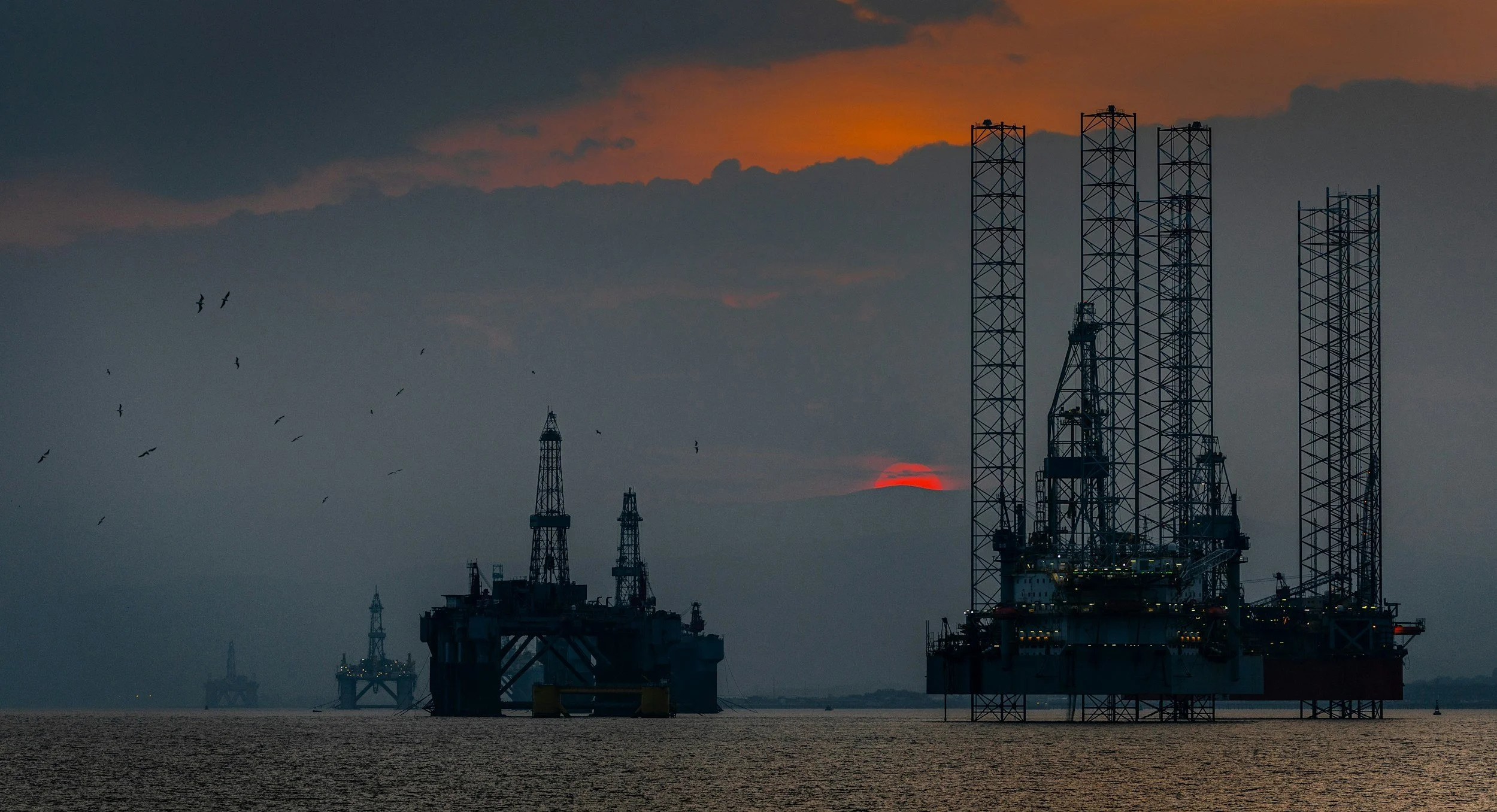
The Association of Foreign Press Correspondents in the United States (AFPC-USA) hosted a Foreign Press Podcast episode in partnership with the Hinrich Foundation titled, “What Hormuz Means for Asia’s Energy Security.”
In a recent paper for the Hinrich Foundation, co-authored with Lynn Hughes, ImportGenius research director William George argued that the blockade of the Strait of Hormuz underscored the importance of energy security and diversified supply chains in an increasingly multipolar world. The disruption affected major Asian economies in different ways: China was largely shielded by its substantial energy reserves, while Japan's reliance on US-linked energy supplies left it less exposed to Gulf disruptions. Vietnam, however, faced greater vulnerability because of its dependence on Gulf imports of crude oil, naphtha, and ethylene that support manufacturing for both US and Chinese markets. The authors suggested that those pressures could push Vietnam toward deeper adoption of Chinese renewable energy technologies and electric vehicles.
George spoke about his findings with journalist Roseanne Gerin, an assistant editor at the newsletter Trade Strategies Today, who has worked in journalism for more than 25 years.
This podcast episode was produced in partnership with the Hinrich Foundation. AFPC-USA is solely responsible for the content of this episode. The podcast transcript is available HERE.
Gerin highlighted George’s characterization of the Hormuz disruption as a "polycrisis" with cascading and mutually reinforcing effects and asked what made it fundamentally different from previous Persian Gulf disruptions. George explained that he chose the term "polycrisis" as a shorthand for a problem so broad and interconnected that it becomes difficult to fully grasp. While the closure of the Strait of Hormuz triggered a logistics, plastics, and energy crisis, he argued that those issues represented only one cluster of consequences arising from the broader conflict with Iran. The crisis also raised deeper questions about military strategy, alliances, and global governance.
Among the questions he said the war forces policymakers to confront are whether US military bases in Gulf states serve as assets or have become liabilities, whether Washington can still be relied upon to maintain the military hardware needed to defend critical territories, and what modern warfare looks like when all combatants possess near-parity in surveillance and battlefield awareness. Most fundamentally, he argued, the conflict raises questions about "what does being a rational actor look like in a multipolar world" and how that reality shapes diplomacy, trade policy, and foreign investment. George acknowledged that previous Persian Gulf shocks — particularly the 1967 closure of the Suez Canal — had profound consequences for global trade, inflation, and energy policy. He noted that earlier crises spurred transformative developments, including the construction of some of the largest oil tankers ever built to move crude more efficiently over longer distances and research efforts in the 1970s that helped lay the groundwork for modern electric-vehicle technology.
However, George argued that the current disruption is unique because "no previous shock has ever called US power and hegemonic influence into question to the same degree" or so completely disrupted a critical trade route that lacks a practical alternative. He stressed that today's global economy is far more dependent on interconnected supply chains than during previous crises and that society's dependence on energy and plastics has "never been higher." He also emphasized that principles such as freedom of navigation — long considered foundational to the post-World War II international order — are now being challenged through blockades, tolling systems, and restrictions on maritime traffic. According to George, these developments represent something fundamentally new. Summing up the scale of the challenge, he said, "We've never seen a pressure point as serious as this hit in a time of such deep global reliance on the smooth functioning of trade."

William George
In response to Gerin’s question about how George and his team gathered, verified, and synthesized such a large and varied body of information, George explained that ImportGenius functions as a trade-data aggregator specializing in the collection and analysis of highly detailed shipment-level records from 30 countries. As head of research, much of his work involves both validating the company's data and extracting meaningful insights from it. He said the firm combines its granular shipping data with broader macroeconomic sources such as United Nations Comtrade statistics, US Census Bureau trade data, and comparable government datasets from countries, including China and Japan. While these official datasets are often valuable, George cautioned that they are not always perfect and can be affected by political incentives and reporting limitations. As one example, he noted that Chinese trade statistics officially show no imports of Iranian oil, despite widespread evidence that such trade occurs. More broadly, he said customs data can be distorted when companies deliberately mislabel products. He cited shipments of Chinese electronic cigarettes entering the United States that are declared as "flashlights" or "portable phone chargers" to avoid scrutiny. George also pointed to distortions caused by trade war tariffs. According to him, tariffs have created incentives for both Chinese exporters and American importers to understate the value of goods crossing the Pacific, contributing to a growing discrepancy between China's reported exports to the United States and America's reported imports from China.
Even so, he said most official trade datasets remain highly useful once analysts account for obvious anomalies. Describing the process as both "an art and a science," George said researchers must identify the most reliable datasets available, reconcile differences between them, and determine what conclusions can reasonably be drawn. He explained that ImportGenius conducts both micro-level and macro-level analysis. At the micro-level, researchers examine clusters of shipment records to understand the behavior of specific companies. For broader reports like this one, however, the firm begins with country-level trade statistics to identify large-scale trade patterns and then uses shipment-level data to "zoom in" on particular industries, supply chains, or firms. The approach, he said, serves two purposes: First, it provides an independent check on the broader statistical data by comparing records from multiple countries. He cited an example of matching Vietnamese shipping records with US import data for Vietnamese plastic products to verify trade flows from both sides. Second, the method allows researchers to identify the specific companies involved in those transactions, which often yields what he described as the most "exciting and actionable information" contained in the report.
Gerin turned to China's energy strategy, noting that the country entered the crisis with an estimated 1.4 billion barrels of crude oil in strategic and commercial reserves — more than the combined stockpiles of the United States, Japan, and OECD (Organisation for Economic Co-operation and Development) Europe. She asked what that massive reserve actually provides China in terms of time, leverage, and protection from market shocks. George said the stockpile effectively gives China "around six to nine months of breathing room" in the event of a complete supply cutoff. In practice, however, China has not had to rely exclusively on its reserves. By continuing to purchase oil on global markets while selectively drawing down reserves, Beijing has been able to stretch its buffer even further. Rather than aggressively consuming its stockpile, George said China appears to have pursued a middle-ground strategy. As evidence, he pointed to data showing that Chinese crude imports in May fell to their lowest level since October 2017. Even so, he stressed that this was "far from nothing," noting that imports were still substantial despite representing roughly a three-million-barrel-per-day decline from February demand. He described the approach as "threading the needle" — maintaining energy supplies despite soaring prices until the economic costs no longer justified previous purchasing levels.
George said the decline in Chinese demand has had consequences beyond China's borders. He said analysts believe the reduced buying is effectively helping to stabilize global oil prices because the oil China is no longer purchasing becomes available to other countries facing shortages. The result is that China's reserves are not only providing domestic insulation but are indirectly easing pressure on international energy markets. He argued that China's strategy may also increase the future value of its stockpile. While countries such as the United States and Japan are drawing down their strategic reserves to moderate prices, China is consuming its reserves at a much slower pace. As those other countries eventually approach the limits of what they are willing to release, oil prices may begin reflecting actual supply shortages more directly. At that point, China's reserves could become far more strategically valuable. Because China would face less pressure from unmet domestic demand, it could have greater freedom to influence energy markets and potentially even redirect supplies to neighboring countries. He suggested that Beijing could eventually be in a position to provide shipments to regional partners while others are struggling to secure adequate supplies. Although he acknowledged significant uncertainty about how the situation will ultimately develop, George argued that the crisis could create the unusual scenario in which the United States feels economic pressure before China does. Despite America's status as a net energy exporter, he said Washington could find itself forced into either diplomatic concessions or risky escalatory actions if energy pressures become severe enough.
Gerin then highlighted another finding from the report: Import Genius data showed that PetroChina, the country's largest state-owned oil company, sharply increased pipeline imports from Kazakhstan in early 2026, paying nearly US$100 per barrel. She asked what that behavior revealed about China's crisis management and its willingness to pay a premium for supply security. George explained that PetroChina suddenly began importing record pipeline volumes from Kazakhstan near the end of March and paid "record prices" to do so. While he emphasized that the volumes were relatively small compared to China's overall oil consumption, he said the transactions offered a rare glimpse into Beijing's thinking because detailed Chinese trade data is generally unavailable. To conduct the analysis, researchers relied on Kazakhstan's export records. Since PetroChina is state-owned, George argued that its purchasing decisions serve as a useful "microcosm of China's overall oil policy" and provide insight into an otherwise highly opaque system. He said it would be valuable to revisit the data using more recent information to determine whether China's increased pipeline purchases have continued. Based on currently available information, however, he suspects that China has maintained elevated pipeline imports while reducing seaborne purchases.
More broadly, George said the Kazakhstan purchases revealed a clear crisis management strategy. China's immediate response to market turmoil was to reinforce the advantages already provided by its large reserves. As global buyers scrambled for crude oil, Beijing moved to secure additional overland supplies, strengthening its position even further. China's actions demonstrate a willingness to pay higher prices for redundancy and resilience. Rather than maximizing short-term economic efficiency, Beijing appeared focused on ensuring multiple supply options while preserving the strategic flexibility created by its stockpile. George argued that China has now begun drawing on those reserves, but "at a much lower rate than the US and Japan," allowing it to preserve more of its long-term leverage. George also suggested that China's restrained purchasing may be producing regional benefits, though he cautioned against drawing firm conclusions. It is difficult to know, he said, whether Beijing is intentionally trying to reduce pressure on neighboring countries such as Vietnam and the Philippines. Nevertheless, he noted that China's reduced demand is "definitely helping take the heat off of the oil markets at the moment," making it easier for other countries to secure supplies during the crisis.
Gerin noted that China’s coal-to-chemicals sector is effectively unique on a global scale and asked how much it helps offset the loss of Gulf-sourced naphtha and other petroleum-based feedstocks that are essential for plastics and petrochemicals production. George replied that while China's coal-to-chemicals industry is unique today, the concept itself is not new. The technology was first proven in Germany during World War II, when Berlin sought alternatives to crude oil because it had abundant domestic coal but increasingly limited access to petroleum supplies. He said the strategy is not really about self-reliance but about "strategic diversification." Coal-to-chemicals production is both environmentally damaging and expensive. Under normal market conditions, it is often uneconomical. George explained that oil prices generally need to exceed roughly US$70 per barrel before coal-based alternatives become financially viable, and China's industry has also benefited from significant government subsidies. He contrasted China's success with countries such as India and Indonesia, which also possess large coal reserves and depend on imported oil but have failed to develop comparable industries because the economics have been difficult to justify. The current crisis, however, has transformed the equation. With oil prices elevated and access to Gulf-produced naphtha, propylene, ethylene, and other petrochemical inputs constrained, China's long-term investment in coal-to-chemicals is suddenly paying dividends.
George acknowledged that precise production figures are difficult to obtain but pointed to China's polyvinyl chloride (PVC) industry as a revealing example. Of China's approximately 30 million tons of annual PVC production, he said roughly 10 million tons are ethylene-based and dependent on imported feedstocks linked to the Persian Gulf. The remaining 20 million tons are produced using carbide-based processes derived from coal-generated acetylene. That split, he argued, demonstrates the sheer scale of China's alternative production capacity. He added that the coal-to-chemicals industry has grown so large that it now consumes more coal annually than all of Europe combined. George emphasized that the sector produces much more than plastics. Through what he jokingly referred to as "petrochemical magic," coal can also be converted into products ranging from aviation fuel to synthetic natural gas. Natural gas production, in particular, has become a major focus. George said Chinese producers view coal-derived gas as attractive because it is cheaper than imported liquefied natural gas when environmental costs are excluded and, perhaps more importantly, because it is insulated from maritime disruptions. Since the fuel is produced domestically, it cannot be interrupted by shipping blockades or disruptions to international trade routes. He stressed that this strategy is aimed primarily at maintaining domestic stability rather than creating an export industry. Once transportation and liquefaction costs are considered, coal-derived gas becomes much less competitive internationally.
Asked how effectively the industry has compensated for the loss of Gulf feedstocks, George pointed to the evidence on the ground. If Chinese manufacturers were facing severe shortages, he argued, there would be widespread declarations of force majeure from petrochemical companies. Instead, such announcements have been relatively rare. Likewise, the kinds of petrochemical shortages and production disruptions reported in Japan have not emerged on the same scale in China. Prices for key products such as ethylene-based PVC surged after the Hormuz disruption but have since fallen substantially from their late-March highs, in some cases by more than US$300 per ton. George said the availability of carbide-based, coal-derived PVC has played a major role in stabilizing prices. While costs remain elevated compared with pre-crisis levels, the coal route has narrowed the gap between traditional ethylene-based products and coal-based alternatives, creating what he described as a stabilizing force across the market.
On the subject of whether China is becoming Asia's de facto petrochemical stabilizer, George said “yes,” adding that the trend has become a significant source of concern for some Japanese politicians and industry leaders, who worry that emergency imports from China could become a permanent foothold for Chinese suppliers in Japanese petrochemical supply chains. Even after the crisis ends, those relationships may persist, potentially weakening Japanese producers and making it harder for them to regain market share. But George argued that the phenomenon extends well beyond Japan. Returning to the PVC example, he cited recent research showing that Chinese manufacturers have capitalized on shortages throughout Asia, particularly in India and Vietnam. Coal-derived PVC, once viewed as a less competitive alternative, has suddenly become "massively profitable." Meanwhile, manufacturers that rely on traditional naphtha-based production are facing serious challenges. Some have had to cut production because they cannot secure enough feedstock. Others are operating at a loss because soaring naphtha prices have outpaced what they can charge customers. As a result, George said, every additional day of disruption strengthens the competitive position of China's coal-to-chemicals sector. The longer the crisis lasts, the more profitable these products become and the more opportunities Chinese firms have to establish themselves in markets and supply chains where they previously could not compete.
George cautioned that it remains unclear whether coal-derived alternatives can fully replace every missing petrochemical input. Nevertheless, he described the industry's performance thus far as "a very effective band-aid." Prices remain significantly elevated, but widespread supply collapses have not occurred. George also highlighted the environmental trade-offs involved. Coal-based PVC production is "roughly three to five times more carbon intensive" than conventional ethylene-based methods. Yet, he suggested that environmental concerns have taken a back seat to supply security during the crisis, arguing that policymakers and companies are focused on maintaining supplies rather than selecting the cleanest options. Even after Gulf naphtha supplies return and some of coal-to-chemicals' competitive advantage fades, George believes the industry's role during the crisis will have lasting consequences. While regulatory and environmental questions remain unresolved, he concluded that governments and supply-chain managers are unlikely to forget what helped keep factories running during one of the most severe petrochemical disruptions in recent memory.
George said Japan has managed to weather the Strait of Hormuz disruption so far through a combination of alternative crude suppliers, government support, and drawdowns from its strategic petroleum reserves, but he questioned how sustainable that approach will be over the longer term. He noted that conditions have worsened since the report was written. While Japan initially secured roughly 60% of its crude needs through US and Russian supplies, it is now facing growing shortages of naphtha and petrochemical products. Those shortages have produced unusual downstream effects, with some products disappearing from store shelves and even packaging becoming "black and white, devoid of color" because ingredients needed to make colored inks are unavailable. The most visible impact has been rising costs. Prices for some petrochemical-dependent products, including rice bags and construction materials, have increased by more than 30% compared to pre-crisis levels. Japan has largely relied on its strategic petroleum reserve to cushion the shock, but recent data suggests the country has already consumed between one-quarter and one-third of those reserves in only about two and a half months.
Although increased imports of US crude could help offset the shortfall, George stressed that the logistics are far more challenging than importing oil from the Middle East. Shipments from the US Gulf Coast take nearly twice as long to reach Japan, even when traveling through the Panama Canal. He pointed out that the largest crude tankers cannot use the canal at all, making transportation significantly more expensive. George also highlighted an often-overlooked constraint: the Panama Canal's freshwater supply. Because each vessel transit consumes large amounts of water, canal operations are limited by available reserves and could face additional strain from developing El Niño conditions. Routing large tankers around the southern tip of South America would be even less practical, stretching voyages from roughly 20 days to more than 60 days. George argued that Asia's historic dependence on Middle Eastern crude is not accidental but reflects the "path of least economic resistance." The existing system evolved because it is the most efficient and cost-effective. The Hormuz disruption has exposed how dependent global markets are on that efficiency and "just how fragile a lot of the prices that we take for granted truly are." Looking ahead, he warned that if Japan remains dependent on US crude for an extended period — especially while both Japan and the United States continue drawing down strategic reserves and global oil prices remain elevated — costs will rise rapidly across the Japanese economy.
George said the recent production cuts at Japanese ethylene plants should not be viewed as routine slowdowns but as emergency measures designed to prevent complete shutdowns. He explained that in some industrial processes, a full shutdown can take months to recover from and may even damage equipment. Using the analogy of a glass foundry, he noted that stopping production entirely can leave materials solidifying inside machinery and "destroy the crucible and damage all the equipment." By reducing output to the minimum viable level, manufacturers can stretch limited naphtha supplies while remaining capable of quickly increasing production if additional feedstocks become available. According to George, the effects of the shortages are already moving through the economy. The disruptions began appearing in late March and April and have continued to compound. While petrochemical shortages may seem random at first glance, he argued that "essentially all industries are exposed" because petrochemicals sit at the center of countless manufacturing supply chains.
George pointed to several examples of how seemingly minor shortages can create outsized consequences. Earlier shortages affected the ingredients used to produce colored inks, resulting in some packaging losing its color. More recently, shortages of specific thinners and lacquers have disrupted manufacturing in unexpected sectors. George cited the example of Japanese bathroom fixture manufacturer TOTO, which announced some products would become unavailable because it could no longer obtain a single specialized thinner required for finishing. In his words, "there goes the entire supply chain," illustrating how the absence of one component can halt production of a much larger product. While disruptions are emerging across multiple sectors, George believes construction materials will be among the first industries to feel the impact most severely. Numerous manufacturers have already announced price increases for available products. He emphasized that plastics are deeply embedded in modern economic activity, serving functions ranging from industrial parts to packaging. Because of that interdependence, "a bottleneck of one necessary product or part can turn into a complete shortage of a much larger thing very quickly."
Turning to aluminum, George said one of the report's most surprising findings was the gap between Japan's overall dependence on Gulf-region aluminum and the dependence of its domestic auto industry. While Japanese customs data showed that about 27% of Japan's aluminum imports traveled through Hormuz-affected routes, Bloomberg reporting indicated Japanese automakers relied on Gulf aluminum for roughly 70% of their needs. The situation is particularly concerning because major Gulf aluminum producers have suffered disruptions. George noted that facilities operated by Emirates Global Aluminium sustained significant damage and could require up to a year to recover. Meanwhile, Qatar's Qatalum facility has undergone a controlled shutdown and is also projecting a six- to 12-month restart timeline. Even those estimates remain uncertain because the broader conflict continues and future attacks on critical infrastructure could further delay recovery. Still, George cautioned against expecting immediate shortages. Japan can source aluminum from alternative suppliers such as India and Australia, and the Japanese Aluminum Association has not forecast abrupt supply collapses. However, he stressed that avoiding shortages does not mean avoiding economic pain. In a tight global market, Japan must compete for replacement supplies, forcing manufacturers to pay substantial premiums that are then passed on to consumers.
Those price increases are already showing up in products ranging from aluminum foil to truck beds. George also highlighted shipbuilding as a sector worth watching because aluminum plays an important role in modern vessel construction. While the industry's opacity makes it difficult to estimate the exact impact, he suggested higher aluminum costs could eventually affect shipbuilding profitability and order books. Stepping back, George stressed that aluminum shortages are only one part of a broader inflationary cycle. Combined with rising petrochemical costs and higher energy prices, the disruption is pushing up transportation, logistics, and manufacturing expenses throughout the economy. As a result, he expects elevated prices to persist "for at least a year" even under a relatively optimistic scenario, contributing to mounting economic pressures in both Japan and the wider global economy.
George pushed back slightly on the premise that Vietnam had been the country most affected by the dual blockades, arguing that distinction currently belongs to the Philippines. However, he said Vietnam was chosen for the report because it remains highly exposed to the disruption, is often overlooked in discussions of global supply chains, and serves as a critical link in manufacturing networks that many countries underestimate their dependence on. He explained that Vietnam's vulnerability begins with energy. Roughly 80% of Vietnam's crude oil imports in 2025 came from Kuwait, with all of those barrels supplied by Kuwait Petroleum Corporation (KPC). That concentration has become a major liability because KPC has declared force majeure twice, suffered drone strikes, and seen production fall to less than one-fifth of pre-war levels. While KPC has projected that it can restore about 80% of production within a month and repair the remaining damaged infrastructure over roughly six months, George cautioned that such forecasts should be treated cautiously given the continuing instability in the Gulf. Even if production recovers, export routes remain vulnerable and additional attacks could further delay recovery.
Vietnam's exposure is compounded by the structure of its refining sector. George noted that KPC is also a major owner of one of Vietnam's primary oil refineries. Under normal conditions, that relationship makes economic sense, but during a disruption it creates additional challenges because the refinery is optimized for Kuwaiti crude. Alternative crude grades can still be processed, but with lower efficiency, creating "marginal inefficiencies" that can accumulate throughout the supply chain. Beyond energy, George highlighted Vietnam's rapidly growing plastics industry as one of the sectors most at risk. He noted that Vietnamese plastics manufacturing has expanded dramatically over the past 15 years. Exports of plastic products to the United States grew from just US$114 million in 2010 to approximately US$4.3 billion in 2025. That growth has made Vietnam an increasingly important supplier not only to the United States but also to other major economies.
Japan, in particular, has become highly dependent on Vietnamese plastics imports, purchasing roughly US$1 billion annually. George pointed out that Japan has responded proactively by helping supply Vietnam with crude oil after the Hormuz disruption, explicitly recognizing its own reliance on Vietnamese-made medical plastics. He described this as an example of governments acting early to prevent broader supply-chain breakdowns. The risks extend well beyond plastics themselves. George emphasized that plastics are a foundational input for many of Vietnam's major export sectors, including electrical machinery, synthetic apparel, packaging, and other manufactured goods. Rising feedstock costs therefore threaten a wide range of industries simultaneously. George warned that higher input costs could undermine one of Vietnam's biggest recent economic successes: its emergence as a major alternative to China in electronics manufacturing. Vietnam has recently surpassed China as a leading exporter of laptops and tablets, but George suggested that escalating plastics and energy costs could erode the margins that helped make that shift possible.

George said Vietnam's vulnerability extends well beyond its plastics sector because disruptions to Kuwaiti crude imports quickly ripple throughout the broader economy. He explained that a stable supply of oil is essential for the functioning of Vietnamese society and many key industries, including farming, fishing, and logging, all of which rely heavily on affordable gasoline and diesel fuel. As an example, he noted that Vietnamese diesel prices surged by 145% above pre-closure levels at their peak in April. The increase immediately pushed up food prices at markets and restaurants, creating localized economic shocks that spread beyond the energy sector. Although those price spikes have begun to ease, George said the inflationary effects are still working their way through the economy and continue to put upward pressure on labor costs. He said it remains difficult to determine exactly how much manufacturing output has been lost because more detailed shipping and production data are still needed. However, he noted that Vietnam has partially softened the blow by becoming a major purchaser of Chinese supplies, much as Japan has relied on alternative sources to offset shortages. Chinese exports have helped "attenuate the shock," but they have not eliminated it.
The larger problem, George argued, is that costs throughout the Vietnamese economy remain significantly elevated. He estimated that many industries are facing sustained cost increases of 15% to 30%, which threatens profit margins and could weaken consumer spending over time. The key question, he said, is whether Vietnamese manufacturers can remain competitive at those higher cost levels, particularly compared with Chinese producers. George pointed out that much of Vietnam's manufacturing growth was fueled by companies relocating production from China, especially amid Trump's tariff policies. If those tariffs are eventually repealed or reduced, Vietnam could face a more difficult competitive environment just as higher energy and production costs are squeezing margins. Looking beyond Vietnam, George said the Hormuz crisis is likely to have lasting consequences for energy security and industrial policy across Asia. In the short term, he expects traditional trade patterns to return once Gulf oil and petrochemical exports begin flowing normally again. The reopening of the Strait would provide "a tremendous relief" by helping lower costs and stabilize supply chains.
Over the longer term, however, he believes governments will draw broader lessons from the crisis. Countries are increasingly operating in what he described as an uncertain and competitive multipolar world, where geopolitical conflicts, climate-related disruptions, and supply-chain vulnerabilities are becoming more common. Events ranging from the Hormuz closure to heat-wave-induced blackouts in places like the Philippines are reinforcing the need for energy systems that are more flexible, secure, and domestically controlled. George argued that this environment is likely to accelerate investments in renewable energy, electric vehicles, and alternative supply chains. He noted that previous energy crises helped spur technological breakthroughs, including many of the innovations that underpin today's electric vehicle industry, and suggested the current disruption could have a similar effect. In fact, he said demand for electric vehicles in Europe and Asia has already been rising sharply since March. At the same time, he warned that reducing dependence on oil could create a new form of dependence. Countries pursuing renewable energy and electrification will likely need Chinese-made solar panels, battery systems, and electric vehicles. Those technologies can insulate economies from volatile oil and gas markets, but they also deepen reliance on Chinese hardware and software.
George cited recent reporting about Chinese surveillance technologies as an example of the risks that could accompany such dependence. Once countries build critical infrastructure around Chinese technology, he suggested, they may find it difficult to disentangle themselves later. Ultimately, he framed the issue as a difficult strategic choice facing many governments. On the one hand, countries can reduce their exposure to global oil and gas disruptions by embracing Chinese renewable technologies. On the other, doing so may create long-term technological and economic dependencies on China. As George put it, many nations will increasingly have to decide whether they are more comfortable being exposed to disruptions in global energy markets or becoming more reliant on Chinese technological ecosystems.