How Foreign Correspondents Can Cover the Current Iran Crisis With Accuracy, Context, and Restraint
The current Iran crisis is not a story that can be covered through a single lens. It is at once a military story, a diplomacy story, a nuclear story, a regional security story, and an energy market story. That complexity matters. One of the biggest mistakes in a fast-moving international crisis is to reduce it to one dramatic frame such as war, regime change, nuclear countdown, or regional collapse. Those labels may sound urgent, but they often flatten reality. Good foreign correspondence does the opposite. It helps the audience understand what is happening, why it matters, what is verified, and what remains uncertain.
For foreign correspondents, the current Iran crisis is also a test of method. It demands discipline, context, and an ability to resist emotional overstatement. In a moment like this, official claims, battlefield claims, exile narratives, social media footage, and market reactions all move faster than traditional verification. The role of the correspondent is not simply to repeat what is being said, but to organize events into a structure that readers can understand.
The first lesson is this: cover the crisis as a system, not as a headline.
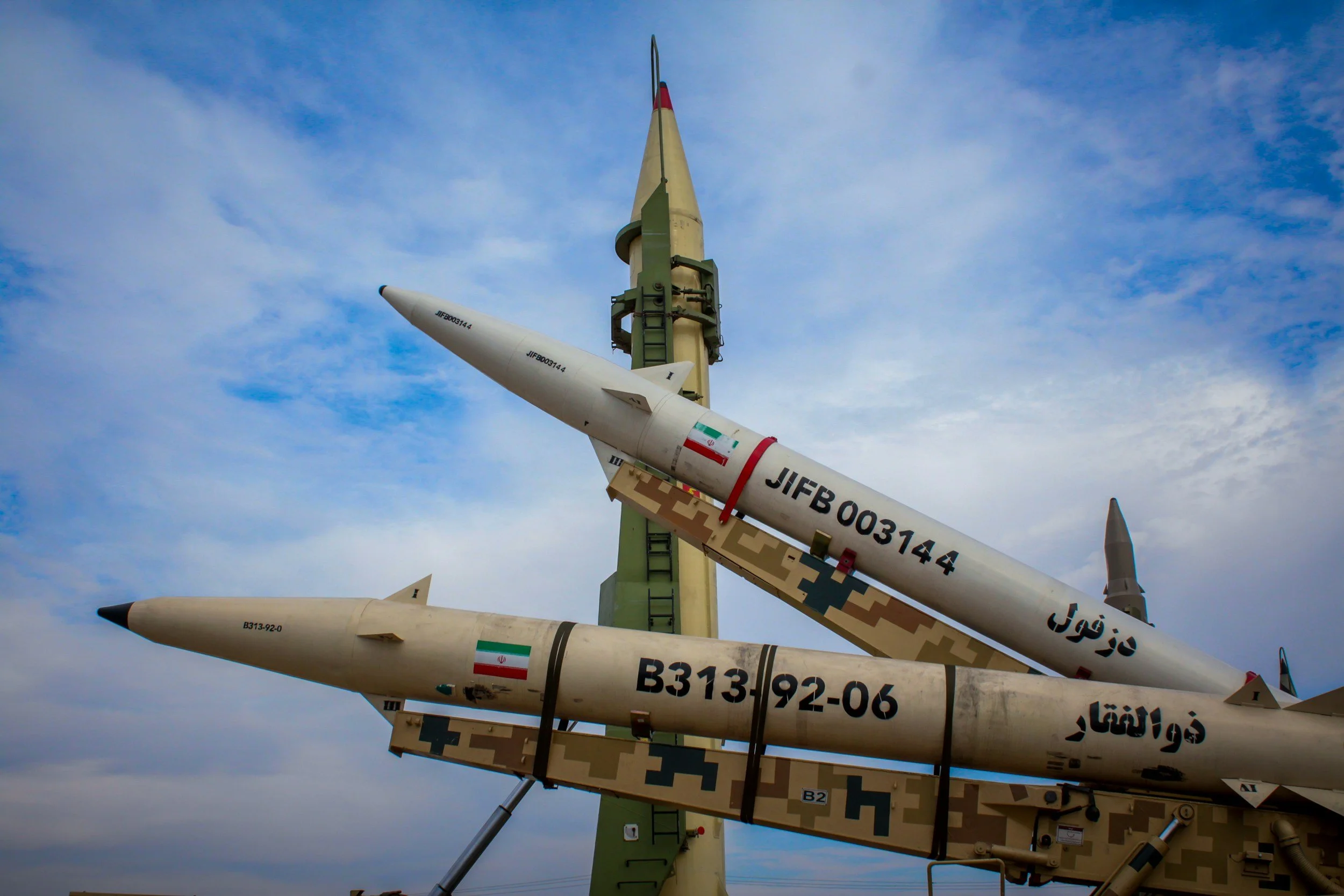
The Iran crisis has several interlocking parts. The first is direct military escalation. That includes strikes, retaliation, regional military posturing, and the possibility of miscalculation. But the second part is equally important: the nuclear dimension. Journalists need to distinguish between general fear about “nuclear danger” and the actual elements of nuclear reporting, such as enrichment, inspections, safeguards, facility damage, and diplomacy. Too often, the word nuclear is used in a vague and dramatic way. Correspondents need to be precise. A facility being struck is not the same as a weapon being built. A warning from an international body is not the same as proof of imminent catastrophe.
The third part of the crisis is the regional dimension. Iran’s influence extends beyond its borders through relationships, alliances, and aligned actors. But foreign correspondents should be careful not to rely on old formulas. It is tempting to describe every escalation as a repeat of the last one. Yet the region changes, the actors change, and incentives change. Lazy assumptions are dangerous. Good reporting must explain who is involved now, what their interests are now, and how this specific round of escalation differs from previous ones.
The fourth part is the energy and economic dimension. The Iran story is not only a Middle East story. It is also a story about global shipping, oil prices, inflation, and the vulnerability of international markets to disruption. A foreign correspondent writing for readers in Europe, Asia, Africa, or Latin America needs to explain why events in and around Iran matter far beyond the region. A disruption in a major shipping route is not an abstract geopolitical issue. It can shape the cost of fuel, transportation, food, insurance, and household goods in places far from Tehran.
The fifth part is the human and institutional dimension. Foreign correspondents often do some of their best work when they connect geopolitics to institutions people recognize. Schools, hospitals, airports, ports, central banks, apartment buildings, and ministries all tell the story of how a crisis is lived. A blackout is not just a number. A closed university is not just a symbol. A disrupted hospital system is not just collateral damage. These are the places where people feel the pressure of conflict in daily life. Reporters should pay close attention to how institutions adapt, remain open, or break down under strain.
A second lesson is methodological. Correspondents should organize their reporting around layers of certainty.
One layer is what has clearly happened. These are confirmed strikes, official closures, visible damage, public market reactions, and statements from accountable institutions. Another layer is what governments claim has happened. Those statements may be important, but they are not automatically facts. A third layer is what analysts infer from available evidence, including satellite imagery, shipping data, military movements, or patterns of prior behavior. A fourth layer is what remains unknown.
High-quality reporting keeps these layers separate. Readers should not have to guess whether a sentence is based on confirmed fact, official assertion, rumor, or analysis. The correspondent’s job is to make that distinction visible. This is especially important in conflict reporting, where emotional narratives often outrun evidence.
This applies particularly to reporting on nuclear facilities. Journalists should know the difference between a nuclear site, a research site, an enrichment site, and a facility with strategic significance. They should understand what kind of risk is being discussed. Is the concern military? Environmental? Technical? Symbolic? The public often hears a single word and imagines the worst. A correspondent needs to slow that instinct down and clarify terms. Precision is not a luxury in this kind of reporting. It is a public responsibility.
A third lesson concerns language. In a crisis environment, words can quickly outrun facts. Terms such as all-out war, collapse, breakout, or regional firestorm may sound powerful, but they often create more heat than light. A better approach is to describe exactly what is known: who acted, where, with what consequences, and according to whom. Strong reporting does not need inflated language. In fact, precise language often makes the writing more persuasive because it shows discipline and credibility.
The same principle applies to adjectives. Foreign correspondents should be careful with words such as massive, unprecedented, devastating, or historic unless they are prepared to explain why. In a highly emotional environment, language itself can become a form of distortion. Correspondents serve their audiences better when they resist that temptation.
A fourth lesson is that the Iran crisis must be localized for each audience.
Foreign correspondence is never just about reporting an event abroad. It is about translating that event for a specific readership. The same crisis may be framed differently for readers in Greece, France, India, Brazil, South Africa, or Japan. The facts may be broadly similar, but the angle of relevance changes.
A European audience may be especially interested in energy security, migration pressures, NATO implications, and inflation. An Asian audience may care more about shipping lanes, fuel imports, and supply chain stability. A Latin American audience may be interested in oil prices, diplomatic alignments, and broader questions of nonalignment. An American audience may focus on military exposure, political consequences, and domestic economic effects.
This does not mean changing the facts. It means changing the point of entry. Good foreign correspondents know that audiences engage most deeply when they understand how a distant crisis touches their own lives.
A fifth lesson is about sourcing. No single source can carry a crisis of this scale.
Correspondents should build a reporting matrix. That means drawing from official statements, international organizations, subject-matter experts, regional journalists, market data, shipping information, military analysts, and economic specialists. Governments speak strategically. Analysts can overinterpret. Social media can mislead. Experts can become trapped in their own frameworks. The discipline of foreign reporting lies in cross-checking across systems.
The stronger the crisis, the greater the temptation to rely on one dramatic source. A viral video, a senior official, a military spokesperson, or an opposition figure may appear to offer clarity. But one source alone rarely explains a crisis. A correspondent should always ask: what other systems can confirm or complicate this claim?
A sixth lesson is to be honest about uncertainty.
One of the marks of serious international journalism is the willingness to say that something remains unclear. In a fast-moving security environment, reporters often feel pressure to sound definitive. But there is nothing weak about writing that a claim could not yet be independently verified, that the extent of damage remains uncertain, or that officials have not released evidence. On the contrary, such phrasing builds trust. It tells the audience where knowledge ends and speculation begins.
Audiences do not expect omniscience. They expect honesty. In a misinformation-heavy environment, transparency about uncertainty is one of the most valuable habits a correspondent can have.
A seventh lesson is to remember that Iran is not only a theater of conflict. It is also a society.
Even during military escalation, there are ordinary people making decisions about work, school, movement, money, health, and safety. There are institutions trying to remain functional. There are families dealing with shortages, anxiety, and disruption. There are businesses adapting. There are students trying to continue their education. These realities matter because they show how a crisis is actually lived.
Foreign correspondents should therefore look beyond statements from capitals and military actors. They should ask what the crisis means for banking access, transportation, internet connectivity, local commerce, energy supply, health care, education, and internal movement. These second-order effects often reveal the true pressure of a crisis more effectively than dramatic visuals alone.
Another important lesson is historical discipline. Every crisis invites easy analogies. Journalists will hear comparisons to earlier wars, earlier confrontations, earlier nuclear standoffs, and earlier regional escalations. Some comparisons are useful. Others are lazy. A correspondent should always ask whether the analogy clarifies or obscures.
History is essential, but it must be used carefully. It should illuminate structure, not replace reporting. Saying that a crisis resembles an earlier one can provide context, but it should never become a substitute for explaining what is distinctive in the present moment.
Correspondents also need to think carefully about balance. Balance does not mean giving equal credibility to all claims. It does not mean mechanically repeating each side’s language and presenting that as neutrality. Real balance means proportion, evidence, and fair representation of what can be established. Sometimes one claim is better supported than another. Sometimes one actor is more transparent than another. Sometimes a story is asymmetrical. Good journalism should reflect that reality rather than forcing artificial symmetry.
There is also an ethical lesson in covering a crisis like Iran: do not confuse speed with depth.
The demand for immediate updates is real, especially in digital journalism. But speed can create shallowness. Correspondents should try to balance breaking developments with explanatory work. The audience needs both. It needs to know what happened today, but it also needs help understanding why it matters, what the background is, and what the likely next questions will be.
This is where educational journalism becomes especially valuable. ForeignPress.org serves an audience that benefits not only from updates, but from context. That means correspondents should not assume prior knowledge. They should explain terms, institutions, actors, and consequences clearly. They should avoid writing only for specialists. A strong educational article does not oversimplify. It clarifies.
So what should foreign correspondents watch next in the Iran crisis?
They should watch whether diplomacy reopens in any recognizable form. They should watch whether the crisis expands geographically or begins to stabilize. They should watch whether major shipping routes remain disrupted or begin to normalize. They should watch whether institutions inside the affected areas remain functional. They should watch how language changes, because political language often signals strategic movement before events fully unfold.
They should also watch what is not being said. Silence can be as revealing as rhetoric. A delayed statement, a vague phrase, an unexplained closure, or a quiet technical meeting may tell correspondents as much as dramatic public declarations.
Ultimately, the current Iran crisis is an important test for foreign correspondents because it demands nearly every skill the profession requires: historical memory, regional literacy, economic awareness, technical precision, careful sourcing, linguistic restraint, and humility before uncertainty. It is not enough to dramatize the moment. The real challenge is to make the moment legible.
That is what international journalism is for. It is not to make a distant crisis louder. It is to make it clearer.
For ForeignPress.org, that is the educational takeaway. A crisis of this scale should not only be covered. It should be translated. The strongest correspondents will help their audiences understand that Iran is not one story but many stories unfolding at once. They will explain that military events, nuclear questions, regional alliances, market shocks, and institutional resilience are all part of the same picture. And they will remember that clarity, especially in a crisis, is not just a professional skill. It is a public service.