
Understanding the Current U.S. Stock Market: An Educational Guide for International Correspondents
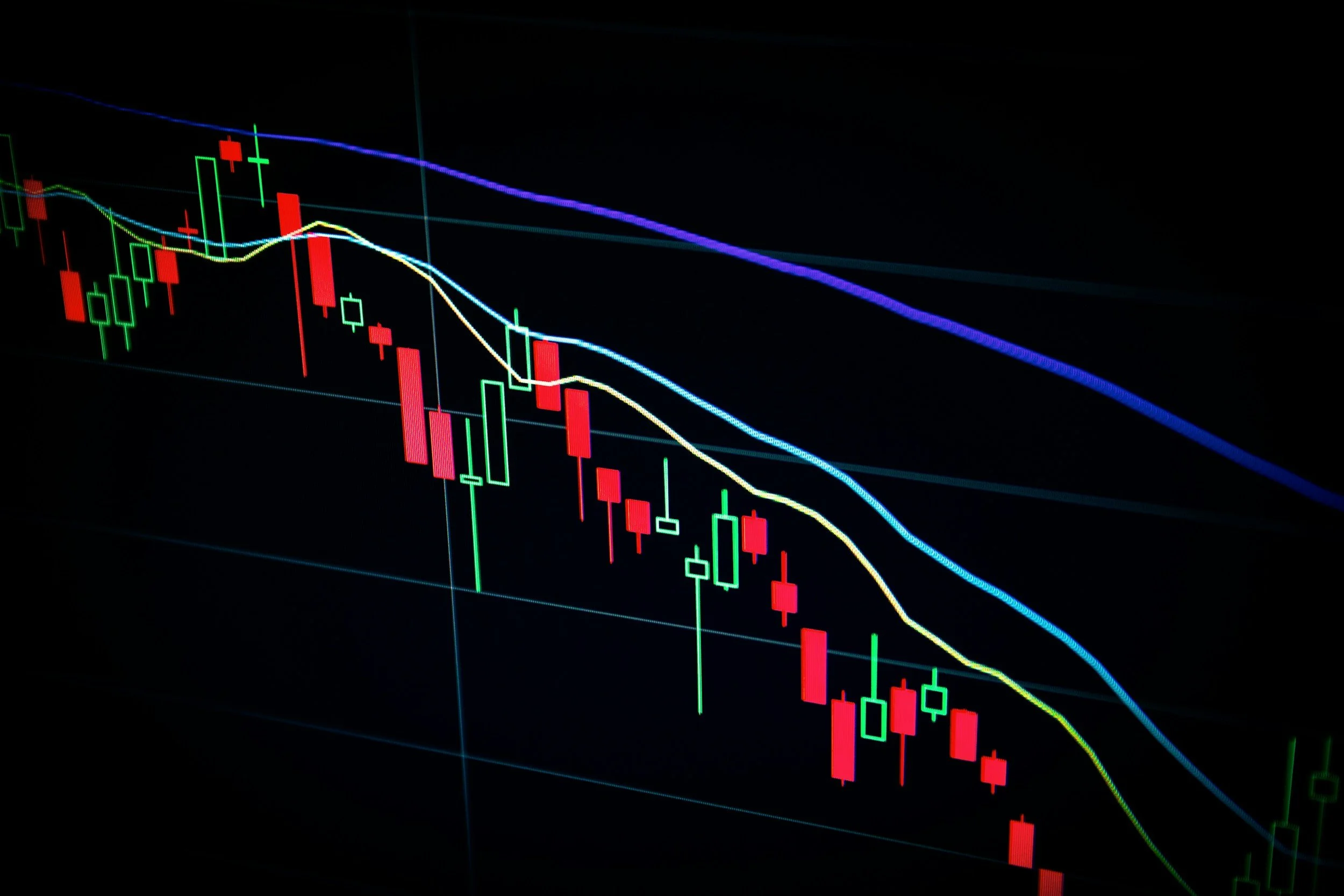
As of March 9, 2026, the U.S. stock market is in a nervous and highly reactive phase. Wall Street’s main indexes fell sharply on Monday as investors responded to a sudden jump in oil prices, renewed inflation concerns, and broader geopolitical tension. Reuters reported that the S&P 500, Nasdaq, and Dow all came under pressure, while the Russell 2000 moved closer to correction territory and the CBOE Volatility Index climbed to its highest level since April. For international correspondents, this is an important moment to understand because the real story is not simply that stocks are down. The deeper story is that several major forces are now colliding at once: oil, inflation, central-bank expectations, labor-market softness, and fear about how a global security shock could affect the U.S. economy.
The immediate trigger is energy. Reuters reported that oil prices surged toward $120 a barrel as conflict in the Middle East intensified and traders worried about disruptions to global supply. Commodity markets reacted violently, with oil posting one of its biggest jumps in years. That matters because oil is not just a commodity followed by specialists. It is a central economic input that affects transportation, shipping, manufacturing, heating, aviation, and consumer prices. When oil rises this quickly, investors begin to recalculate inflation expectations almost immediately. In market terms, that means the shock does not stay confined to the energy sector. It spreads through the entire financial system because higher energy costs can reduce corporate profit margins and raise the overall cost of living at the same time.
This is where the stock-market story becomes more complex. Before this latest oil shock, markets had been hoping that inflation was gradually moving lower and that the Federal Reserve might have more room later this year to ease monetary policy. The Federal Reserve said on January 28, 2026 that it was maintaining the federal funds target range at 3.5 percent to 3.75 percent and would continue to assess incoming data, the evolving outlook, and the balance of risks. That wording signaled caution, but it also left room for possible future adjustments if inflation continued to improve. Now, however, investors worry that a sudden energy spike could make the Fed more hesitant. In other words, one of the market’s key optimistic assumptions has become less certain.
The inflation backdrop helps explain why investors are so sensitive. According to the Bureau of Labor Statistics, consumer prices rose 2.4 percent over the 12 months ending in January 2026, down from 2.7 percent in December 2025. That suggested inflation was moving closer to the Fed’s long-term comfort zone. But markets do not react only to the last data release; they constantly try to anticipate the next one. If oil remains elevated, traders may conclude that the recent progress on inflation could slow or even reverse. This is why markets sometimes fall even when the latest inflation report appears relatively favorable. Investors are not trading yesterday’s economy. They are trading expectations about the next few months and whether those expectations are becoming more or less believable.
At the same time, the labor market has started to look less reassuring. The Bureau of Labor Statistics reported on March 6 that total nonfarm payroll employment edged down by 92,000 in February, while the unemployment rate was 4.4 percent. Employment in information and federal government continued to trend down, and payroll growth had changed little on net through 2025. On its own, one monthly employment report does not prove that the economy is entering recession. But when a weaker jobs report appears alongside an oil shock and rising inflation fears, it changes the market mood. Investors become more alert to the possibility that growth is softening just as new price pressures are emerging. That combination is especially unsettling because it limits the range of good policy options.
This is why the word stagflation has returned to the conversation. Stagflation describes a difficult environment in which growth slows while inflation remains stubborn or rises again. Markets dislike this scenario because it creates a policy trap. If the central bank cuts rates too quickly, inflation could worsen. If it keeps policy tight for too long, growth could weaken further. Reuters noted that investors are increasingly worried about exactly this risk as higher oil prices collide with softer labor data and delayed expectations for rate cuts. For correspondents, this is one of the most useful ways to frame the current moment. The market is not merely afraid of inflation or merely afraid of recession. It is increasingly worried about a world in which elements of both appear at the same time.
One of the most important lessons for international correspondents is that markets are forward-looking. A stock index is not a simple snapshot of present economic conditions. It is a constantly changing estimate of future profits, future interest rates, and future risks. That is why a market may rally on bad news if investors believe the bad news will push the central bank toward easier policy later. It is also why a market may fall on seemingly manageable news if investors believe the next phase could be worse. In the current environment, investors are reassessing whether the U.S. economy can absorb higher energy prices without a broader slowdown and whether companies can protect earnings if input costs rise. That forward-looking logic is essential to explaining market behavior accurately to international audiences.
Sector performance also tells a more precise story than the headline indexes alone. Reuters reported that travel and banking stocks were among the notable losers on March 9, while the energy sector held up better. That makes sense. Airlines, cruise operators, and other travel-related companies are especially vulnerable when fuel costs rise. Banks, meanwhile, can struggle when economic uncertainty grows and investors fear slower borrowing, weaker deal activity, or broader financial stress. Energy companies often benefit, at least initially, because higher oil prices can support revenue. For correspondents, this is a useful reminder that “the market” is not one single thing. Inside every broad index are sectors that react very differently depending on what kind of shock is driving the day’s move.
Another key point is that this is not just an American story. The same Reuters coverage showed that European shares also fell sharply as the oil spike deepened inflation anxiety across global markets. Europe is particularly sensitive to imported energy shocks, but the broader lesson applies everywhere: when oil jumps, inflation expectations, growth worries, and policy assumptions change across borders. This gives international correspondents a natural way to localize the story for audiences outside the United States. Instead of covering Wall Street as a distant drama, correspondents can explain how the same forces moving U.S. stocks may also affect local currencies, transportation costs, consumer prices, bond markets, and central-bank thinking in other countries. The U.S. market matters globally not only because it is large, but because it often transmits and amplifies broader financial narratives.
The next scheduled data points matter greatly because they can either confirm or calm the market’s fears. The Bureau of Labor Statistics says that February 2026 CPI data will be released on March 11, 2026, at 8:30 a.m. Eastern Time. That report will be closely watched because it may show whether inflation pressures remain contained or whether the oil shock is beginning to contaminate the outlook. Beyond that, the Federal Reserve’s next moves will be judged against both inflation data and any further signs of labor-market weakness. This is why financial journalists often focus so intensely on calendars. Markets move on what has happened, but they also move on what is about to be measured. In the current environment, one inflation report or one policy signal can quickly change the prevailing narrative.
For international correspondents, there are several common mistakes to avoid when covering a market like this. The first is treating a one-day market decline as self-explanatory. A drop of more than 1 percent may look dramatic, but what matters most is why it happened. Was the move driven by inflation, earnings, geopolitics, or interest rates? In this case, Reuters tied the selloff directly to soaring crude prices, fears of persistent inflation, and anxiety about weaker growth. The second mistake is relying only on the headline indexes. Sector behavior often tells the real story. The third is assuming that Wall Street reacts only to domestic U.S. conditions. In reality, Monday’s selloff reflected a global security shock with global commodity implications. Good financial journalism connects those layers rather than flattening them into a simple up-or-down narrative.
This is also a moment when explanatory journalism matters more than dramatic language. Saying that investors are “nervous” is not enough. A stronger article explains the transmission mechanism. Higher oil prices can raise inflation expectations. Higher inflation expectations can reduce hopes for rate cuts. Fewer expected rate cuts can push bond yields higher or keep financial conditions tighter than investors had wanted. Tighter financial conditions and higher input costs can pressure company profits. Softer labor data can then intensify worries that the economy is losing momentum. Once correspondents explain that chain clearly, market moves become much easier for general audiences to understand. The current stock-market situation is best understood not as random volatility, but as a rational repricing of interconnected risks that suddenly became more serious.
So how should international correspondents summarize the U.S. market right now? The clearest answer is this: the market began 2026 with some optimism that inflation was cooling and that the Federal Reserve might gradually gain flexibility, but that optimism has been shaken by a geopolitical oil shock arriving just as labor-market data have softened. The result is a market that is more volatile, more defensive, and more sensitive to each new economic release. Investors are not only asking whether stocks are cheap or expensive. They are asking whether inflation will reaccelerate, whether growth will weaken, and whether policymakers will have enough room to respond. That is the real story behind the current market environment, and it is the story correspondents should aim to explain to audiences around the world.