
In Ukraine’s Darkest Winter, a University Refuses to Close
On a winter morning when the temperature in Kyiv sat in the low teens and much of the city had no heat, electricity, or running water, the Kyiv School of Economics was holding class.
In a lecture hall crowded with students bundled in coats and scarves, Dr. Tymofiy Mylovanov, the school’s president, stood at the front of the room and spoke about culture. Not culture in the abstract, but culture as it reveals itself under pressure. He told a recent story about a plumber.
A nearby apartment building had suffered frozen pipes during a recent blackout. A plumber was called in to fix the break. He repaired the pipe, collected his payment, and left. Days later, during the next hard freeze, the pipes burst again.
“When people asked him why he didn’t flush the water from the pipes,” Mylovanov told the class, “he answered, ‘Nobody told me to.’”
The room was quiet. Students leaned forward.
Mylovanov paused, then continued. Other plumbers, he said, working in similar buildings, did flush the pipes. They took responsibility for the system as a whole. Those buildings were still functioning.
“This,” he told the students, “is the difference between the old Soviet culture and the new Ukrainian culture.”
In the old system, responsibility flowed downward. You did what you were told. Nothing more. Initiative was dangerous. Accountability was someone else’s problem. In the new Ukraine, Mylovanov pointed out, survival depends on the opposite instincts: initiative, ownership, transparency, and moral responsibility for outcomes.
Listening from a student’s seat, the lecture felt like more than economics or sociology. It felt like permission to think clearly in a time designed to overwhelm. Outside, the city was dark. Inside, there was heat, light, and the unexpected comfort of normalcy. Being there kept the students’ minds from spiraling out of control. As one student told Mylovanov, “Coming here keeps me sane!”
Mylovanov knows that KSE has a bigger purpose than just training economists. “We are training people who will rebuild this country.”
That is why the Kyiv School of Economics matters.
Founded after Ukraine’s independence and radically reoriented after 2014, the school has become one of the country’s most important pipelines for future leaders. Graduates of KSE populate government ministries, central banking, policy think tanks, and the private sector. In wartime, its mission has sharpened rather than receded.
“KSE will remain open no matter what,” Mylovanov said. “If Kyiv stands, KSE will stand.”
That resolve is not rhetorical. During repeated Russian attacks on Ukraine’s energy infrastructure, large parts of the country have gone dark. Entire cities have lost electricity. In some regions, apartment buildings have been abandoned because burst pipes cannot be repaired until the spring thaw. People have learned to live with candles, generators, and water carried up stairwells.
Many Ukrainians have stayed in freezing apartments rather than leave pets behind, adding another layer of hardship. But for students and faculty at the Kyiv School of Economics, the decision to keep teaching has been nonnegotiable.
“Universities are not a luxury,” Mylovanov said. “They are part of national resilience.”
Mylovanov himself embodies the fusion of academic rigor and civic urgency that defines the institution. An economist by training, he served as Ukraine’s Minister of Economic Development and later chaired the National Bank’s council. He returned to the school not because it was easier, but because it was harder.
“Before 2014, I was teaching at Pennsylvania State University,” he said. “But I wanted to return to Ukraine to help.”
What helps keep him and others going through the brutal cold is awareness of history. He said people in Ukraine understand that moments of national trial have precedents. He often invokes Britain during World War II, when Britain was under sustained bombardment yet refused to collapse.
“The British didn’t know how the war would end,” he said. “They just knew they couldn’t stop.”
That comparison resonates with students. Like the British during the Battle of Britain, Ukrainians today are enduring extraordinary suffering without certainty of outcome. Cities without electricity. Infrastructure held together by improvisation. Lives suspended between air raid sirens and routines that must somehow continue.
In spite of these conditions, faculty and students continue planning for a future after the war. Students still debate policy frameworks for postwar reconstruction. Faculty still model scenarios for economic recovery. Courses continue. Research continues.
“If you start doing the right things, others will join you and you can accomplish fantastic things,” he said, adding, “We’re an example. There are a thousand people here who helped start KSE, and today we train thousands of future leaders. The world can be made better simply by people acting.”
He is witnessing a culture of optimism against extremely adverse conditions.
Back in the lecture hall, the plumber story lingered. It was not about pipes. It was about whether one waits to be told what to do or instead takes responsibility when no one is watching.
Outside, the city was still cold and dark. Inside, students took notes and worked for a better future. Putin wanted to destroy the Ukrainians’ will to resist. KSE is an example of how Putin is failing to achieve his goal.
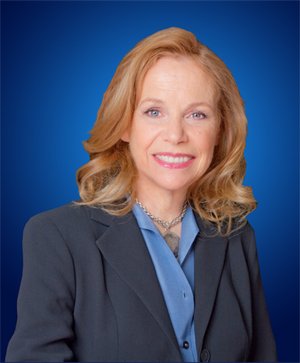
War Correspondent Mitzi Perdue writes from and about Ukraine. She is the Co-Founder of MentalHelp.global, an on-line program that will begin providing online mental health support in Ukraine, available on-line, free, 24/7.