What Foreign Correspondents Should Understand About Central Park in New York City
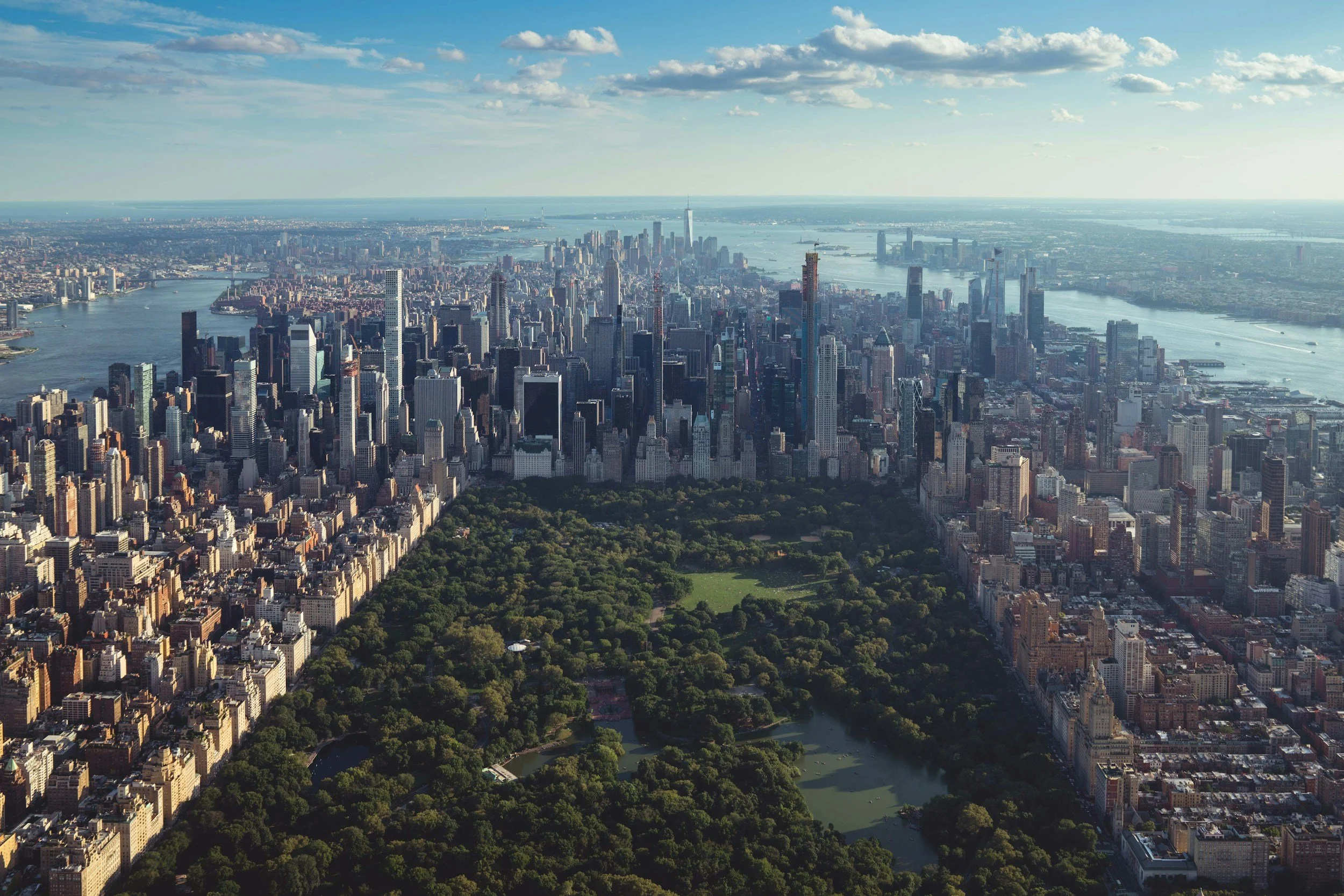
For foreign correspondents, Central Park is never just a park. It is one of the best places in New York to understand how the city imagines itself and how it often contradicts itself. Officially, it is an 843-acre public space that welcomes more than 42 million visitors a year. In practice, it is also a stage for tourism, class, leisure, protest, philanthropy, memory, architecture, race, climate politics, and the mythology of New York itself. That is why Central Park deserves to be covered not only as a landmark, but as an institution.
International reporters often treat Central Park as scenery. They mention it in profiles, travel pieces, weather stories, lifestyle dispatches, or color paragraphs about Manhattan. But the park is far more useful than that. It functions as a compressed version of New York’s public life. It is where the city performs openness, where wealth sits beside public access, where residents and visitors use the same landscape differently, and where ideas about democracy and belonging become visible in ordinary ways. If you want to understand how New York wants to be seen, spend time in Central Park. If you want to understand New York more critically, do the same.
The park’s origin already tells a deeper story. Central Park was created through a design competition in the late 1850s, and out of 33 entries the city chose the Greensward plan by Frederick Law Olmsted and Calvert Vaux. Their vision was naturalistic rather than geometric: pastoral lawns, wooded landscapes, water, long views, and carefully orchestrated transitions between open space and architecture. What appears “natural” in Central Park is, in fact, highly designed. That distinction matters to journalists because it reveals something central about American urban life: even nature in the city is often a constructed civic argument. Central Park was built to offer repose, but it was also built to express what a modern metropolis believed it should provide.
For correspondents, that design history offers an important lesson. Central Park is not valuable only because it is beautiful. It is valuable because it was conceived as public infrastructure with moral and social ambition. The Conservancy still describes it as a democratic space and a green respite for the city and all its people. That language is not decorative. It reflects a long American belief that public parks are not luxuries but civic necessities. In New York, that idea still matters. The park is used for solitude, exercise, school outings, dating, birding, grief, performance, portrait photography, protest-adjacent gathering, and simple relief from urban pressure. Journalists who treat the park merely as a tourist attraction miss its role as a piece of civic design.
But Central Park is also inseparable from displacement, and that is one of the most important facts international correspondents should understand. Before the park was built, part of the land was home to Seneca Village, a predominantly Black community that existed from 1825 until the city acquired the land in 1857. By 1855, Seneca Village had around 225 residents, three churches, a school, and high rates of property ownership. Some male landowners there met voting requirements at a time when property ownership had enormous civic meaning. The community was then displaced through eminent domain so the city could build the park. That history complicates any easy celebration of Central Park as a democratic space. It is democratic in aspiration, but its creation also involved the forced removal of a real community.
This matters editorially because Central Park allows correspondents to write about American public space without romanticism. A park may symbolize openness while also resting on erasure. Seneca Village should therefore not be treated as a side note. It is central to understanding how public works in the United States have often been built through unequal power. When international reporters write about Central Park today, they have an opportunity to connect present-day New York to larger American themes: race, land, historical memory, and the selective way cities commemorate themselves. The fact that Seneca Village was forgotten for generations before being rediscovered is itself revealing. It says something about which stories cities preserve and which they bury.
The physical details of the park also deserve attention, especially for correspondents trying to move beyond cliché. Bethesda Terrace, Bow Bridge, Belvedere Castle, the Great Lawn, the Reservoir, Harlem Meer, and the wooded north all represent different moods, publics, and reporting possibilities. Olmsted and Vaux’s plan combined pastoral expanses with architecture, including bridges, arches, and rustic structures, so that movement through the park would feel varied rather than monotonous. For journalists, that means there is no single Central Park. The southern end often feels like a global stage of tourism and spectacle. The middle can feel performative, cinematic, and socially mixed. The northern end can feel quieter, more local, and more revealing of neighborhood relationships. A strong feature on Central Park notices these internal geographies.
For foreign correspondents, another crucial point is that Central Park is an economic story. The Central Park Conservancy says the park generates more than $1 billion in annual economic activity and supports 5,000 local jobs. It is also maintained through an unusual stewardship model: while the land is public, the city has entrusted the Conservancy with complete day-to-day care, and the organization says it raises and invests nearly $100 million a year into the park, primarily through private donations. That structure is worth understanding because it reflects a broader New York reality. Public space in the city is often sustained through hybrid arrangements involving government, philanthropy, private money, and nonprofit management. The park, in other words, is public, but not in a simple state-run sense.
That public-private dimension is especially important for international audiences. In some countries, a major park of this scale would be managed overwhelmingly by the state. In New York, the story is more layered. The Conservancy’s model reflects both civic generosity and structural inequality: it is evidence of deep philanthropy, but also of the extent to which prestige and wealth can shape which public spaces are best maintained. The park’s success is genuine, yet it also raises questions that matter to urban reporters everywhere. What happens when iconic spaces attract donors more easily than less glamorous neighborhoods? What does it mean when the “best” public space depends heavily on private giving? Central Park is therefore not just a green space story; it is a governance story.
The park is also a transportation and access story. The Conservancy notes that private cars were banned from the park in 2018, creating an opportunity to rethink how the drives and circulation routes work for walkers, runners, cyclists, and other users. That change may sound administrative, but for correspondents it points to something larger: Central Park is part of the city’s ongoing debate over who public space is for. In New York, battles over streets, curb space, bikes, pedestrians, and cars are never just technical. They are arguments about power, quality of life, speed, safety, and urban values. Central Park offers one of the clearest examples of how a city can reclaim space from vehicles and redefine it around human use.
Climate and ecology form another overlooked reporting angle. The Conservancy now frames the park not only as historic landscape but as a living system under environmental pressure. Its sustainability framework highlights climate risk assessment, biodiversity work, waste reduction, an increasingly electric vehicle fleet, and the Central Park Climate Lab developed with academic partners. More than 18,000 trees are stewarded in the park. These are not trivial maintenance details. They show that Central Park is also a climate-adaptation story. For foreign correspondents covering cities, heat, resilience, and environmental stress, the park can be used as a case study in how urban green space functions as both symbol and infrastructure.
What makes Central Park particularly valuable for international reporters is that it helps explain New York through contrasts. It is formal and informal, famous and local, curated and improvised. Wealth surrounds it, yet admission is free. It is highly managed, yet it feels open. It is one of the most photographed landscapes in the world, yet many of its most revealing moments are quiet and unspectacular: a child learning to ride a bicycle, a school group studying trees, elderly New Yorkers walking familiar loops, runners circling the Reservoir before work, migrants taking wedding pictures, birders scanning branches during spring migration, musicians playing under an arch for strangers who will never meet again. These scenes matter because they show how public life is actually shared.
Correspondents should also remember that Central Park is a language of New York television, film, and global imagination. It appears constantly in visual storytelling because it solves a narrative problem: it instantly signifies New York while softening the city’s density. Yet that very familiarity can make coverage lazy. Too many stories use Central Park as shorthand for urban romance or Manhattan prestige. Better journalism asks what the park reveals in a given moment. In a heat wave, it reveals inequality in who has access to relief. In a story about tourism, it reveals how New York sells itself. In a story about mourning or shock, it becomes civic refuge. In a story about race and memory, Seneca Village reshapes the frame entirely. The setting is famous, but the reporting angle should still be earned.
There is also a practical lesson here for foreign press. Central Park is one of the best places in the city to observe how New Yorkers coexist without intimacy. People share it intensely, but often without speaking. That is part of the city’s character. The park is collective without always being communal. It lets millions occupy the same space while pursuing radically different purposes. For an international correspondent, that is useful not only as description but as method. Good reporting in New York often begins by watching how different populations use the same terrain differently. Central Park makes that visible in a single afternoon. Tourists cluster where they expect icons. Locals often move with purpose. Families choose open lawns. Performers choose traffic. Birders choose edges and early hours. Luxury towers overlook the whole scene without defining all of it.
Ultimately, Central Park matters because it condenses so many American questions into one landscape. It is about who a city is built for, who was removed to build it, who funds public life, what democracy looks like in physical form, how nature is staged inside capitalism, and how memory survives in spaces designed for pleasure. For foreign correspondents, it is therefore not simply a feature subject. It is a reporting tool.
To cover Central Park well is to resist treating it as postcard material. It is more useful than that. It is a place where New York’s ideals become visible and where its evasions do too. It is a park, yes, but also a political text written in paths, bridges, lawns, donations, erasures, and routines. For international reporters trying to explain New York to the world, few places offer more in a single frame.