The Metropolitan Museum of Art: Power, History, and the Global Story of Culture
The Metropolitan Museum of Art, commonly known as the Met, is not merely one of the largest museums in the world; it is one of the most symbolic. For foreign correspondents based in the United States, the Met offers more than an art collection. It is a living archive of how America understands history, power, and its place within global civilization.
Founded in 1870, the Met emerged at a moment when the United States was still culturally insecure on the world stage. European capitals such as Paris, London, and Rome had long-established museums rooted in imperial history and royal patronage. The Met, by contrast, was a project of aspiration—an attempt by a young nation to construct cultural authority through accumulation, education, and global reach. From the beginning, the museum positioned itself not as a national collection, but as a universal one.
This ambition is reflected in the Met’s encyclopedic scope. Its galleries span more than five thousand years of human history, from ancient Mesopotamia and Egypt to Renaissance Europe, imperial China, Islamic civilizations, Africa, the Americas, and contemporary art. For international visitors, the experience can feel both awe-inspiring and overwhelming. For foreign correspondents, it raises a deeper question: who gets to tell the world’s story, and from what vantage point?
Unlike museums rooted in colonial capitals, the Met presents itself as a neutral custodian of global culture. Yet neutrality itself is a powerful position. Many of the museum’s most celebrated objects arrived in New York during periods of colonial expansion, uneven diplomacy, or weak cultural protection laws abroad. In recent decades, this reality has placed the Met at the center of international debates over provenance, restitution, and cultural ownership.
The museum has responded by returning several high-profile artifacts to countries including Italy, Cambodia, and Nigeria, acknowledging that some acquisitions no longer align with modern ethical standards. These decisions are not merely administrative; they reflect a shift in how global institutions negotiate legitimacy in an era of postcolonial reckoning. For foreign correspondents, these moments are as politically significant as they are cultural.
At the same time, the Met remains a site of cultural diplomacy. Foreign leaders, ambassadors, and international delegations routinely visit the museum as part of official programs. Major exhibitions are often the result of cross-border collaborations, involving loans, shared research, and long-term institutional partnerships. In this sense, the Met operates as a soft-power instrument, shaping perceptions of the United States as a steward of world culture rather than a cultural consumer.
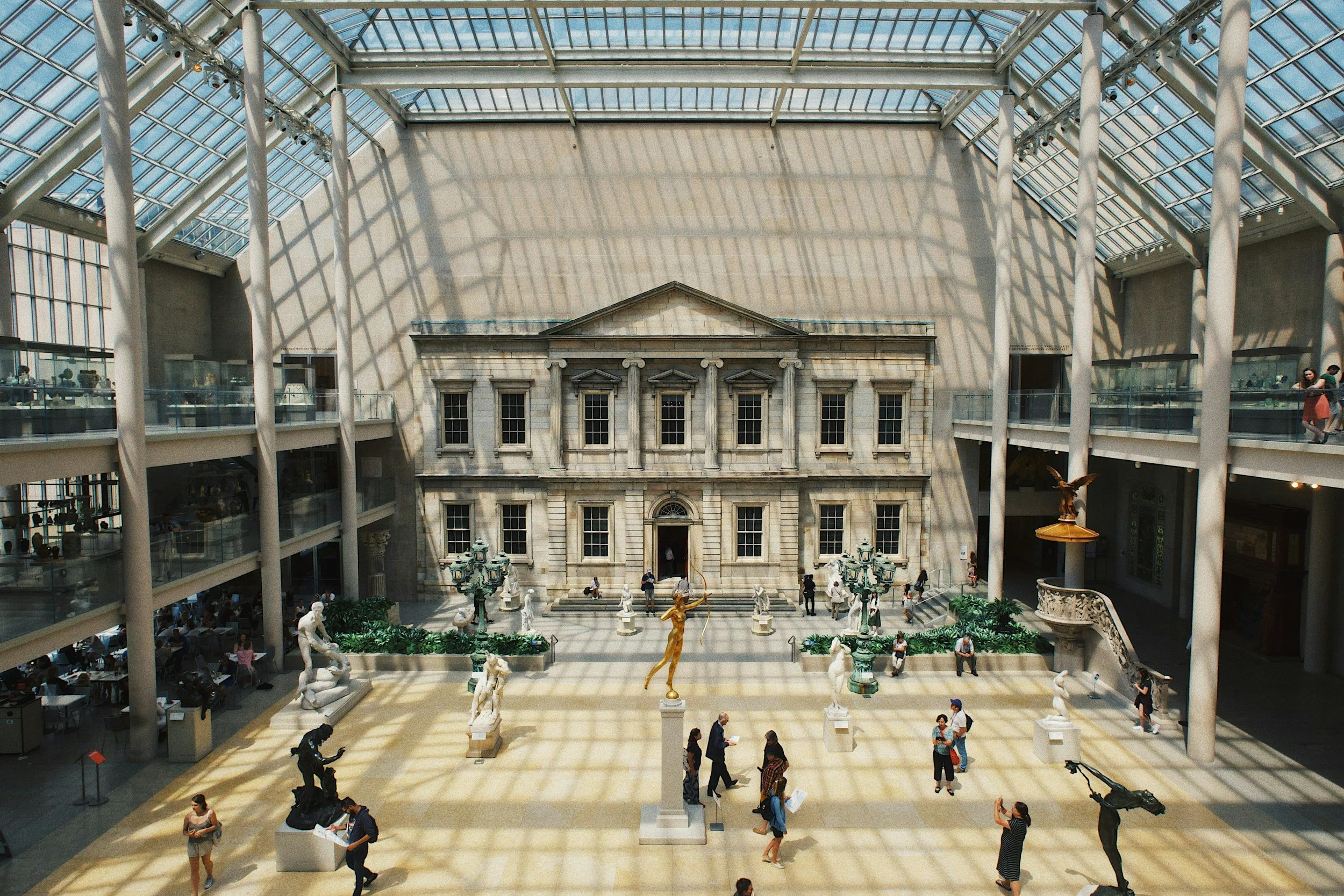
The Met’s physical presence reinforces this role. Situated along Central Park’s eastern edge, the building itself evokes European grandeur, signaling permanence and authority. Yet unlike many elite institutions, the Met has consciously framed itself as a public space. Its pay-what-you-wish policy for New York residents reflects a civic philosophy that culture should be accessible, even as global tourists contribute significantly to its revenue.
For international journalists, this dual identity—elite yet public, global yet American—is central to understanding the Met’s influence. It embodies the tension between democratization and hierarchy that characterizes much of American cultural life.
The museum also plays a crucial educational role. Scholars, students, and researchers from around the world rely on the Met’s archives, conservation labs, and publications. The institution does not merely display objects; it produces knowledge. Catalogues, academic symposia, and digital collections shape how art history is taught and understood globally.
Critics argue that this knowledge production reinforces Western frameworks, even when presenting non-Western cultures. The arrangement of galleries, the language of labels, and the selection of canonical works all reflect curatorial choices that influence interpretation. For foreign correspondents, these choices offer insight into how cultural authority is constructed—not only through what is shown, but through how it is explained.
Ultimately, the Metropolitan Museum of Art is a mirror of American ambition. It reflects a nation eager to position itself as both heir and guardian of global civilization, while still confronting the ethical consequences of that role. For foreign correspondents, the Met is not just a museum visit; it is a case study in how culture, power, and identity intersect in the United States.