
Why the White House Is Not Being Demolished and What Redesign Discussions Really Mean
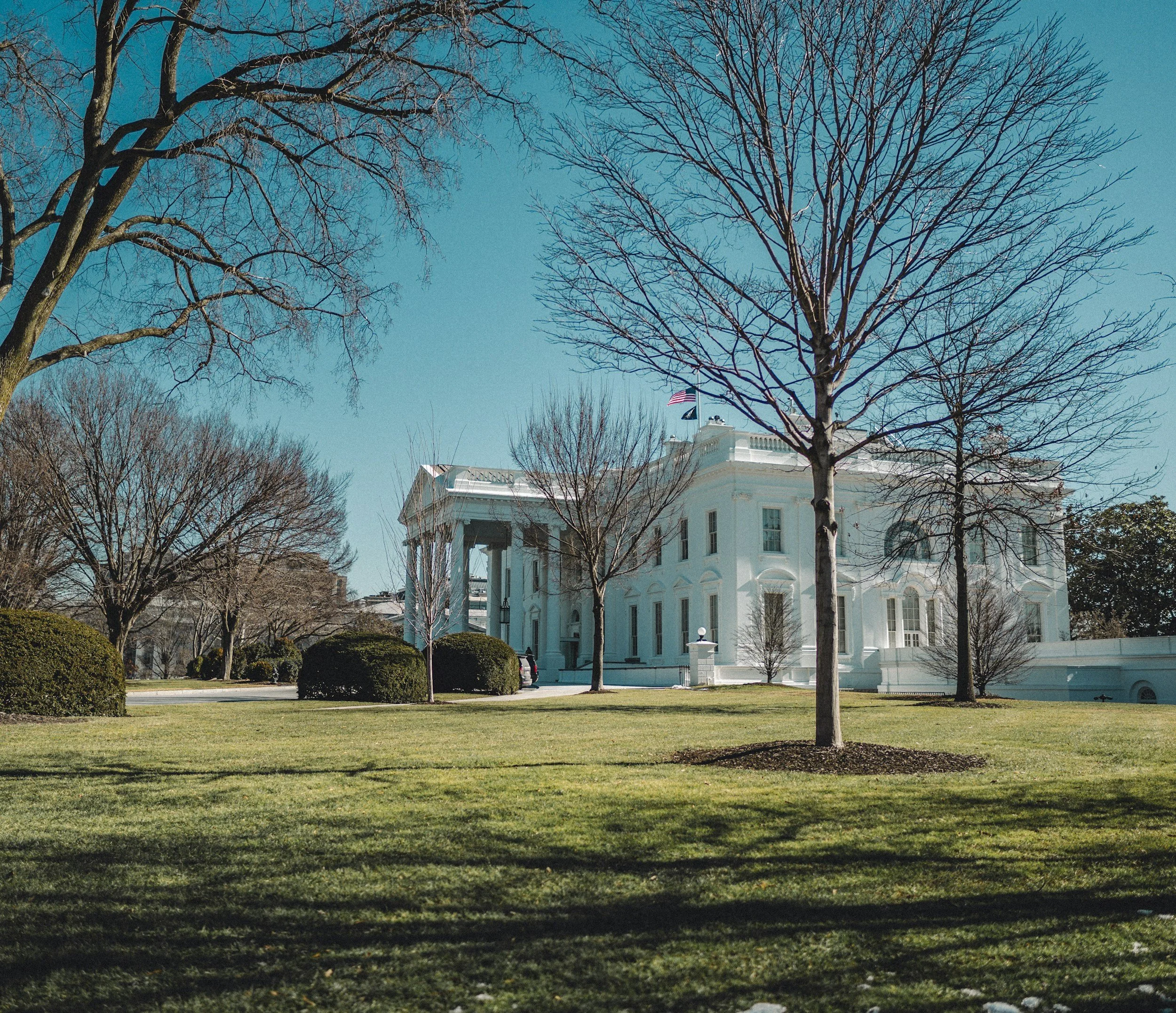
An in-depth guide for international correspondents explaining rumors about White House demolition, how renovation decisions are made, and what modernization actually looks like.
Claims that the White House is about to be demolished or radically redesigned circulate periodically in international media and online platforms. These claims tend to resurface during moments of political transition, heightened security concerns, or major debates about government infrastructure. For international correspondents, such narratives present a serious reporting challenge. They combine symbolism, secrecy, and speculation, making them especially vulnerable to distortion when removed from their legal and historical context.
The first and most important fact is simple: the White House is not being demolished. There is no proposal, plan, or legal mechanism that would allow for the destruction of the building officially known as the Executive Residence. Any report suggesting otherwise misunderstands how the United States treats historic structures, particularly those with constitutional and symbolic importance.
The White House is one of the most protected buildings in the country. As a National Historic Landmark, it is subject to strict preservation laws that limit what can be altered, how changes are approved, and who has authority over them. These protections are reinforced by political reality. The White House is not just a residence or an office building; it is a national symbol closely associated with democratic continuity and constitutional order. Any suggestion of demolition would face immediate legal, political, and public opposition.
Much of the confusion arises from misunderstandings about renovation versus demolition. In the United States, particularly with historic buildings, it is common to preserve external structures while modernizing internal systems. Electrical wiring, plumbing, heating, ventilation, communications infrastructure, and security technology all require periodic upgrades. These changes are essential for a functioning modern presidency but do not alter the building’s identity or appearance.
The most dramatic renovation in the White House’s history occurred during the Truman administration. By the late 1940s, the building’s interior had become structurally unsafe due to age, prior modifications, and lack of modern engineering standards. President Harry Truman authorized a complete internal reconstruction. The interior was dismantled and rebuilt using a steel framework, while the exterior walls were carefully preserved. This episode is sometimes mischaracterized as a demolition, but it was, in fact, a preservation effort that saved the building.
For foreign correspondents, this distinction is critical. The White House can undergo extensive internal change while remaining, outwardly and symbolically, the same building. Reporting that fails to explain this history risks misleading audiences into thinking that modernization implies replacement.
Security considerations also play a major role in discussions about redesign. The White House must adapt continuously to evolving threats, advances in surveillance and communications technology, and changes in presidential operations. Since the attacks of September 11, 2001, security requirements have increased significantly. Many of the most substantial modifications to the White House complex occur underground or within restricted areas and are not publicly detailed. This necessary secrecy often fuels speculation.
Another common source of confusion is the term “White House” itself. In everyday language, it refers not only to the Executive Residence but also to the broader White House complex, which includes the West Wing, East Wing, Eisenhower Executive Office Building, and multiple security and support facilities. These auxiliary structures have undergone numerous renovations, expansions, and reconfigurations over the decades. Reports about construction activity in these areas are sometimes misinterpreted as changes to the White House itself.
International correspondents should also be cautious when interpreting political language. American officials often speak about “modernizing government,” “reimagining institutions,” or “upgrading federal infrastructure.” These phrases are frequently metaphorical, referring to administrative processes, technology, or policy frameworks rather than physical buildings. When such language is taken literally, it can give rise to exaggerated or false claims about architectural transformation.
The White House is also a frequent subject of conspiracy theories, particularly online. Claims about secret demolitions, hidden replacement structures, or imminent rebuilding projects often circulate alongside narratives about underground cities or concealed power transfers. While the White House does have underground facilities, including secure bunkers built during the Cold War and expanded over time, these are well-documented aspects of modern state security, not evidence of extraordinary or unlawful activity.
Responsible reporting requires foreign correspondents to separate verifiable facts from speculative content designed to attract attention. This is particularly important given the White House’s global visibility. Stories involving the building tend to travel rapidly across borders and languages, making errors difficult to correct once they gain traction.
There is, however, a legitimate and ongoing debate about preservation versus functionality. Maintaining a 19th-century structure as a 21st-century command center is costly and complex. Congress regularly debates funding for maintenance, structural reinforcement, and modernization projects. These debates are public, procedural, and subject to oversight. They do not involve questions of demolition but rather how to sustain the building for future generations.
For international audiences, it is also helpful to contextualize the White House within global norms. Many countries preserve historic seats of power while modernizing their interiors. Buckingham Palace, the Élysée Palace, and the Kremlin have all undergone extensive renovations without losing their historic character. The White House follows a similar model, balancing continuity with operational necessity.
Another factor that limits radical redesign is public ownership. While the president resides in the White House, it is not personal property. It is held in trust for the American people. Any major alteration becomes a matter of national debate, media scrutiny, and political accountability. This public relationship to the building reinforces its stability and limits abrupt change.
For foreign correspondents, precision is essential when reporting on this topic. Words such as “demolition,” “rebuilding,” or “replacement” carry strong connotations and should be used only when legally and factually accurate. More often, the correct terms are “renovation,” “restoration,” “modernization,” or “security upgrade.”
The White House also functions as a visual symbol in global politics. Images of the building are used to represent the U.S. presidency, executive authority, and American governance. Even minor physical changes can be interpreted internationally as political signals. This symbolic weight makes accurate reporting even more important.
The real story, therefore, is not about destruction or radical redesign. It is about controlled adaptation. The White House evolves slowly, carefully, and within strict legal and cultural boundaries. Its continuity reflects broader features of the American system, where change is often incremental, procedural, and constrained by tradition and law.
Understanding this helps international correspondents avoid sensationalism and provide context-driven reporting. It also offers insight into how power is exercised and symbolized in the United States. While policies may shift dramatically from one administration to the next, the physical seat of executive power remains deliberately stable.
In an era of rapid political change, digital misinformation, and viral speculation, the White House stands as a case study in institutional continuity. Explaining that continuity clearly and accurately is a valuable service to international audiences.
For foreign correspondents, the lesson is broader than architecture. It is about how to report on symbols responsibly, how to question dramatic claims, and how to ground coverage in legal and historical reality. In doing so, journalists help ensure that global discussions about American power are informed by facts rather than fueled by myths.