Why Greenland Matters More Than Ever in Global Politics
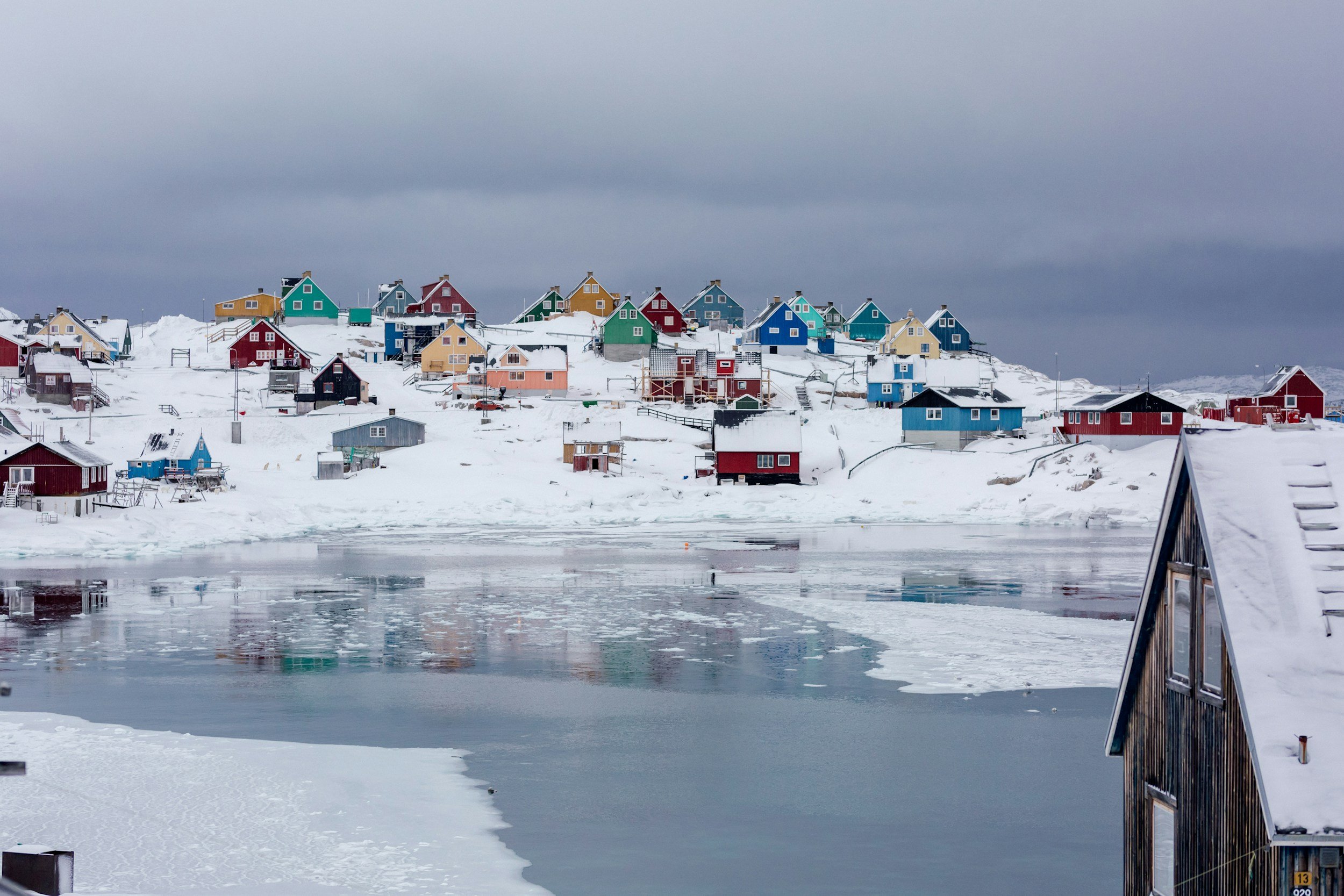
For many years, Greenland was treated in international media as a remote, frozen territory with limited relevance beyond climate science. That perception has changed dramatically. Today, Greenland sits at the center of some of the most important geopolitical, environmental, and strategic debates of the 21st century. For international correspondents, understanding Greenland is no longer optional. It is essential for accurately covering global power shifts, Arctic security, and climate-driven transformation.
Greenland is the world’s largest island and an autonomous territory within the Kingdom of Denmark. While Denmark retains responsibility for foreign affairs and defense, Greenland governs most domestic matters. This hybrid political arrangement is often misunderstood by international audiences, leading to inaccurate reporting about sovereignty, independence, and external influence.
Geographically, Greenland occupies a uniquely strategic position between North America and Europe. It lies along key Arctic and North Atlantic routes that are becoming increasingly accessible as ice melts. This location explains why Greenland has long held military significance, particularly for the United States, which has maintained a military presence on the island since World War II. The continued operation of the Thule Space Base underscores Greenland’s role in missile defense, space surveillance, and early-warning systems.
Climate change has accelerated Greenland’s global relevance. Rising temperatures are causing rapid ice melt, contributing significantly to global sea-level rise. For international correspondents, Greenland is not just a symbol of climate change but a frontline laboratory where environmental transformation is measurable, visible, and consequential. Reporting from Greenland offers tangible evidence of abstract climate models, making it a powerful narrative anchor for global audiences.
The melting ice also has economic implications. Greenland is believed to hold substantial reserves of rare earth minerals, uranium, and other critical resources essential for renewable energy technologies and advanced manufacturing. As global demand for these materials increases, Greenland has become an arena for competition among major powers seeking secure supply chains.
This competition is often framed as a rivalry between the United States, China, and Europe. Chinese investment interest in Greenlandic infrastructure and mining projects has drawn scrutiny from Western governments, raising concerns about strategic dependency and influence. For foreign correspondents, it is important to separate actual economic engagement from speculative fears, while acknowledging why small-scale investments can carry outsized geopolitical weight in the Arctic context.
Greenland’s internal politics add another layer of complexity. Many Greenlanders support greater autonomy or eventual independence from Denmark, but opinions vary on timing and feasibility. Economic self-sufficiency remains a central concern, particularly given the island’s reliance on Danish subsidies. Reporting on Greenland must avoid portraying independence as inevitable or uniform; it is a nuanced and evolving debate shaped by economic realities and cultural identity.
The voices of Indigenous Inuit communities are central to any responsible coverage of Greenland. Inuit populations are disproportionately affected by climate change, environmental degradation, and resource extraction decisions. International correspondents should prioritize local perspectives rather than treating Greenland as an empty strategic space contested by external powers.
Another challenge for journalists is avoiding sensationalism. Headlines about Greenland being “for sale” or becoming the “next great power battleground” often oversimplify reality. While strategic interest is real, Greenland’s future will be determined as much by local governance decisions as by global rivalries. Accurate reporting requires balancing geopolitical analysis with grounded, on-the-ground context.
Greenland also plays a growing role in international climate diplomacy. Data gathered from its ice sheets informs global climate models, while its experience shapes discussions on adaptation, mitigation, and climate justice. Foreign correspondents covering climate summits or Arctic cooperation should understand Greenland’s scientific and symbolic importance within these negotiations.
Access and logistics pose practical challenges for journalists. Greenland’s vast size, sparse population, and limited infrastructure make reporting expensive and time-consuming. These constraints have contributed to undercoverage and reliance on secondary sources. When possible, firsthand reporting is invaluable, but correspondents must plan carefully and ethically engage with local communities.
There is also a security dimension that foreign correspondents should approach with care. Arctic militarization is increasing, but it is often overstated in media narratives. While military presence and strategic planning are expanding, the Arctic remains governed by cooperation frameworks that prioritize stability. Alarmist reporting risks misrepresenting both intentions and realities.
For international audiences, Greenland is often perceived through the lens of larger powers. One of the most important contributions foreign correspondents can make is shifting that perspective. Greenland is not merely an object of global interest; it is a society navigating rapid change, balancing tradition and modernization, and asserting its voice on the world stage.
Ultimately, Greenland matters because it sits at the intersection of climate change, geopolitics, and human resilience. It reveals how environmental transformation reshapes strategic calculations and how small populations can become central to global debates.
For international correspondents, covering Greenland well requires moving beyond clichés and power politics. It demands attention to law, science, local governance, and lived experience. In doing so, journalists can help global audiences understand not just why Greenland matters, but what its future may tell us about the world as a whole.