
The Soldiers and the Startups: Who Shares in Ukraine’s Victory?
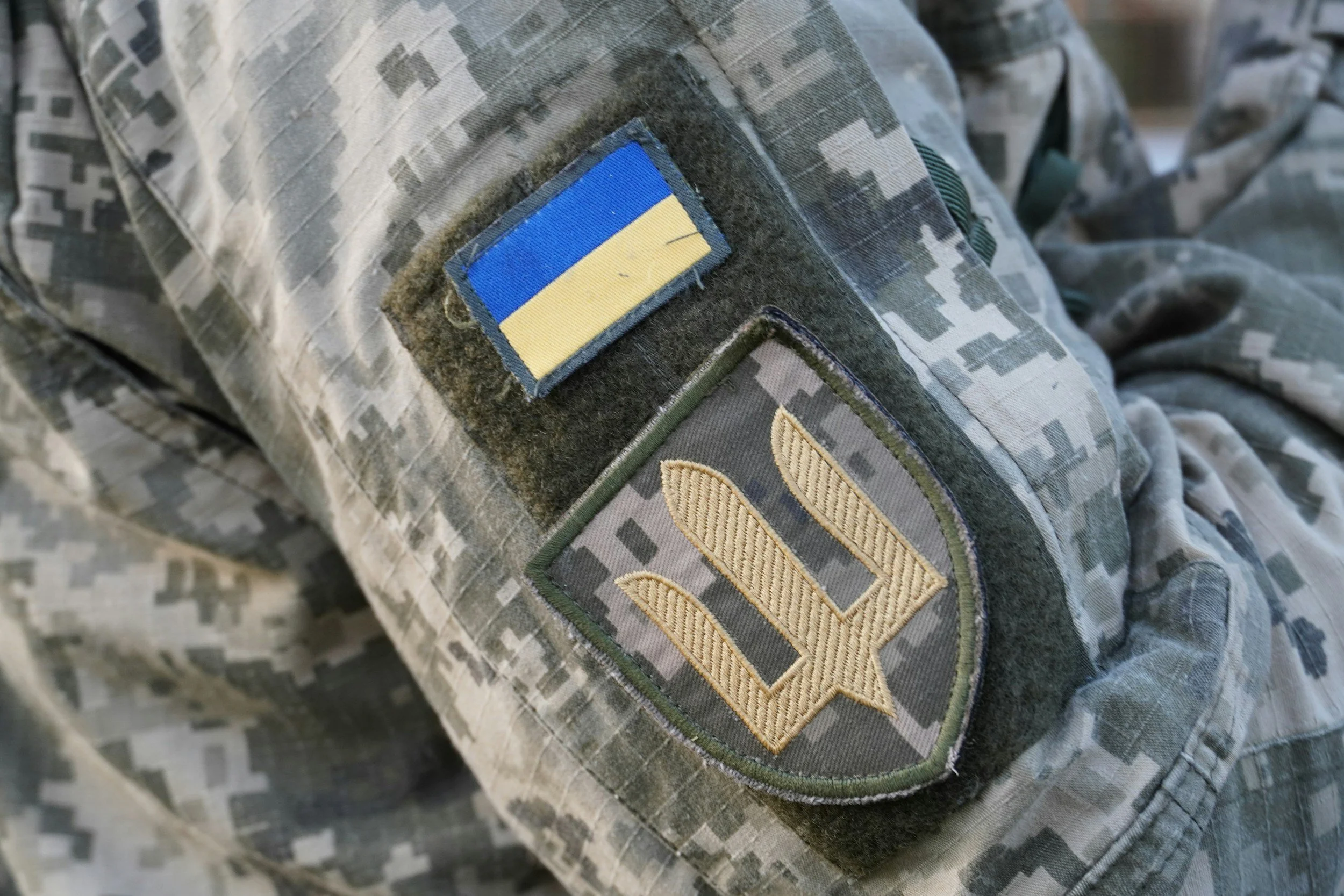
Ukraine’s future will be shaped by the tension between two groups emerging from the same wartime crucible. One is on track to gain extraordinary wealth and influence. The other will return to bombed factories, destroyed housing, and many will bear serious physical and psychological scars.
In the first group are the defense industry entrepreneurs, particularly the drone manufacturers. Dmytro Kavun, President of the nonprofit Dignitas Ukraine (https://dignitas.fund), supports and collaborates with this sector, with a two-decade career in cybersecurity and close involvement in Ukraine’s defense-tech ecosystem. According to him, several Ukrainian companies could soon reach billion-dollar valuations. He’s seen that investors, particularly in the United States, are eager to buy Ukrainian technology.
Through his work supporting this sector, he consistently focuses on the second group, the soldiers who fought for their country’s survival. He worries that if they can’t participate in their country’s economic success, it could weaken the bonds that keep a society together.
Both groups are essential to any Ukrainian wartime success. In the case of the entrepreneurs, Kavun states, “We knew we couldn’t outnumber the Russians. We’d have to out-innovate them.” That mindset produced one of the most consequential developments of the war: the rapid rise of Ukraine’s defense-tech sector.
Engineers, software developers, and startup founders -- many with no prior military background -- formed an ecosystem capable of producing drones, electronic warfare tools, and battlefield software, and they did it at remarkable speed. According to Kavun, “These entrepreneurs coordinate with soldiers on the battlefield on a daily, if not hourly basis. New technologies are often deployed in weeks rather than the years it often takes in the West.”
Some of these companies are scaling rapidly, attracting international investors. Kavun, who follows these developments closely, has seen that quite a few of the Ukrainian drone companies are on track to become unicorns – privately held startups valued at over $1 billion – and, when they’re sold, would make their founders and early investors extraordinarily wealthy.
At the same time, he sees a danger that could be the opposite of what happens with the entrepreneurs. There may be millions of veterans who return to find that those who built the tools of war prospered, while those who fought it did not.
Kavun returns to this point repeatedly. “They defended the country. They kept Ukraine free. We need to make sure they share in the benefits that come with the peace.”
The optimistic scenario is, the veterans’ firsthand experience, discipline, and networks could position them well in an economy shaped by security, resilience, and rapid adaptation. Society could be knit more tightly together. Ukraine could flourish.
But there is also a less comfortable possibility. The new successful entrepreneurs could follow the old pattern left over from Soviet times. There is a risk that wealth becomes concentrated and disconnected from broader societal needs.
At the same time, the challenge Ukraine faces is not only economic. Many veterans will return with physical injuries and psychological trauma, and will need long-term support to reintegrate into civilian life. Access to mental health care, education, reskilling, and meaningful employment will be critical in determining whether reintegration strengthens society – or strains it.
This is a pattern that for generations has worried policymakers when major wars end. The United States faced a version of this problem at the end of World War II. Approximately 16 million service members returned home within a short period.
Policy makers in the U.S. shared a widespread concern about unemployment, housing shortages, and the risk of social unrest – concerns shaped in part by what happened after World War I. Returning veterans back then encountered scarce jobs and inadequate support. One of their demonstrations against these conditions, the Bonus Army March on Washington, proved so disruptive the Hoover Administration dispersed it using tear gas, fixed bayonets, and cavalry charges.
To avoid a repeat of this, the U.S. Congress passed the Servicemen’s Readjustment Act of 1944, better known as the GI Bill. It offered returning soldiers access to higher education, vocational training, low-cost mortgages, and financial support. Over time, millions of veterans took advantage of these benefits. The program helped expand the American middle class and integrate veterans into a period of sustained economic growth.
The comparison has limits. The United States in the 1940s was not rebuilding cities damaged by war on its own territory. Ukraine’s circumstances - economically, geographically, and politically – are different. Still, the underlying lesson matters.
“One way to help bridge this divide,” Kavun suggests, “is to align economic incentives between those building companies and those who fought to defend the country – while also ensuring broader support for veterans’ reintegration into society.”
Among the ideas being discussed are mechanisms such as employee stock ownership plans (ESOPs), which some, including Kavun and US General David Petraeus, have highlighted as one possible approach in which all employees would own a certain portion of the company, 5% or possibly even 10%. The shares would be non-voting, but shareholders would participate in the economic success of their companies.
Other approaches – ranging from public policy measures such as education, housing, and veteran benefits, to workforce retraining and community-level rebuilding – will also play an important role in shaping an inclusive recovery.
Ukraine’s future may depend on whether those who fought for Ukraine’s survival are given a meaningful share in the prosperity that follows.
As Kavun puts it, “The question Ukraine faces now is not just how it wins the war, but who shares in the peace – and how broadly its economic rewards and social stability – are sustained.”

War Correspondent Mitzi Perdue writes from and about Ukraine. She is the Co-Founder of MentalHelp.global, an on-line program that will begin providing online mental health support in Ukraine, available on-line, free, 24/7.