Reporting Iran Now: What Foreign Correspondents Need to Know
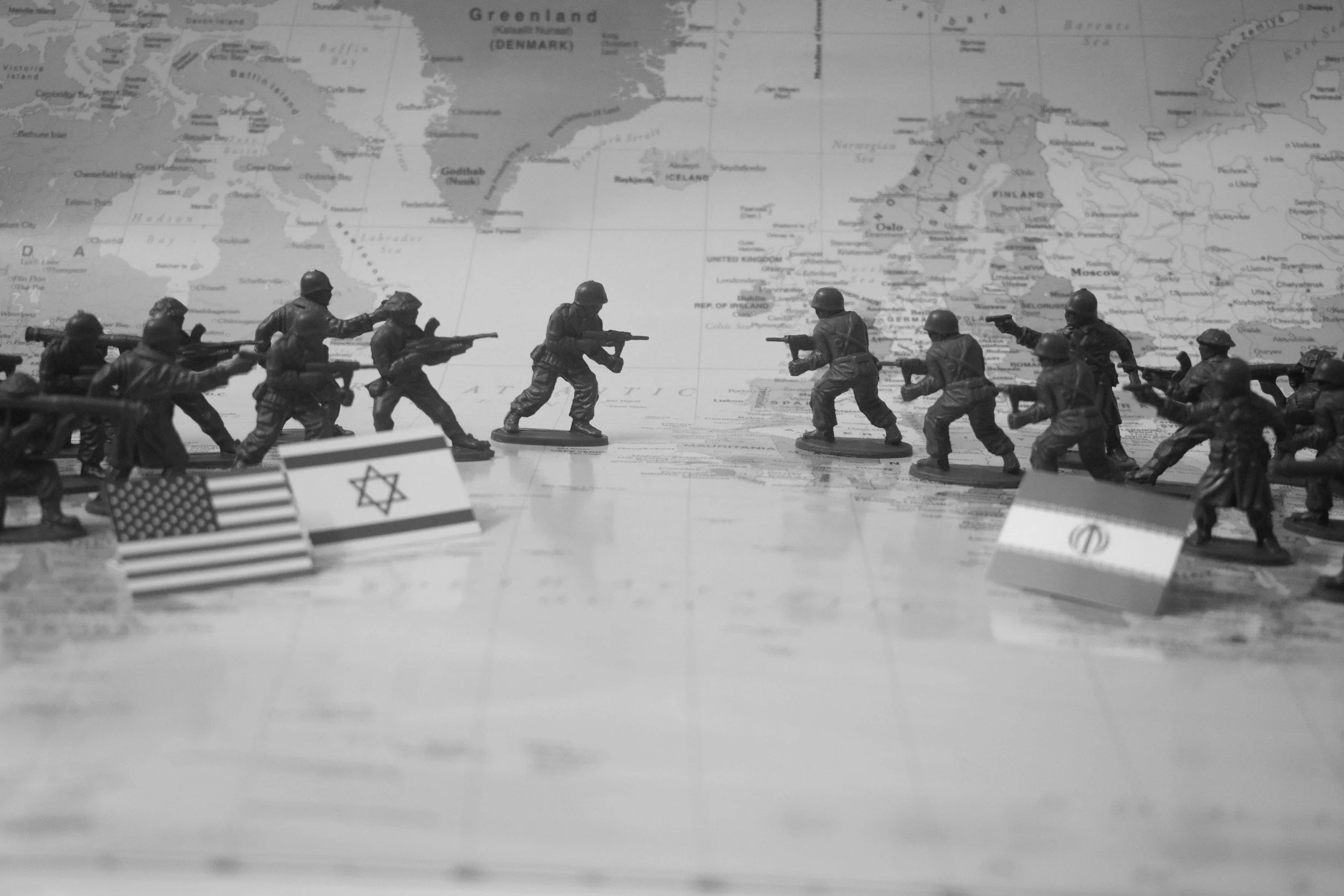
For foreign correspondents, Iran is never a routine assignment. But in April 2026, it is an especially difficult one. The country is emerging from weeks of armed escalation, severe communications disruption, and heightened security measures. As of April 8, a two-week ceasefire between the United States and Iran has been announced, with further talks expected, but the situation remains fluid and reporting conditions can change with little warning. For journalists, that means the story is not only what is happening in Iran, but also how difficult it has become to see, verify, and explain it accurately.
The first thing correspondents need to understand is that the reporting environment in Iran is restrictive even in relatively calm periods. Reporters Without Borders ranks Iran 176th out of 180 countries in its 2025 World Press Freedom Index and describes it as one of the world’s most repressive countries for journalists. RSF says the media landscape is heavily controlled, arbitrary arrests are common, and independent journalism is routinely pressured through harsh legal and security tools. That larger structure matters, because any short-term reporting trip takes place inside a long-established system of surveillance, censorship, and state control.
What has changed in recent weeks is the degree of operational difficulty. The Committee to Protect Journalists reported on April 2 that Iran was in the grip of the longest internet blackout in its history, with connectivity reduced to almost zero after the war broke out on February 28. CPJ says the blackout has cut journalists off from sources and audiences and sharply reduced their ability to verify even basic facts. Reporters interviewed by CPJ described relying on phone calls, text messages, face-to-face conversations, expensive satellite workarounds, and constantly shifting technical solutions just to communicate. Human Rights Watch has warned that such shutdowns also conceal abuses, restrict access to information, and hamper documentation by journalists and monitors.
For foreign correspondents, this has several immediate implications. First, you should assume that digital reporting will be intermittent at best and unusable at worst. File early when possible. Build an offline workflow. Download maps, background documents, contact lists, and language tools before arrival or before entering a blackout-prone area. Use redundant communications methods and do not depend on a single platform, app, or local SIM card. If your newsroom expects live hits, instant uploads, or rapid fact checks, those expectations may need to be reset before deployment, not after. In Iran right now, the classic disciplines of reporting — notebooks, local phone trees, fixed check-in times, and deliberate verification chains — matter again.
Verification is another core challenge. In blackout conditions, rumors move faster than confirmed reporting. CPJ quoted local journalists saying they sometimes cannot report reality because they cannot fully determine what is true. That is a warning not only about censorship but about information hygiene. Correspondents should avoid overstating what they know, distinguish clearly between eyewitness material, official statements, satellite or OSINT evidence, and secondhand claims, and explain verification limits transparently to audiences. The quality of your reporting may depend less on speed than on disciplined restraint.
Foreign correspondents also need to be realistic about legal and detention risk. The U.S. State Department’s current Iran travel advisory says U.S. nationals face serious risk of questioning, arrest, and wrongful detention, including journalists, and warns that even connections to the United States can be enough to trigger scrutiny. It also notes that dual nationals face particular complications because Iran does not recognize U.S. citizenship for dual U.S.-Iranian citizens and may limit outside consular access. While that guidance is specific to Americans, the broader lesson applies more widely: journalists should assume that nationality, employer, past reporting, public profile, and digital footprint can all affect vulnerability.
This means preparation cannot be generic. Before travel, correspondents should conduct a role-specific risk assessment. Are you a staff correspondent with institutional backing, or a freelancer? Are you a dual national, or do you have family ties that could expose relatives to pressure? Have you reported previously on sanctions, security, protests, or human rights? Do you carry public social media content that could be interpreted as hostile? In a tightly controlled environment, these questions are not abstract. They shape the real risk of interrogation, expulsion, device search, or detention.
Entry and accreditation are also essential. Iran requires a press or media visa for foreign journalists. According to an Iranian consular page, applicants must coordinate with a consulate press office, register through the e-visa system, and obtain permission from the Ministry of Foreign Affairs’ public and media diplomacy center. In practice, this means that foreign reporting is not something to improvise casually. Correspondents should expect formal paperwork, scrutiny of purpose, and limits on the kind of reporting that can be done openly. Newsrooms should budget more time for approvals and avoid assuming that standard tourist or business travel is a substitute for proper press authorization.
Even with the right documents, movement may be difficult. Reuters reported in March that the war in Iran caused major regional air travel disruption, with key transit hubs including Dubai, Abu Dhabi, and Doha shut or heavily restricted at points, stranding passengers and affecting schedules far beyond Iran itself. Today’s temporary ceasefire may reduce some pressure, but Reuters and AP both describe the truce as fragile and the broader environment as uncertain. For correspondents, the practical lesson is simple: do not build a reporting plan around best-case travel assumptions. Expect rerouting, delays, suspended flights, disrupted insurance coverage, and last-minute changes to departure options.
Source protection is especially important in the current Iranian context. Reuters reported on March 24 that Iranian police arrested 466 people accused of online activity deemed harmful to national security, while state media put the month’s total arrests at more than 1,000 for activities that included filming sensitive locations or sharing content online. Whether every accusation is credible is beside the point for journalists: the enforcement environment is active, broad, and digitally focused. That means reporters must think carefully before asking sources to message, forward images, geotag locations, or store sensitive communications on their personal devices. In many cases, the safest source is not the fastest source.
The same caution applies to visual reporting. Filming infrastructure, security sites, military damage, checkpoints, or even politically sensitive street scenes can create risk for both journalists and local contacts. Correspondents should know in advance what material will be gathered, where it will be stored, who can access it, and when it will be transmitted. Device minimization matters. Bring only the data you need. Use clean travel devices where possible. Separate contact lists from sensitive notes. Plan for confiscation as a possibility, not an outlier. In environments where filming itself can be criminalized or politicized, workflow is part of safety.
Another important point for foreign correspondents is that the reporting story in Iran is not limited to missiles, diplomacy, or state statements. Human Rights Watch and CPJ both emphasize that blackout conditions harm civilians by cutting them off from safety information, essential services, and family contact. That means some of the most valuable journalism may focus on ordinary coping mechanisms: how families communicate when platforms disappear, how businesses function when connectivity collapses, how hospitals, schools, and local communities adapt, and how people distinguish fact from rumor under pressure. This is where educational reporting can be especially strong: explaining systems, consequences, and daily realities without collapsing into slogan or spectacle.
There is also a professional mindset issue. Covering Iran right now requires patience and humility. Access may be partial. Official narratives may be rigid. Independent confirmation may come slowly. Local fixers and producers may themselves be under pressure. Some stories will simply be unreportable in the way foreign editors would prefer. That does not make the assignment impossible. It means good correspondents must narrow the aperture, define clearly what can be known, and avoid pretending that limited visibility is full visibility. In closed or semi-closed environments, honesty about blind spots is part of accuracy.
Finally, correspondents should remember that Iran is not only a dateline; it is a high-risk operating environment. Build contingency plans before arrival. Share itineraries conservatively. Establish newsroom check-in protocols. Identify legal support and emergency contacts. For U.S. citizens specifically, the State Department notes there is no U.S. embassy in Iran and that assistance is limited, with U.S. interests handled through Switzerland. Whatever your nationality, do not assume that emergency help will be immediate if conditions deteriorate. In a place where conflict, communications restrictions, and detention risk can overlap, self-preparation is not optional. It is part of the assignment.
For foreign correspondents, the central lesson is clear. The current situation in Iran is not only a major international story. It is also a test of reporting method. The best journalism there now will come from those who prepare carefully, verify slowly, protect sources rigorously, and understand that access itself is part of the story. In this environment, professionalism means more than getting in. It means knowing how to work when visibility is limited, pressure is high, and every fact must be earned.