
The Radar Is Red. What Can a Reporter Actually Say?
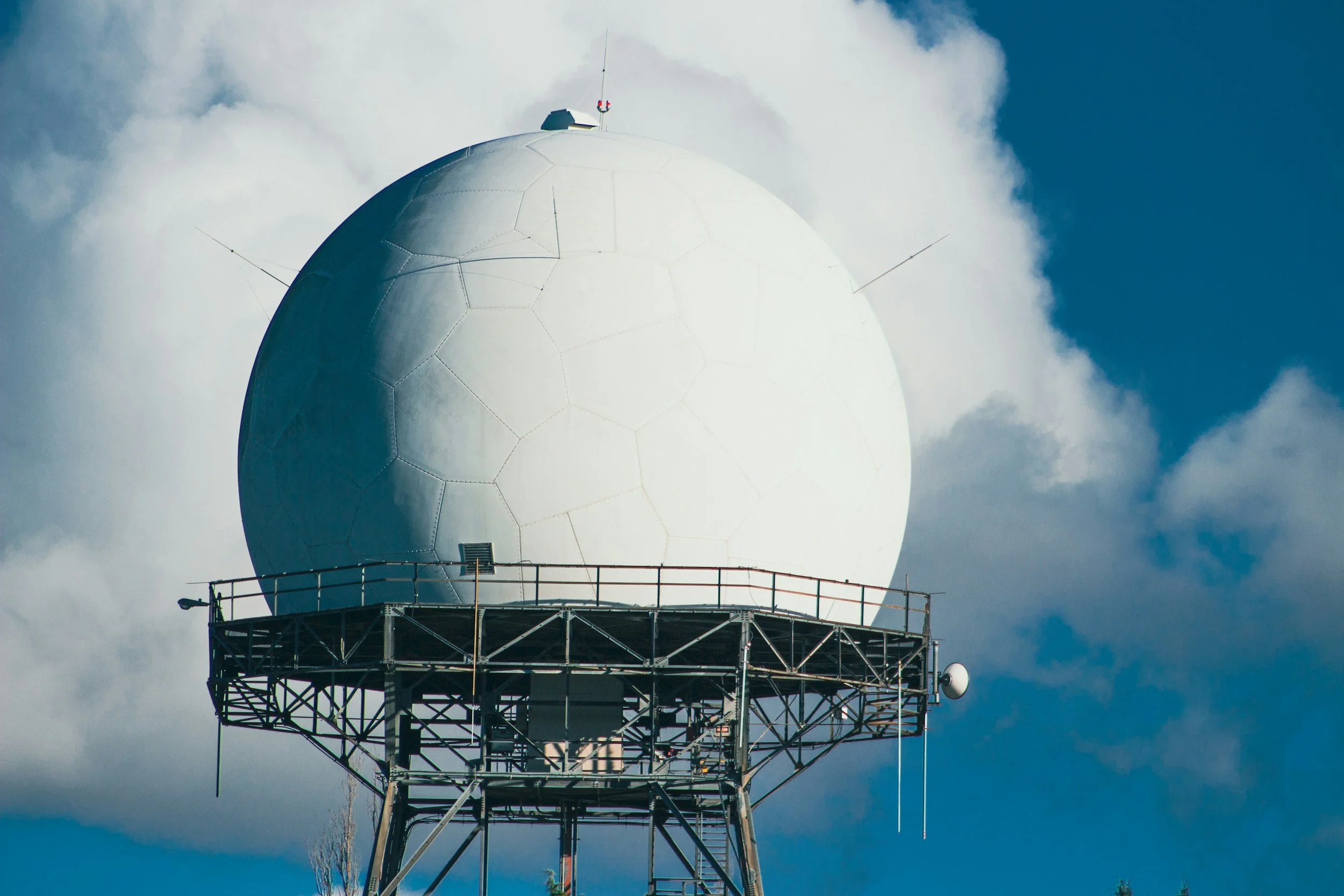
A hypothetical assignment begins with a producer circling a red patch on a weather-radar screenshot. A correspondent is asked to say that heavy rain is falling at a county fair beneath it. Before recording that line, the reporter needs to know what the image measures, when it was made and whether it supports a claim about conditions on the ground. Color is an invitation to investigate, not an observation that can be read aloud without its context.
Recover the product name and legend
Obtain the original radar page or file, including its title, legend and timestamp. The National Weather Service distinguishes reflectivity, which concerns the returned radar signal, from products that estimate precipitation accumulation. A bright color in one product can have a different meaning from the same color in another. Do not identify an amount of rain by remembering what red meant on yesterday's map.
Copy the product name into the reporting notes in full. If it is base reflectivity, composite reflectivity or an accumulation estimate, preserve that distinction when sending the image to the desk. A producer should not have to reconstruct the product from a tiny logo after the legend has been cropped away. Ask for an explanation when the original source does not clearly identify the display.
Put a time beside every frame
The time on a screenshot can be a data time, a forecast time or simply the time the screenshot was captured. Determine which one the display provides. For a radar animation, note the beginning and end of the loop and whether the final frame is recent enough for the claim you intend to make. An old loop can continue moving convincingly on a screen.
For an overseas newsroom, convert the timestamp carefully and preserve the original in the notes. If a reporter says it is raining now, a frame from earlier in the morning cannot independently support that present-tense statement. Describe an earlier radar observation as earlier, and seek a current observation from the location when current conditions matter to the story.
Recognize that the radar samples the atmosphere
The NWS explains that radar sends energy and measures the signal scattered back by targets. Those targets can include precipitation and other objects. Its radar tutorial also cautions that precipitation type inferred at the height sampled by the beam may differ from what reaches the surface. A colored area over a map pin is therefore not a camera looking straight down at the pavement.
That distinction gives the correspondent a useful question for a meteorologist: what can this particular product establish at this location? Ask whether distance, beam height, terrain or non-weather returns complicate interpretation. Avoid supplying your own diagnosis based on the shape of the patch. A specialist can distinguish a meaningful weather feature from an artifact more reliably than a reporter improvising from a screenshot.
Separate intensity from accumulated amount
A single reflectivity frame and an estimate accumulated over an hour describe different things. A brief intense signal should not automatically become a claim that a location received a large total. Equally, a less dramatic frame does not erase rain that fell earlier. The reporting question determines which product, and which interval, belongs in the story.
In the hypothetical fair example, the organizer may say that a tent floor became wet during the previous hour. Ask for the timing and location of that observation, then seek a relevant accumulation estimate or nearby gauge record if the article needs a rainfall amount. Do not assign an amount to the tent merely because a larger regional map contains a convenient number.
If a graphic shows an estimated amount, call it an estimate and identify its source. A measurement from a rain gauge has its own location and period. The two may be compared, but they should not be introduced as identical observations. Ask the data provider how a discrepancy should be interpreted before deciding that one of the sources must be wrong.
Use ground reporting to answer a narrower question
Contact someone who can observe the actual venue, and ask a concrete question. What was visible at the entrance at a specified time? Did rain reach the ground during the interview? Is there a dated photograph with a recognizable location? These questions can establish a limited observation without asking a witness to interpret regional weather.
Keep safety and access arrangements with the responsible local authorities and the reporting team. A reporter's reading of a radar gap should not become an assurance that conditions are safe. For the article itself, distinguish official instructions, an organizer's operational decision and a witness's account. Each has a different source and purpose, even when all three appear in one paragraph.
Consider what the audience needs to see. A wide photograph of the fairground can establish the setting, while a properly labeled radar panel explains the broader weather context. A tight photograph of a puddle cannot establish the total rainfall across a county. Match each illustration to the claim it can actually support rather than asking one dramatic image to do every job.
Review the caption before the broadcast
Give a published radar image its source, valid time, location and product description. Keep the legend readable and identify any annotation added by the newsroom. If an arrow was drawn by a producer, readers should not mistake it for an agency warning boundary. Check that translation has preserved the distinction between an observation and an estimate.
Finally, read the proposed narration while looking at the uncropped source. Replace claims that outrun it with precise descriptions, then add the separately verified ground account. The result may be less dramatic than announcing what the red patch supposedly proves, but it gives viewers abroad a coherent chain of evidence: what the instrument indicated, what people observed and what the reporter could responsibly establish at the venue.
