
The Laboratory Wrote “Not Detected.” The Headline Said Zero.
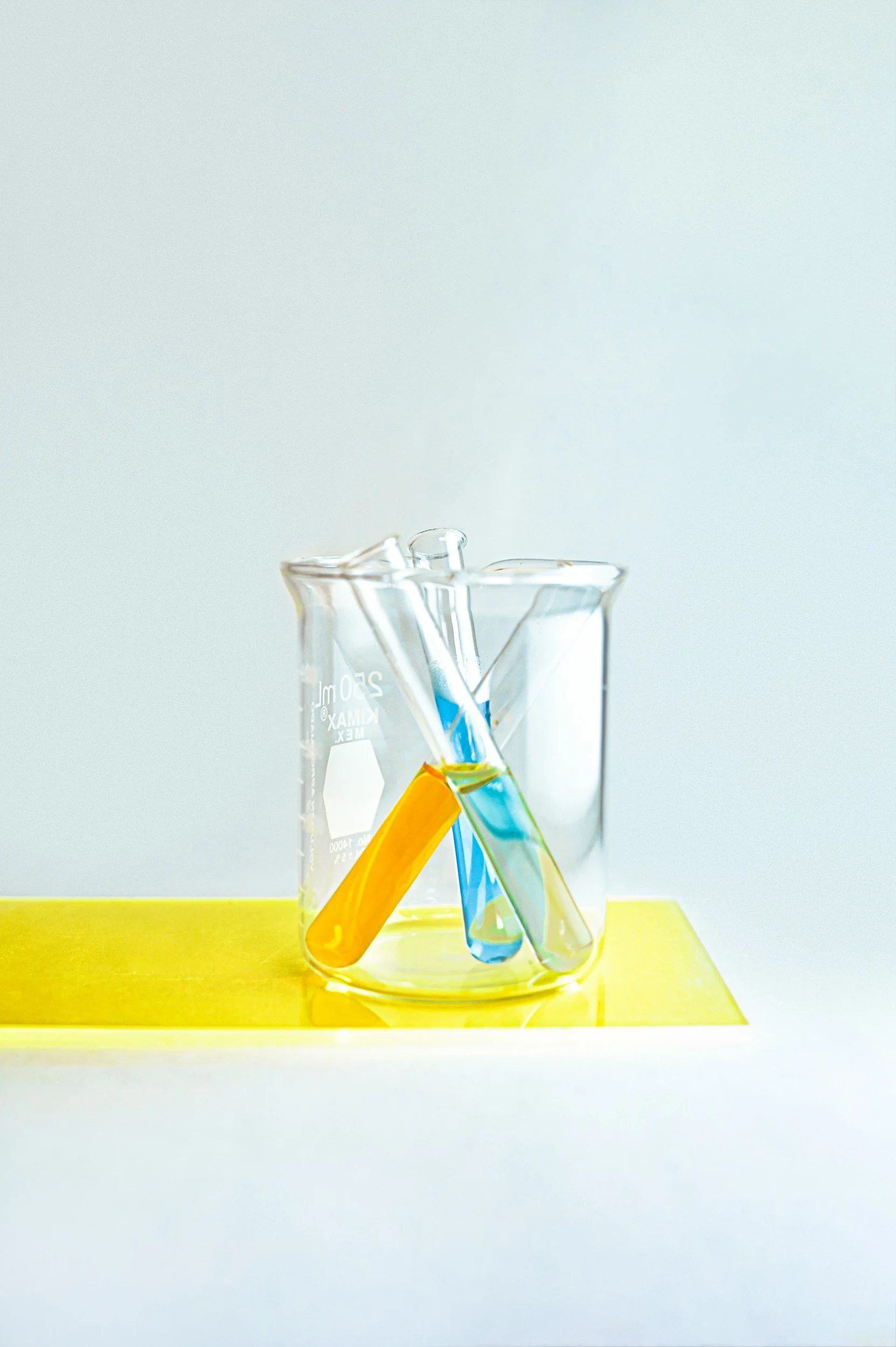
An environmental laboratory report can contain a small abbreviation with a large editorial consequence. ND usually signals a non-detect under the report's stated method and limit. In a hurried rewrite, it can become none, absent or zero. Those substitutions can make the published claim stronger than the test supports. A correspondent does not need to become an analytical chemist to avoid the mistake, but does need to preserve the result's conditions and ask the laboratory what its notation means.
Begin with the whole report
Request the complete report, including its cover letter, narrative, result tables and explanations of qualifiers. Alaska's environmental agency describes these as distinct parts of a laboratory record. A screenshot of one row may omit the note explaining a problem with that sample or the meaning of the symbol beside its result. Keep the page numbers when sharing extracts with an editor.
Identify the sample before interpreting it. Record what material was tested, where and when it was collected, who submitted it and which sample identifier connects the field record to the laboratory table. In a hypothetical neighborhood feature, a result from one container cannot be described as a survey of every property on the street without evidence supporting that wider scope.
Keep the limit beside the non-detect
The Illinois and Alaska agency explanations distinguish a non-detect from a quantified result. The notation must be read with the relevant detection or reporting information, rather than as proof of an absolute absence. Ask the laboratory which limit applies to the row and how it defines that limit for the method and sample involved.
Suppose, hypothetically, a report says ND with a limit of 0.5 in the specified units. Preserve both the notation and the unit in the reporting notes. Do not enter zero in a spreadsheet simply because zero makes a chart easier to draw. Do not enter 0.5 as though it were a measured concentration either. The row communicates a qualification, not a conveniently exact number.
Ask for a plain-language sentence the laboratory considers faithful to the result. Check that sentence against the written record and attribute technical interpretation where appropriate. A short explanation that a substance was not detected above the stated limit can be more informative than a dramatic headline announcing that the sample contained none.
Distinguish a measurement limit from a standard
Illinois EPA explicitly cautions that a reporting or detection limit does not itself determine whether a result is considered safe or exceeds an applicable standard. These are different concepts. A method's ability to detect or quantify a substance is not automatically the threshold used by an authority for a particular environmental decision.
If a story compares a result with a benchmark, obtain the correct benchmark from the responsible source and ask whether it applies to this material, method, location and purpose. Preserve the units and any averaging period. A journalist should not choose a convenient number from a different program and pronounce the sample acceptable or unacceptable on that basis.
Keep the article's purpose in view. An educational explanation of a laboratory record can show readers how the evidence is qualified without offering a personal health assessment. If the assignment requires an account of public guidance, report the relevant authority's actual guidance and identify when it was issued.
Read the letters after the number
Laboratories use qualifiers to flag circumstances affecting a result. The agency guides advise readers to consult the report's key or the laboratory rather than assuming every code has one universal meaning. Copy the qualifier with the result when extracting data. A numeric column separated from its qualification column can create a misleading clean-looking table.
Ask whether a value is estimated, rejected, affected by an interference or otherwise limited. Then ask what that means for the specific claim in the story. A qualification does not always make a result useless, but it can restrict the comparison a reporter wants to make. Let the laboratory explain that restriction before deciding how prominently to feature the number.
Quality-control material also requires attention. A report may include blanks, duplicates or substances added as part of a laboratory check. Establish which rows describe the field sample and which describe checks on the analytical process. A chemical listed in a quality-control section should not automatically be reported as a substance discovered at the sampling site.
Resist an automatic average
A series containing quantified results and non-detects cannot always be summarized honestly by replacing every non-detect with zero. Ask an analyst familiar with the dataset how such observations should be handled and what assumptions the proposed method makes. Preserve the original entries so the analysis can be reviewed rather than overwriting them with substituted values.
In a hypothetical comparison of two years, a change in detection limits could affect how many results are reported as non-detects. Find out whether the method, laboratory or reporting convention changed. An apparent increase in detections may deserve investigation, but the count alone does not establish an environmental increase when the measurement process is different.
Edit the claim to the scale of the evidence
Write the sentence around the actual sample, test and time. State the target substance and the result's qualification if it is material. Avoid letting a broad phrase such as chemical-free replace a narrow finding. The narrower wording is not evasive; it tells readers exactly what was examined and what the examination could establish.
Before publication, check the headline, caption and translated version for the same problem. A careful paragraph can be undone by a label saying zero contamination beside it. Keep the complete report and the laboratory's explanation with the reporting file. The strongest account is one another editor can trace back to the qualified result, without having to guess what vanished between the original table and the final sentence.
