
Reading the Fraction Beneath a Print
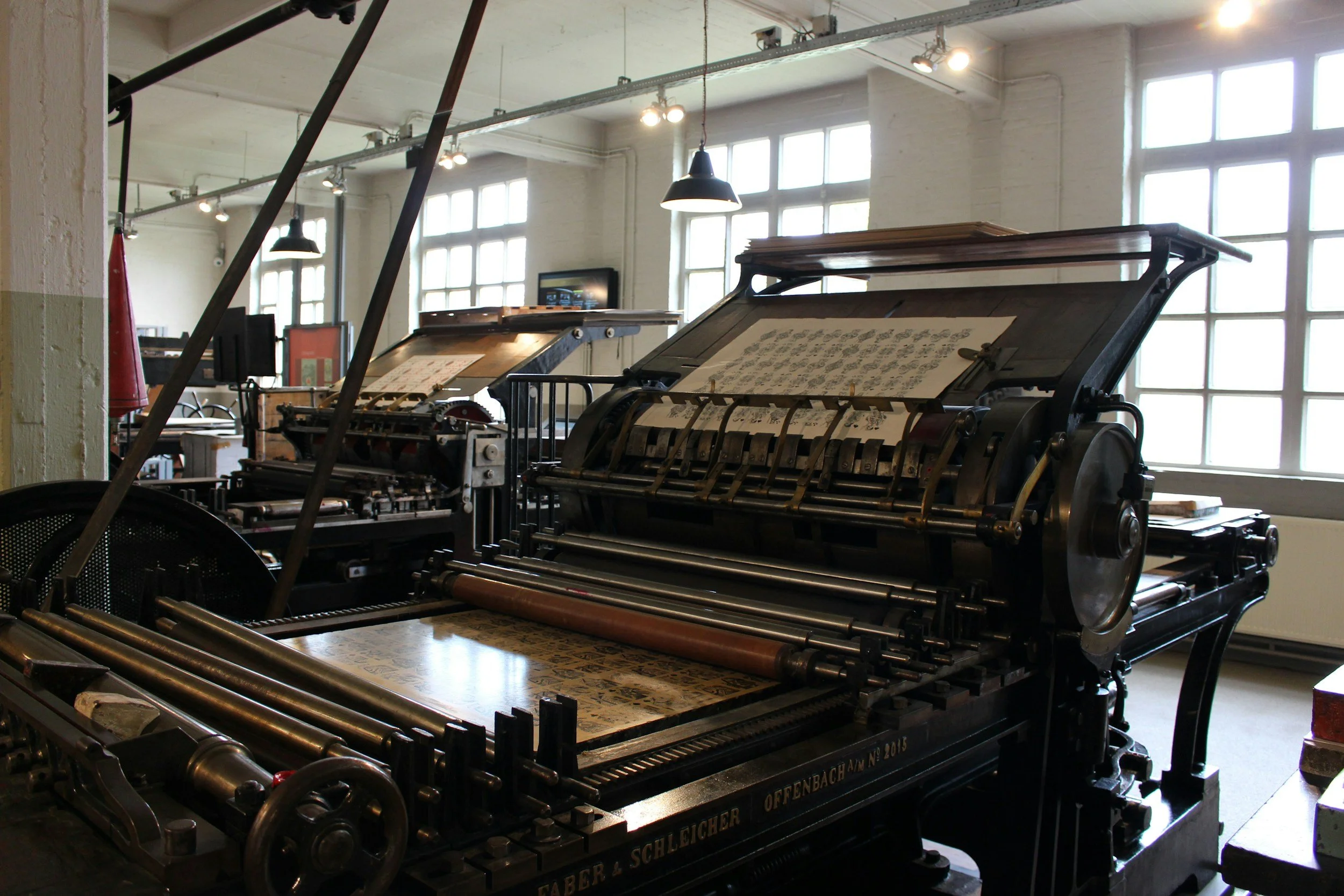
A small fraction penciled beneath an artwork can tempt a reporter into a large claim. An inscription such as 15/50 appears to say exactly how many examples exist and where this sheet stands among them. In practice, an edition number is one part of a print's documentation. Proofs, versions and the institution's description still matter before a correspondent calls an object rare, original or unique.
Imagine a hypothetical feature about an American print workshop. The artist holds up a numbered impression, and the overseas desk wants to describe it as the fifteenth copy of a painting. That wording could misunderstand both the medium and the inscription. Begin with how the work was made, then establish the status of the particular sheet in front of the camera.
Ask whether the work was conceived as a print
A print can be an artwork made through a printmaking process rather than a reproduction of a separate painting. Ask the artist, printer or collection curator how the image was developed and what matrix or process produced it. Use the actual medium supplied by a reliable record instead of treating every flat image on paper as the same kind of object.
Print Center New York's glossary describes an edition as a set of prints made from the same matrix or matrices and explains common inscriptions. This provides vocabulary for questions, not a substitute for examining the particular work. An artist can use processes and variations that require a more specific description than a general glossary supplies.
For the hypothetical workshop visit, ask to see the relationship between the matrix and the finished impression if access is appropriate. Describe what you observe and have the printer confirm the technical terms. Do not infer that a digital-looking image was made digitally or that visible texture proves a particular traditional technique.
Read the inscription exactly
Record the edition inscription, signature, date and any additional marks without silently standardizing them. Photograph the relevant details when permitted. Ask what the fraction means for that edition and how the publisher or workshop documents it. Do not assume the number establishes the order in which sheets were printed or a ranking of quality.
A hypothetical 15/50 inscription identifies a numbered impression within an edition described as fifty. It does not, by itself, prove that only fifty related impressions exist. The glossary from Print Center New York explains that other categories, including artist's and printer's proofs, may be made outside the numbered edition. Check the edition documentation before making a total-count claim.
If the inscription is difficult to read, keep the uncertainty in your notes and obtain confirmation. A slash, letter or faint digit can change the description. The reporter should not enhance a photograph or guess the mark into the form that best fits an expected edition size. An unresolved inscription can be described without pretending that it has been decoded.
Distinguish proofs from a quality hierarchy
MoMA's glossary describes several kinds of proofs, including trial proofs and impressions reserved for artists or printers. Those categories have different functions. An artist's proof is not automatically an unfinished test, and the word proof does not by itself establish that a sheet is better or more valuable than a numbered impression.
Ask which designation applies and what evidence supports it. A workshop record, publisher's documentation or museum catalog may explain the relationship between the proof and the edition. If an interviewee makes a value claim, attribute it and seek appropriate independent evidence rather than converting a production label into a price conclusion.
Avoid treating every handwritten abbreviation as self-explanatory. The same general vocabulary can be used differently across practices and periods. Ask the responsible specialist to explain the inscription on this object. Your article needs a defensible description of a particular work, not a display of terminology that the evidence does not support.
Check versions, states and variations
An artist may revise an image during its development or make related versions. Ask whether the record distinguishes a state, edition, variant or later printing. Keep the exact term used by the catalog and obtain a plain-language explanation. Two images that look similar in small online reproductions may not represent the same documented form of the work.
For a hypothetical comparison, one sheet may show an added line or a changed color. Do not immediately call it damage, a printing mistake or a unique masterpiece. Ask whether the difference was intentional and how it is recorded. A close visual observation creates a question; the artist's or institution's evidence establishes the answer.
Use dimensions carefully. A record may list the sheet size, image size or plate size. Label the measurement you report and compare the same kind of dimension across examples. A cropped reproduction can make two sheets appear identical in size even when their margins or physical supports differ substantially.
Credit the people who made the edition
Read the printer and publisher credits alongside the artist's name. Ask what each contributed to the work being discussed. A feature about collaborative production can explain technical and creative decisions without assuming that one job title captures every person's role. Attribute specific contributions through interviews or documentation.
If the story includes photographs from the workshop, identify whether they show the edition in question or another project. Do not use a convenient process image as evidence of how this particular print was made unless that connection is established. A general illustrative image should be described as such and selected with appropriate permission.
Remove unsupported scarcity from the headline
Before filing, underline words such as only, unique, original and rare. For each, ask what the source actually establishes. An edition number can support a precise description without supporting every implication a reader may attach to it. If the total number of impressions is unknown, do not turn the denominator into a universal inventory.
The finished article can make printmaking more accessible by showing how an image becomes a documented group of physical objects. Explain the process, the inscription and the particular sheet's status. Readers then understand why a print is more than a copy, while avoiding the equally misleading idea that every pencil mark is a guarantee of exclusivity or value.
