
How Many Bakeries Does This Street Have?
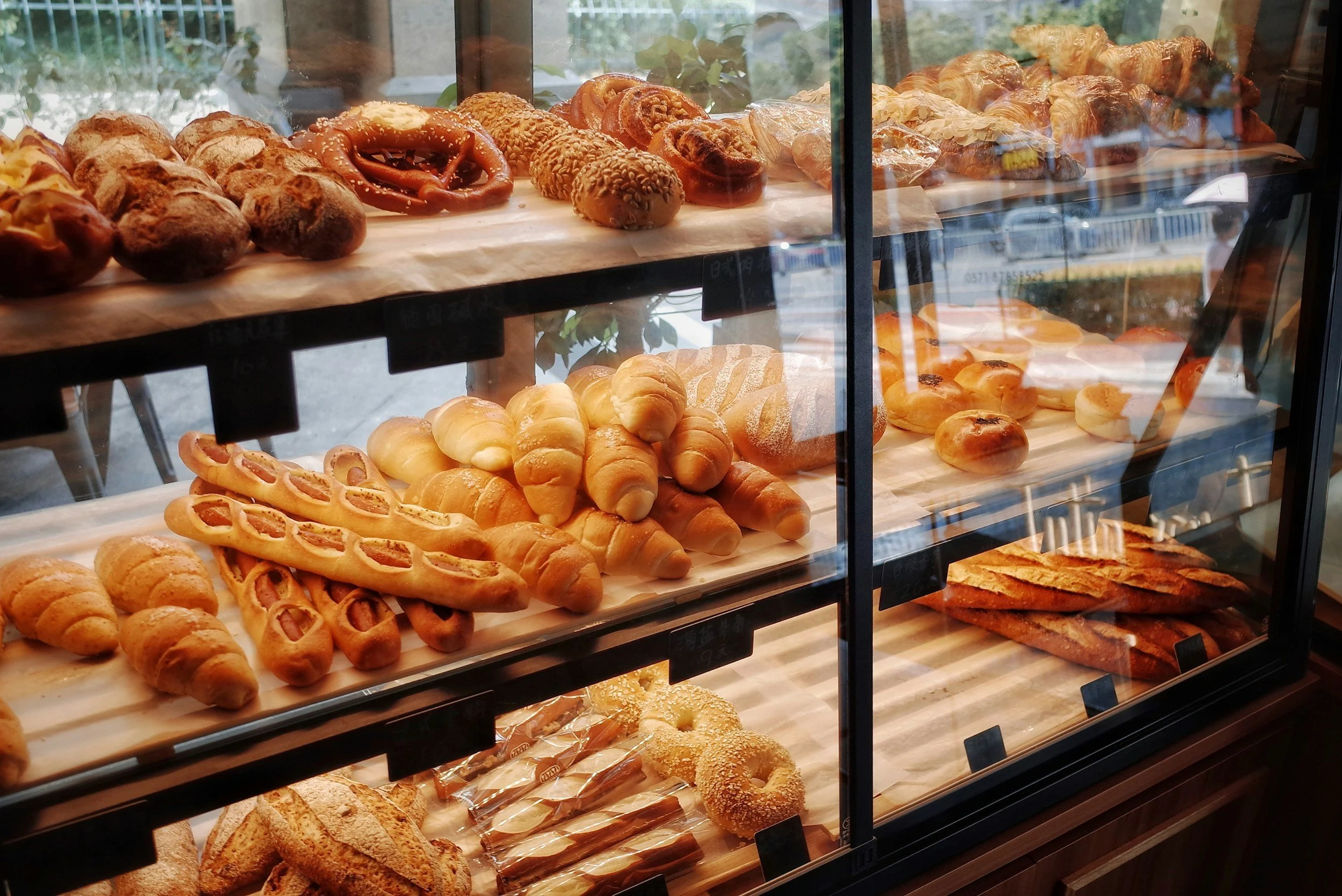
A visitor looking for a loaf can follow the smell of baking bread. Counting American bakeries for an economic story takes a little more detective work. A shop may bake on the premises, sell bread from a central kitchen or serve buns to people who sit down for breakfast. The same family name can appear over all three doors. How many businesses has the reporter just found?
US economic statistics often organize the answer using the North American Industry Classification System, or NAICS. Its codes describe economic activities at establishments. A good correspondent can use those definitions to make a feature more revealing. Walk the reader from the mixing bowl to the sales counter, and the seemingly abstract difference between an industry, a workplace and a company becomes visible.
Find out where the dough is made
Start with a question a baker can answer without knowing a code. What happens to the flour after it arrives here? Follow with two others. Who buys the finished product, and where do customers usually eat it? Write down what happens at this address separately from what the parent company does elsewhere. A sign with the word “bakery” settles none of those questions.
The 2022 US NAICS manual has an entry for retail bakeries, code 311811. Its description specifies products made on the premises from flour and sold for consumption other than immediate consumption. Prepared dough, products made elsewhere and businesses serving food for immediate consumption raise different classification questions. Read the cross-references attached to the entry. Each sends a reporter to a distinction that might matter on this particular street.
A second entry, 311812, covers commercial bakeries. A plant baking loaves primarily for sale to supermarkets for resale presents a different case from a shop baking its bread for customers who take it home. Both can fill a photographer’s frame with racks of identical loaves. The customer and the production arrangement explain why they may appear in different statistical rows.
Count doors and owners separately
In a hypothetical town, one company operates three staffed retail bakeries. Each makes its bread from flour and sells it to take home. Two other owners each run one staffed shop that does the same. Assume the companies are independent of each other and operate no other locations. A census-style count of these workplaces would yield five establishments. A count of the firms that own them would yield three.
Now imagine the first company opens a fourth shop. The number of locations increases by one while the number of independent owners stays the same. If instead it buys one of the two other businesses and keeps both sets of doors open, ownership changes while the number of locations can stay level. Either development might interest readers, but only one can be described simply as a new storefront.
In its Statistics of US Businesses program, the Census Bureau generally defines an establishment as a physical location where business activity takes place. A firm or enterprise can have multiple locations. In a table organized by enterprise size, check whether the size refers to employment across the enterprise. A counter staffed by four people could belong to an enterprise employing hundreds across its locations.
Read the whole industry entry
Search the manual using several ordinary terms supplied by the business. Read the full industry description, examples and exclusions, then move up the hierarchy to see how it fits. The broader categories use fewer digits. The six-digit entry gives US detail. A broad category and one of its components cannot be added together to produce a bigger total without counting the component twice.
At a single site a business can carry on several activities. The statistics generally classify an establishment according to its primary activity. A bakery selling a few tea towels does not automatically generate another establishment in a household goods category. If a mixed operation is central to the story, ask the statistical agency how the relevant series would treat it and how much detail is available.
A reporter may be able to explain why a hypothetical operation fits a category while lacking access to any particular employer’s official classification. Write the observed activity in everyday language and identify the category used for the published total. When sending a chart to the desk, include the edition year with the code. A number without its edition makes a later comparison unnecessarily difficult.
Check whose work the table covers
The Census Bureau’s employer statistics and its nonemployer statistics cover different business populations. A self-employed baker selling from home with no paid employees may have a place in the local feature while falling outside an employer-establishment count. Check coverage before writing that the table contains every baker in town. A person holding a baking job in a supermarket raises yet another question about occupation rather than industry.
For a comparison across years, use the bureau’s concordances to see whether industries split, merged or changed definitions between editions. A familiar title may survive a revision while its membership changes. For an international comparison, read each country’s published industry descriptions at the level being compared. A shared classification framework by itself does not establish that every national detail or survey universe matches.
Let the reporting question choose the total
If the question is where residents can buy bread, include relevant counters and label the survey of shops as your own. If the question is how many employer establishments make bread under a given classification, report the code, edition, year and geographic coverage. If the subject is consolidation, seek ownership records and comparable firm data. An establishment total alone cannot tell you who controls the ovens.
Bring the feature back to one address. Identify where the dough is mixed, where the bread is sold and who owns the operation, using evidence specific to that location. Then give the statistical count its own sentence. Readers overseas can follow the work from oven to counter and understand exactly which part of the American baking trade the numbers describe.
U.S. Census Bureau, 2022 NAICS Manual
