Podcast Transcript — The US Balance-of-Payments Gamble: All About the Section 122 Strategy
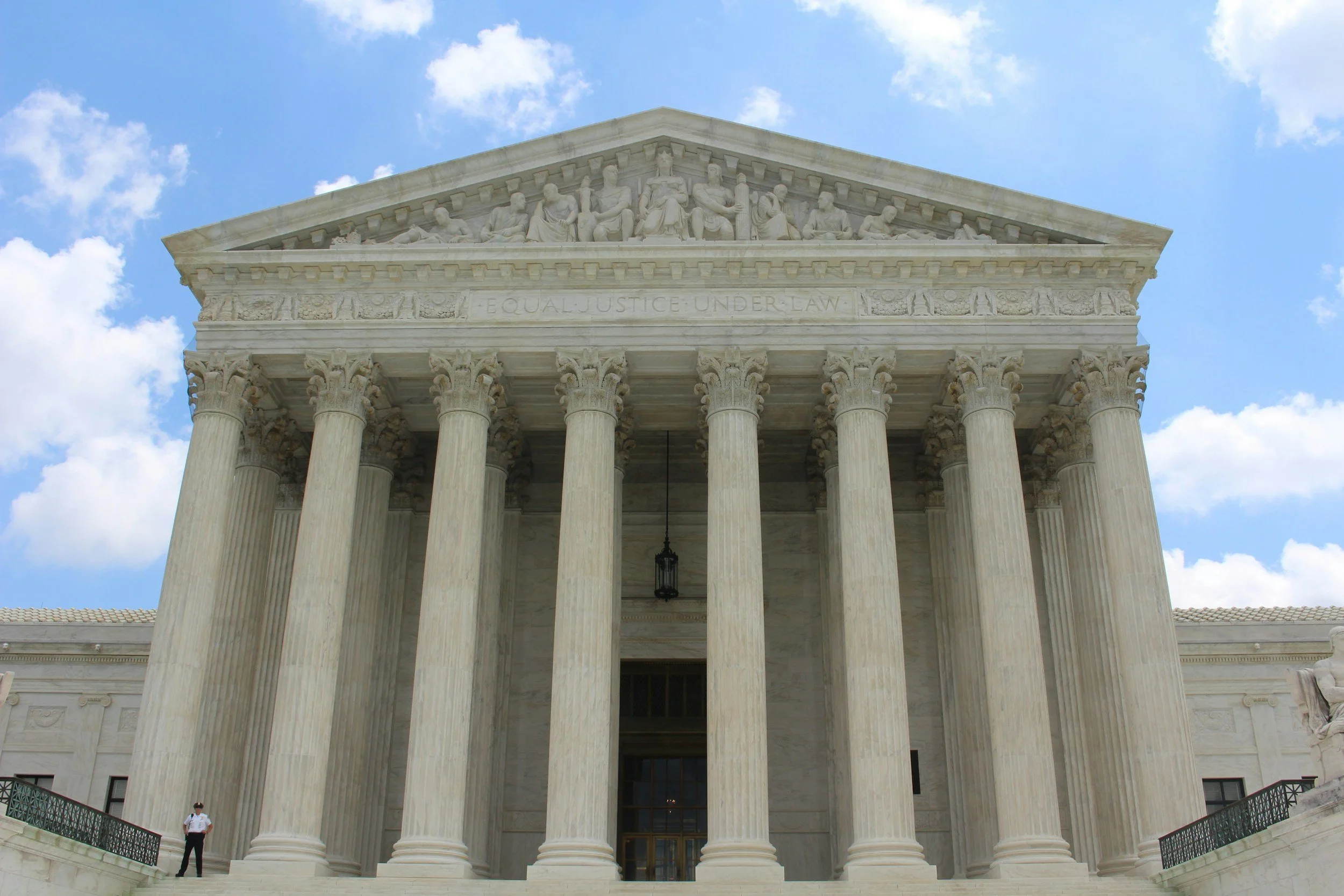
The Association of Foreign Press Correspondents (AFPC-USA) hosted a podcast, in partnership with the Hinrich Foundation, titled, “The US Balance-of-Payments Gamble: All About the Section 122 Strategy.”
According to Dawn Shackleford, the President of Looking Glass Trade, LLC, after the US Supreme Court ruled the Trump administration could not use the International Emergency Economic Powers Act (IEEPA) to impose tariffs, the administration shifted to Section 122 of the Trade Act of 1974 as an alternative legal authority. Section 122 allows the president to impose temporary tariffs of up to 15% for 150 days, unless Congress extends them, when facing serious balance-of-payments deficits or a risk of significant dollar depreciation. The administration initially set the tariffs at 10%, and although President Donald Trump later said he wanted to raise them to 15%, they remained at 10%.
Shackleford explains that a true balance-of-payments crisis generally involves severe financial distress — such as a country being unable to pay for essential imports or service foreign debt, along with rapid depletion of foreign exchange reserves, loss of access to foreign borrowing, and sudden capital flight. Crucially, unlike national security claims, whether such a crisis exists is not typically considered self-judging by governments; instead, international institutions — particularly the International Monetary Fund (IMF) — play a role in evaluating whether the economic conditions justify trade restrictions.
The podcast episode was hosted by Roseanne Gerin, an assistant editor at the newsletter International Trade Today, who has worked in journalism for more than 25 years.
This podcast episode was produced in partnership with the Hinrich Foundation. AFPC-USA is solely responsible for the content of this episode. The learning takeaways can be found HERE.
Roseanne Gerin: Welcome to the Foreign Press Podcast from the Association of Foreign Press Correspondents in the USA, produced in partnership with the Hinrich Foundation, an Asia-based philanthropic organization dedicated to advancing sustainable global trade. AFPC-USA is solely responsible for this content. I'm Roseanne Gerin, an assistant editor at International Trade Today.
After the US Supreme Court ruled in February that the Trump administration could not use IEEPA (International Emergency Economic Powers Act), a national emergency law, to impose tariffs, the White House pivoted to Section 122 of the Trade Act of 1974 — a rarely used provision that allows temporary tariffs in response to balance-of-payments problems. The administration now argues that the United States faces fundamental international payments problems, a claim that brings both the International Monetary Fund (IMF) and the World Trade Organization (WTO) into the picture. And on March 20, the US formally notified the WTO that it is imposing a 10% import surcharge under Section 122, a step many observers did not expect, given the scrutiny such a filing invites.
All of this is unfolding as WTO members gather this week in Cameroon for the 14th Ministerial Conference, adding timely context to the US notification. To help us unpack the legal, institutional, and geopolitical implications, we're joined by Dawn Shackleford, President of Looking Glass Trade, former assistant US trade representative for the WTO and for Southeast Asia, and author of a new article for the Hinrich Foundation titled, “Trump asserts trade payments problems. The IMF may want to sharpen its pencils.”
Dawn, welcome. It's great to have you with us.
Dawn Shackleford: Thanks so much for having me.
Roseanne Gerin: Let's begin with the administration's decision to pivot from IEEPA to Section 122. IEEPA, the International Emergency Economic Powers Act, allows presidents to restrict certain economic activities during a national emergency, but the Supreme Court ruled last month that it couldn't be used to impose tariffs. That forced the Trump administration to look for another legal pathway. So the shift to Section 122 raises questions about both legal strategy and economic justification. The US has now chosen a balance-of-payments justification — one that invites IMF scrutiny. What do you think motivated the administration to take this route rather than rely on a national security rationale that gives the US more unilateral room to maneuver?
Dawn Shackleford: Well, thanks for that question. Of course, there are several national security tariffs that are currently in place. So even though there has been a pivot from the IEEPA tariffs, you still have a number of tariffs that are under what's called Section 232, which is a different national security exclusion that allows the president to impose tariffs for national security reasons. And of course, there are several steel, aluminum, copper, auto parts, [and] autos. The list is quite long in terms of the 232 tariffs that exist. However, the 232 tariffs, the national security tariffs, take some time to put in place. The entire process can take around a year to put Section 232 tariffs in place. There is a study that needs to be done by the Department of Commerce, which can take close to 300 days. You then have a review period by the president and then a certain amount of time for him to make a decision on whether to impose the tariffs.
The administration really needed something that was going to be quick. And this is where Section 122 comes in, when they're weighing the different authorities they have, the two that had been talked about in advance were likely either Section 122 or another Section called 338, which is the old Smoot-Hawley [Tariff] Act. That, of course, drove the US into the Great Depression in the 1930s. So I think there was some hesitancy since it hasn't been used since then to use that particular authority. That kind of leaves Section 122. It could be put in place immediately, which is what they needed to provide kind of a stopgap between the IEEPA tariffs and some other tariffs that they are very likely to put in place because they have announced these Section 301 investigations that are starting. But I think it really is the timeline that drove the choice of the Section 122 tariffs because they could be put in place immediately, unlike the national security tariffs.
Roseanne Gerin: Now, Section 122 was designed for a very different era, one of fixed exchange rates and limited capital mobility. By invoking this Cold War-era statute now, is the administration trying to create a kind of legal safe harbor after the Supreme Court blocked other tariff tools?

Dawn Shackleford
Dawn Shackleford: I think they definitely are. That this is really something to continue their ability to have tariffs in place until they can put a more permanent solution in place. And as I just mentioned, it is likely these Section 301 tariffs that they are starting the investigations on 60 countries right now, that they will have the authority to go much higher in the tariffs they impose. The Section 122 tariffs are capped at a maximum of 15%. They are currently set at 10%. If the administration wants to go higher than that, they need to use a different authority. So Section 232, I think you're going to see more of those investigations. And these new Section 301 investigations that have begun, mainly focused on issues related to forced labor and overcapacity, are going to be what replace eventually likely the Section 122 tariffs.
Roseanne Gerin: The US' March 20 WTO notification references a long list of product exemptions in the attached proclamation from critical minerals and pharmaceuticals to aerospace products and vehicles. From a trade policy perspective, how does such a broad set of carve-outs affect the argument that this is a genuine balance-of-payments necessity?
Dawn Shackleford: It does bring that into question. Of course, the authors of the GATT (General Agreement on Tariffs and Trade), when they put these provisions together of GATT Article 12, which is the authority that the United States is using to implement trade measures in response to their asserted balance-of-payments problem, the idea was that to fix this type of crisis, you need to have trade measures that are across the board, that they would cover all products. However, I will say that in practice, that has not always been the case. And looking at some of the recent — and recent is kind of relative since balance-of-payments provisions have not been used frequently in the past 20 plus years — but looking at India being one of the last major countries to have significant balance-of-payments restrictions, they only covered around 2,700 tariff lines, which is only part of their tariff schedule. Ecuador is another one. They covered about 2,800 tariff lines, which was only about 30% of their trade. Ukraine did cover more, but they also had exceptions. So while I think looking at the true meaning of what the GATT founders intended, they really did intend blanket coverage, but in practice, it has not always been the case. So, what the US is doing, while not ideal, is not necessarily completely out of line with what we've seen in past practice.
Roseanne Gerin: Let's dig deeper into the IMF's role because it's central to this story and also an area where expectations often exceed reality. From your experience sitting on the WTO Balance-of-Payments [Restrictions] Committee, what is the high-level process that the IMF follows when it is asked to evaluate whether a member truly faces balance-of-payments pressures?
Dawn Shackleford: Sure. Well, I want to step back just a little bit because this review is happening at the World Trade Organization, and it is an agreement that exists between the World Trade Organization and the IMF that triggers this IMF review. And it is enshrined in Article 15 of the GATT, but there is also an agreement between the WTO and IMF setup that facilitates this. But I just want to make clear that it is a WTO process where the IMF has been asked to provide this input. And what they do, because they really are the ones with the expertise, it's not the WTO or the WTO representatives necessarily or the member representatives because they're trade experts. They're not necessarily monetary fiscal experts. So they call on the IMF. And the IMF's role in this is they try to determine if there is a balance-of-payments crisis. And to do that, they analyze if a country can no longer finance imports or service foreign debt, and they look at whether there has been a rapid foreign exchange reserve depletion or massive capital outflows, or unsustained currency pressure. And this is something that the IMF regularly monitors already. So it would be on them to look at these key indicators that they do monitor and determine if there are large current account deficits, high short-term debt, and dwindling reserves. They then present this information, this macroeconomic picture to the WTO members, and they provide an assessment to their best ability of whether or not there is a balance-of-payments crisis. I will say that they're not always 100% definitive in their evaluation of this, but they will give information on all of these data points.
Roseanne Gerin: You've noted that a real balance-of-payments crisis involves things like an inability to pay for essential imports or a major depletion of reserves. Without getting into monetary policy math, what is the reputational risk for the US if the IMF finds that these conditions simply don't exist for the world's reserve currency issuer?
Dawn Shackleford: Well, indeed, it is somewhat unlikely that the IMF would come to a firm conclusion on that. In looking at current dollar figures, the US official reserve level as of March, it sits at $252 billion. So it seems as if there are adequate reserves. That said, it is important to understand that when the IMF presents its findings to the WTO, it has to go through an internal process that requires a fund statement approved by the IMF executive board. And there is an official US representative, her name is Shannon Ding, and she is the US representative on the board. So I would find it curious as to — there are 25 board members — whether or not the IMF would be able to get a unanimous and definitive position out of the executive board if there is a finding that the US does not have a balance-of-payments crisis. In that case, the IMF may provide input, but not necessarily provide a definitive determination on what the US situation is in terms of balance-of-payments.
Roseanne Gerin: In your article, you wrote that the IMF may want to sharpen its pencils in reviewing the US claim. What specifically about the Trump administration's balance-of-payments arguments do you think will prompt the IMF to take a closer, more skeptical look?
Dawn Shackleford: The real reason I said the IMF needs to sharpen their pencils is that there's not necessarily a very good understanding that the IMF has a role in this process. It is a WTO procedure. And when Ecuador and Ukraine initiated their balance-of-payments processes at the WTO back in 2015 and 2017 respectively, there was very little knowledge of the process being that India's balance-of-payments measures had been phased out at the turn of the century. So there was no one at the WTO who had worked on these issues. There was no one in membership that had actively worked on these issues for quite some time. And there was a lot of dusting off of how the processes work, what the rules are. And I wanted to ensure that for folks who haven't looked at this in a while, and given that it has been so many years, that they refamiliarize themselves with GATT Article 15, as well as the other articles that apply to balance-of-payments.
Those include GATT Article 12, which is the provision that the United States has notified under, and there is also the understanding on balance-of-payments provisions that came out of the Uruguay Round negotiations in 1995. So there are multiple agreements, legal agreements, that need to be reviewed and understood for this process, including the role of the IMF. I will say I received some comments back on the article that a lot of folks thought that the IMF likely won't provide input. I disagree with that. I think they will provide input. I think it's yet to be seen whether their input will be definitive in declaring whether there's a balance-of-payments crisis.
Roseanne Gerin: Now, you mentioned the case of India. In the late 1990s, India invoked balance-of-payments safeguards at the WTO, but the IMF's assessment ultimately found that India's external position wasn't weak enough to justify those restrictions. That finding undercut India's case, do you think the US is essentially gambling that its economic size will insulate it from a likewise critical IMF assessment?
Dawn Shackleford: I think the United States is gambling on time at the moment. So knowing that the balance-of-payments provisions that the US is using, Section 122, are only implemented for 150 days. So that takes us out to July 24. And we now know as of just a few days ago, the US put in their notification on March 20. They put their notification in within the timeframe required of the 30 days from the time the measures were put in place. There is, under WTO rules, a four-month timeframe in which there should be consultations that take place. Four months brings you pretty close to the five months that these measures are going to be in place. And in terms of a first consultation, there's no guarantee that there would be an outcome as part of those consultations. When we worked on Ecuador, there were meetings that took place in June, and there were continuing consultations that took place in October. So I think that there's a high likelihood that the US will notify there will likely be an initial round of consultations, but I could see a situation where the US is in a position to remove the measures before there is a conclusion to the entire consultations process.
Roseanne Gerin: Many observers expected the US to avoid notifying the WTO, but as you mentioned on March 20, the US did exactly that. What do you think ultimately drove the US to file this notification? Was it legal obligation, diplomatic pressure, or a strategic calculation ahead of the WTO Ministerial Conference?
Dawn Shackleford: So I think the United States was doing the right thing here. The United States is a firm advocate of notifications and transparency. They have a reform proposal on notifications and transparency that they came out with in 2017 [that] has not been adopted because there are still just a few holdouts on it, but they have been pushing to get more and more countries to notify all of their measures at the WTO. This is particularly challenging with a country like China, which has significant industrial subsidies that it does not notify. So the United States wants to set a good example. They're very good at providing notifications across the standing committees and meeting all of their notification obligations. It would've been odd for them not to notify. They want to set a good example. They want to follow the rules, and there really wasn't a downside to them. They had already declared to use Section 122 domestically that they had a balance-of-payments crisis. They needed to put that in writing and send it to the WTO. They've done that now. And even if they hadn't put the notification in, the chair of the Balance-of-Payments Committee could have still convened a review to take place. So the review would happen whether or not the United States put in the notification, so there was no downside to them putting in the notification.
Roseanne Gerin: Now that the US has notified the WTO, how might the organization's other members respond? Do you expect any member to request a formal review in the Balance-of-Payments Committee, and what would that process look like?
Dawn Shackleford: So I think that the chair will schedule the meeting now that a notification has been submitted. It's unlikely that the US would request it itself. And the chair of the Committee has actually posted publicly that he's following this very closely and expects to be very busy with it over the next few months. So I do think that you will see a meeting scheduled by the chair. I will say that there is a process for the IMF, however, so he will need to coordinate with them. They normally have an internal minimum eight-week timeframe to produce their assessment of a balance-of-payments crisis. And because of the nature of the United States having someone on the board, it could potentially take longer than that. So that will, I think, influence the timing of when a meeting might take place.
Roseanne Gerin: Now, the timing of all of this is remarkable because as we mentioned, the WTO's 14th Ministerial Conference is taking place from March 26 to 29 in Cameroon. With the US submission, now officially on the table, how do you expect this decision notice to shape conversations in the hallways and side meetings at the ministerial?
Dawn Shackleford: So I don't think that Section 122 will necessarily be the main focus in interactions with the United States in the bilateral meetings that'll take place and conversations during the coffee breaks. And the reason for that is the IEEPA tariffs varied. They went up to, in some cases, 49%. You had a number of countries trying to negotiate the bilateral reciprocal agreements with the United States, and some of them succeeding in doing that. And under those agreements, setting tariff rates of as high as 18%–19%, some of them, Europeans, 15%; Japan, 15%. The Section 122 tariffs are capped at 10% at the moment. They can only go as high as 15%, as I mentioned earlier. So I think what's really going to be on countries’ minds is what happens next. They have a lot of concerns about the Section 232 tariffs because some of those are quite high. You have 50% tariffs on steel and aluminum, for example, 25% tariffs on some of the auto parts and the numbers vary, but there's also concern about how high the Section 301 tariffs could potentially be. So I think countries are going to be focused on trying to secure the agreements that they may have already negotiated with the United States or trying to figure out how they might conclude bilateral agreements with the United States so that when the Section 122 tariffs lapse, what replaces them is not something that is going to be severely trade distorting to those countries.
Roseanne Gerin: Could the US decision to follow the notification rules, even if the underlying justification is questioned, actually strengthen its position in broader WTO reform discussions happening this week?
Dawn Shackleford: Yes, I think it does. I think it does help with the credibility of the United States that they are actively engaging. They are following the rules. Part of their submission on WTO reform actually focuses on this issue of transparency and notifications. And for them to then be able to take their recent example, to be able to say, “Look, we had or we have a difficult situation right now. We know it is unpopular, but we still notified, and we are still willing to engage in the institution and to have this engagement with other members. We want to see other members do that too.” So being able to put the onus on other members to actively engage in the institution and utilize the WTO as a forum for engagement. I think it's positive that the United States did this, and I think it's positive for the World Trade Organization.
Roseanne Gerin: Let's widen the lens and look at how this move fits into the broader global trading system. The US notification says the surcharge will automatically terminate on July 24, as you already pointed out, unless Congress extends it. Does this 150-day sunset clause make it harder for the trading partners like the European Union or China to justify immediate retaliation?
Dawn Shackleford: It certainly does. For some of the reasons that we discussed already that when the Balance-of-Payments Committee meets, what they're really trying to do is work with the member to find out, are these trade measures warranted? So if a country has a balance-of-payments crisis, they may use trade measures, but there are other mechanisms. There are fiscal policies [and] monetary policies that the country could be using in place of trade measures. The ideal is to figure out what is the right suite of measures that a country could use to fix their balance-of-payments crisis. And it could be trade measures, but it could be these other things. So there are these discussions that take place. And in the case of those countries that had balance-of-payments measures in place, they were eventually asked to have a phase-out plan for those measures. And if the United States comes in and says, “Well, we believe we have this crisis, but we also have this phase-out already planned. We plan to eliminate them as of July 24.” Then, that really has almost done the work of the committee because there isn't a phase-out plan that needs to be negotiated. There's not a review of other mechanisms that needs to be reviewed. There are likely to be other things that members are going to be focused on in terms of different trade measures that replace the Section 122. The other thing I would say is folks might ask, well, what about retaliation? Can't countries just retaliate? They would have to go through the dispute settlement process, either at the WTO or through an existing free trade agreement with the United States. And that takes time. And again, we're going to get to this timing question where these measures are likely to be gone by the time that any dispute settlement process plays out, because dispute settlement generally takes years.
Roseanne Gerin: If major economies view the US rationale as implausible, do you expect them to engage through the WTO consultation process or are we more likely to see a tit-for-tat scenario that bypasses the IMF review entirely?
Dawn Shackleford: So I think you will see members use the WTO process. They have in the past, and the WTO has a very well-established process. And the WTO rules clearly state that the IMF is to provide this information, and there is a consultation agreement between the institutions that they do provide this information. So I don't really see a scenario where they would break with that. And again, as I mentioned earlier, if there is some type of political situation where they are unable to make a definitive position on whether a balance-of-payments crisis exists, I think they will try and fudge it in some way and come up with some type of statement that may dance around a definitive conclusion.
Roseanne Gerin: You've written that the most-favoured-nation (MFN) principle, the requirement that any tariff applied to one WTO member must be applied to all, is still not dead yet because Section 122 tariffs are applied uniformly. Does the US notification help preserve MFN by forcing the measure into a transparent rules-based framework.
Dawn Shackleford: I think it demonstrates how difficult it is to really move away from an MFN-based system. I think the notification is helpful, but even after 122, say the United States moves on to just using Section 232 and Section 301. Similar to the IEEPA, there's a certain level of uniformity that is still taking place. You have the MFN rate, and then you have what will likely be a 301 rate that is on top of that. And I think very likely you're going to see some level of uniformity across those various 301 tariffs. In part, it is just very difficult to build out a tariff schedule where you have a different tariff rate across multiple countries, across multiple lines. I mean, right now, our tariff schedule, the US tariff schedule, has three columns in it. You have the MFN rate, you have the Column Two rate, which is North Korea and Cuba, and then you have the FTA (free trade agreement) preferential rate. It's very easy to then see what the tariff is. It's transparent for importers, it's transparent for consumers, it's transparent for other countries. If you exponentially increase the number of columns to account for all of these different tariff rates, it becomes far more complex for US companies to the US detriment. So there will be different tariffs, but I think we are seeing with the Section 122 tariffs, the desire for some uniformity. And I think as we saw with the IEEPA tariffs, you won't get too far away from some level of uniformity with what they have next.
Roseanne Gerin: Before we wrap up, I want to bring this conversation directly to our listeners. Foreign correspondents in the US, some of whom cover trade, economic policy, and global governance. For those covering the WTO ministerial or US economic policy, what specific signals, statements, filings, or code words should they be listening for this week to know whether members plan to challenge the US filing?
Dawn Shackleford: So I would say that there are some key issues that are going to be debated and discussed at the ministerial. And as I noted earlier, it's unlikely that you're going to see much on Section 122. I think the key focus for correspondents covering the ministerial is to watch very closely what's going on with what is the e-commerce moratorium. This is whether or not duties can be charged on digital transmissions like data flows, movies, [and] music downloads. This is something that there have not been duties charged, and there's an existing WTO agreement that gets renewed every two years. There's a push for a permanent moratorium on this. This is something that if the WTO were to lose this, it would be a significant step backwards for the institution. And it's one of the only real tangible agreements that's on the table for the upcoming ministerial. So there'll be a lot of focus on that, and there'll be a lot of focus on a work plan for the future of the WTO, whether they can negotiate what are called plurilateral agreements, which are agreements that are among just a few or could be many members, but not the total 166 members. India has traditionally blocked this, and there is going to be a lot of discussion on whether folks can sway India to allow these plurilaterals to go forward. So I think there are other things that are going to be the key focus of the ministerial, and you're seeing this already in the press reporting on these kind of issues.
Roseanne Gerin: Reporters often focus on the politics of tariffs. How can they better use the IMF's criteria for a critical situation to fact-check whether this policy is an economic necessity or a temporary political bridge?

Dawn Shackleford: So I think what needs to be looked at is actually the rules that govern how a country can change their tariff bindings. So the United States is getting heavily criticized right now for these Section 122 tariffs. Previously for the IEEPA tariffs, they will likely be criticized for Section 301 tariffs in the future because they exceed the bindings that the United States has agreed to at the World Trade Organization. The United States has the lowest bindings of any country at the WTO. And so, we're looking at between 2% and 4% bindings where the United States is not permitted based on that agreement to raise their tariffs above those levels in most cases. Other countries, such as countries like India [and] Brazil, you're looking at 50% bindings. So those countries have a lot more flexibility. Even the European Union has tariff bindings that are higher than the United States.
I think it's critical that correspondents understand what those bindings are, what they mean, who has flexibility, who does not, and what does a country need to go through to actually change those bindings? It's virtually impossible. And they were bound in 1995, meaning that countries are essentially stuck in 1995, in the world of 1995, in terms of the tariff bindings. There were supposed to be several rounds of negotiations that would keep countries in line with their level of advancement, their level of development, but the Doha Round fell apart and there has not been a subsequent multilateral tariff negotiation to replace that. So understanding why the United States is doing what it's doing in terms of Section 122 and any tariffs that follow that really go back to the use of these bindings and the challenges of what is called Article 28 of the GATT, which are the procedures for being able to modify your bindings, which are essentially unusable.
Roseanne Gerin: Given that the US has now notified the WTO, what should journalists watch for in terms of which countries might lead a consultation request or push for a formal review?
Dawn Shackleford: I think it'll be key to follow the chair on this and see what his actions are. As I noted, he's already been talking about being very busy with this issue over the next several months. I think that there are key members that will be actively engaged in these discussions; so the major members at the World Trade Organization, the European Union. I believe that you will see countries like India [and] China also actively engaged, among others. It is not normally the entire membership that participates in the Balance-of-Payments Committee. Some of that is just due to capacity constraints on the part of countries that they feel that other countries will likely carry the water for them on this issue, but you can expect the major members of the WTO to be quite engaged.
Roseanne Gerin: As we close, is there one broader insight you think this episode reveals about how the global trading system handles pressure tests like this?
Dawn Shackleford: I think a helpful lesson to take away from this is that the WTO is working, that the United States, despite its criticisms of the institution, is still actively engaging and participating in that institution, and that this balance-of-payments notification is yet another example of it. I think that the fact that they have now submitted two separate proposals to the WTO on WTO reform for the ministerial this week is also a positive sign of the US engagement, as well as they have competent staff, a competent ambassador who is well versed in trade negotiations, who is serving in Geneva as the ambassador to the WTO. And you have the engagement from Ambassador Jamieson Greer in the WTO ministerial. So I think that the bright spot is that there's a recognition that there is a lot of trade, 72% according to the WTO, that still operates under WTO rules and the United States is engaging.
Roseanne Gerin: Dawn Shackleford, thank you for helping us understand the legal, institutional, and geopolitical dynamics behind this policy shift. Your insights shed light on how major economies navigate and sometimes test the rules-based trading system. As the US, the WTO, and the IMF consider their next steps, this episode may become a defining case in global trade governance. And to our audience, thanks for listening. I'm Roseanne Gerin, and this has been the Foreign Press Podcast brought to you by the Association of Foreign Press Correspondents in the USA in partnership with the Hinrich Foundation. AFPC-USA is solely responsible for the content of this episode.