Podcast Transcript — Trump 2.0 and the Future of Dollar Dominance
The Association of Foreign Press Correspondents (AFPC-USA) hosted “Trump 2.0 and the Future of Dollar Dominance,” a Foreign Press Podcast episode produced in partnership with the Hinrich Foundation.
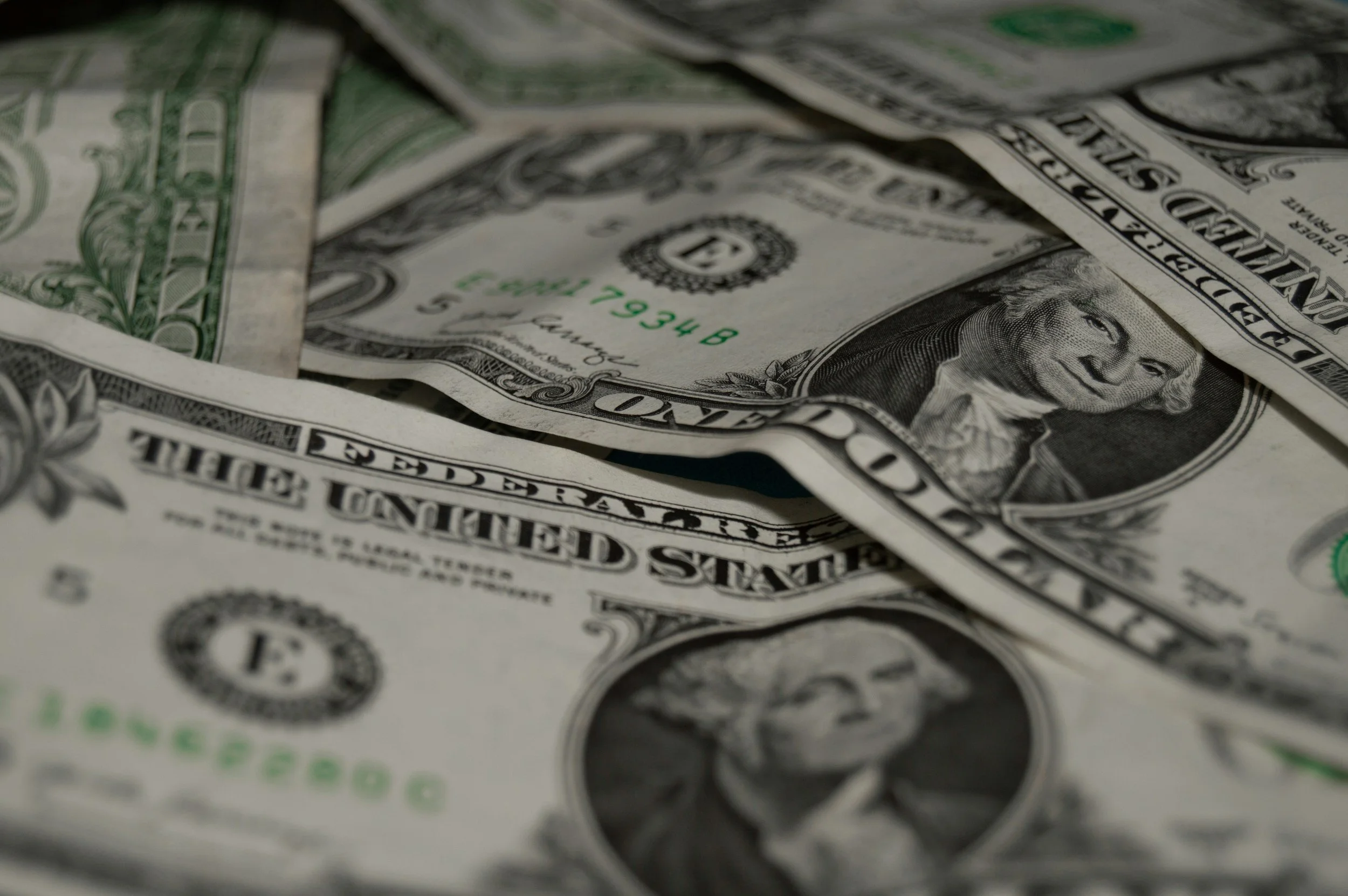
The US dollar has underpinned the global financial system for decades, but its dominance is facing mounting challenges. In a new paper for the Hinrich Foundation titled “Trump 2.0 and dollar dominance: Make or break?”, economist Stewart Paterson argues that a combination of weakening US economic fundamentals, shifting geopolitical alliances, and rapid advances in financial technology are creating the most serious test yet to the dollar's global supremacy. While China's renminbi (RMB) is emerging as the most credible long-term challenger, Paterson contends that Beijing's own financial system and capital controls remain significant obstacles to replacing the dollar. He further explores whether the world is entering a more fragmented, multi-currency era and what that could mean for trade, finance, and global power.
Paterson spoke about his findings with journalist Roseanne Gerin, an assistant editor at the newsletter Trade Strategies Today, who has worked in journalism for more than 25 years.
AFPC-USA is solely responsible for the content of this episode. The learning takeaways are available HERE.
Roseanne Gerin: Welcome to the Foreign Press Podcast, an educational program from the Association of Foreign Press Correspondents in the USA, produced in partnership with the Hinrich Foundation, an independent Asia-based philanthropic organization dedicated to advancing mutually beneficial and sustainable global trade. AFPC-USA is solely responsible for the content of this episode. I'm Roseanne Gerin, an assistant editor at the newsletter Trade Strategies Today.
We're joined by Stewart Paterson, senior research fellow at the Hinrich Foundation, to discuss his April 2026 white paper, “Trump 2.0 and dollar dominance: Make or break?” In the report, Stewart argues that the US dollar faces three challenges: eroding economic fundamentals, weakening geopolitical foundations, and fast-moving technological disruption, while China simultaneously pushes to internationalize the renminbi. As he writes, “The economic and geopolitical ramifications of a dramatic decline in the dollar's dominance could be extremely far-reaching.”
Stewart, thank you for joining us.
Stewart Paterson: Thank you, Roseanne, for hosting.
Roseanne Gerin: Let's begin with the big picture before we dig into the three challenges you outline. Your paper opens by noting that the US appears increasingly isolated on the international stage and that this could accelerate the dollar's decline. For listeners who may not follow currency dynamics closely, why does dollar dominance matter so much for global trade, financial stability, and geopolitical power?

Stewart Paterson
Stewart Paterson: Let's start with the last one first, the geopolitical power. Clearly, as a large amount of global trade and investment is denominated in US dollars, banks around the world require access to US dollar clearing, settlement, [and] messaging infrastructure. The US has been in a strong position to implement economic sanctions against countries it considers wayward or nefarious actors by limiting or cutting off their access to US financial infrastructure. And so, the dominance of the dollar in trade and investment has become weaponized to a large degree. The loss of dollar dominance would be a big blow to America's ability to instigate and implement economic statecraft. So, that is one of the key issues that is at stake. But the dollar's ubiquity in international finance is deeply associated with financial stability coming from the Federal Reserve. One of the traits of the dollar standard over the last 40 years or so has been the Fed's willingness to step in and take dramatic monetary action when required in order to ensure and underwrite financial stability.
And we saw that during COVID, we saw it during the global financial crisis, and we've seen it before through various emerging market crises. It hasn't always been the case. Obviously, in the early 1980s, there was a strong tension between the Fed's desire to get on top of inflation in the United States and Latin America's requirement for lower interest rates in order to ease the debt burdens from its borrowings. But broadly speaking, the Fed has been a responsible actor in terms of promoting financial stability. And then, in terms of global trade, I think the key thing your listeners need to comprehend here is that there are about 180 currencies in the world. If there wasn't a hegemonic currency, that would mean that there'd be about 16,000 different cross-rates, different exchange rates, between the [180] currencies. Obviously, in such an environment, liquidity becomes fragmented, prices become volatile [and] easily manipulable. The role that [the] dollar plays, really, in this case, is in channeling liquidity into a limited number of exchange rates. And the depth of the financial markets in the United States means that hedging instruments are available both for exchange rates and interest rates, which means that exporters and importers can better match revenue and costs in a cost-effective way. And so, those are just some of the multifaceted ways in which the dollar standard operates and why it has been of great utility to the global trading system.
Roseanne Gerin: You write that hegemonic currencies succeed when they preserve purchasing power, maintain value relative to other currencies, and are backed by a dominant producer of goods the world wants. How well does the US still meet those criteria today?
Stewart Paterson: Interesting question. Clearly, if we come to being a dominant producer of goods and services that the world wants, there's a bit of a bifurcation here because the United States quite clearly is a technological leader, if not the technological leader. In a lot of advanced technology, the United States almost has a monopolistic position in the provision of those services and the goods around them. The US is blessed with an abundance of fossil fuels and food, which makes it a net exporter of those. It is a leader in weapons technology. And so, when you come to the reasons why other countries might hoard a currency, [or] might keep reserves in case of an emergency, the United States still stacks up quite well. However, what has become increasingly apparent is that China's dominance of manufacturing, particularly the headway it's made in advanced manufacturing, means that a lot of that United States output is dependent on Chinese input, be it parts or key components. And so, it is no longer really fair to say [it is] the dominant producer of goods and services that people want. And in fact, given the breadth of China's footprint in manufacturing, really, that mantle has passed to China.
In terms of preserving its purchasing power, clearly, we're getting on for six years now since the Fed last hit its inflation target, and therefore, there is a good argument to be made that the Federal Reserve is eroding confidence in the US dollar through its failure to hit those inflation targets. Inflation has not been an issue in China and, therefore, just on that narrow measure, you'd have to say that the RMB [renminbi] is looking superior at the moment. But I think what's more worrying, in a way, is that there's a question mark over whether the Fed actually has the wherewithal and the mandate to actually hit its inflation targets now, given the potential impact that that would have on economic growth, which would be, obviously, very negative in the journey toward bringing inflation down, unless there are some extraneous factors that do some of the heavy lifting for them. And then, relative to other currencies, clearly, the dollar has been very strong in recent years. We are arguably near the end of a 12-year or so bull market in the US dollar. What matters, though, is the outlook going forward, and we'll come on to talk about some of the factors that are potentially calling out for a weaker dollar, which could also lead to a sort of very sharp adjustment down in the value [of the] dollar and, therefore, lead to a loss of confidence in it.
Roseanne Gerin: Your report breaks down the pressure on the dollar into three forces — economic, geopolitical, and technological. Let's take them one by one. You argue that the dollar’s economic foundations have eroded, citing persistent inflation, a deeply negative net international investment position, and America's shrinking share of global output. Which of these, in your view, poses the most immediate risk to the dollar's long-term credibility?
Stewart Paterson: Well, I think the three act in unison with each other, and so it'd be difficult to single one out, although if I had to, I think I would go for the net international investment position. Just to explain, clearly, Americans buy overseas assets, foreigners buy American assets, [and] the net international investment position is the difference between the two. America's perennial current account deficits need funding, and those are funded through foreign acquisitions of US assets. Foreigners now own about US$70 trillion worth of US assets, and that is US$28 trillion or so more than Americans own of foreign assets, which is the net international investment position. And that's about 90% of US GDP [gross domestic product], which is off the charts relative to anything we've seen in history. And what it means is that if there is a loss of confidence in the future returns, real returns measured in the foreigners’ currencies in those US dollar assets, then they will turn net sellers. And, obviously, if there's US$70 trillion worth of holdings, that's a lot of dollar selling that could take place. Bear in mind that the sort of current account positions — the various fundings of that — you're talking sub-a-trillion dollars or so of that on a yearly basis. So, these potential balance sheet adjustments dwarf the flows that are associated with the current account.
Inflation is one of the reasons why foreigners might lose confidence in the dollar because, obviously, they're interested in preserving their purchasing power. And equally, from a foreign exchange reserve perspective, which accounts for a relatively small portion — about 20% of foreign holdings in the United States — would be down to foreign exchange reserves held by foreign central banks. But even so, it could make a sizable difference. As trade patterns get more orientated toward China, the potential is there for central banks to start to seek to hold greater amounts of RMB and, consequently, fewer US dollars in their foreign exchange reserves. So, all three act together. They, to some extent, feed off each other. But it's certainly fair to say that the economic fundamentals underpinning US dollar dominance have significantly deteriorated in the last 15 years or so.
Roseanne Gerin: You note that the Trump administration's tariff regime has added about 0.8% to inflation over the past 15 months and that rising defense spending raises questions about fiscal discipline. How much does sustained inflation, or the perception of political interference in the US Federal Reserve, undermine confidence in the dollar?
Stewart Paterson: So, sustained inflation certainly does. I would add that it's been six and a half years since the Fed met its inflation target, and a lot of that was due to the profligacy induced by the COVID pandemic. Nevertheless, there's been plenty of time for them to get inflation under control, and their failure to do so is a black mark against the dollar. And that has little to do with Trump, albeit Trump's verbal interference in monetary policy, such as it has been, has been arguing for lower interest rates rather than higher interest rates, and that's not been helpful.
In terms of the perception of political interference and central bank independence, independent central banks have frankly made a mess of inflation management in most of the last decade. Therefore, to my mind — and this is probably an unorthodox position — it's far from obvious that the independent central bank argument, i.e., that independent central banks will have a better inflation track record because they're free from electoral cycles. It makes perfectly logical sense, but the experiences of the last five or six years suggest that even independent central banks need to respond to emergency contingencies in a way that leads them to breach their inflation mandates. And therefore, I think it's probably a slightly overhyped view that central bank independence is somehow a guarantor of price stability.
Roseanne Gerin: Your paper highlights that more than 70 countries have been affected by US sanctions in some form. You describe an irreconcilable tension between promoting the dollar as a global currency and weaponizing it. Are we reaching a tipping point where countries begin actively hedging against the dollar because of sanctions risks?
Stewart Paterson: So, I think we reached that point a while ago in terms of China, and that's the important one in terms of it having the global clout and the economic size to actually become the center of an alternative financial infrastructure network. Because if you think about it, hegemonic currencies operate on a network basis, and networks appear incredibly dominant, monopolistic. Then, factors lead to that monopoly being chipped away at the edges, and all of a sudden, there is an alternative network. And I think we are getting close to the point where actually we are going to turn around and say, “Actually, do you know what? There is a perfectly functioning non-dollar cross-border settlement and payment system which needn't touch the US dollar and US financial infrastructure.”
And while at the moment it's a long way from being the dominant one — I'm talking about the Chinese alternative here — what we have seen is, I think, a diminution in the efficacy of US economic sanctions and what have you, precisely because rogue actors like North Korea and Iran have been able to utilize these alternative systems. Therefore, I think the short answer is yes, we are at that tipping point. And what I think will be interesting and will be key is how mainstream players in the global economy who haven't been subject to US sanctions, how they react to this. Do they decide that the commercial advantages of having a foot in each camp outweigh the geopolitical risks of hedging or of remaining entirely on the US dollar standard? And I think that is what will pan out over the next decade or so. So, yes, I think we have reached that tipping point.
Roseanne Gerin: You point to central bank digital currencies — essentially state-issued digital money — instant payment networks, and platforms like mBridge, a multi-country system for settling payments without the US dollar, as structural threats to dollar-centric settlement. How quickly could these technologies meaningfully reduce reliance on the dollar, and which innovations do you see as most disruptive?
Stewart Paterson: So, I think the answer is that it's a bit like when people say you go bankrupt slowly, slowly, and then very suddenly. And I think that that's a similar kind of situation with the alternative payment platforms. They will very incrementally take market share, and then, all of a sudden, they hit critical mass, and they take off. To me, the potential for instantaneous payment and settlement using international digital central bank money will be a game changer. And the commercial imperative behind it is as important as the geopolitical one. If someone comes up with a cross-border settlement system that reduces the scope for error, it's faster, it's cheaper, then there's no reason why people will not adopt it. And so, technology really is the key here, and China's progress on mBridge, which revolves around a very small number of central banks at the moment, but if that is scaled and shown demonstrably to work in an efficient, low-cost way, then I think you will find that it garners a lot of favor very quickly.
Roseanne Gerin: Let's turn to the other side of the equation — China's push to internationalize the renminbi. You cite Chinese President Xi Jinping's call for China to become a strong financial nation with a currency used widely in global trade and reserves. What changed in China's political calculus that made renminbi internationalization a higher priority?
Stewart Paterson: So, I think this is largely geopolitics, and China has seen the damage that US sanctions can wreak on economies where countries act in a way that [is] detrimental to US interests. I'm thinking of Iran here as being the primary example of this. But as I said earlier, I think there are about 70 countries that have had some kind of economic sanctions put on them. Russia and the Ukrainian war, I think, act as an accelerator in the change of Chinese thinking about the importance of RMB internationalization and their own payments infrastructure. So, at a minimum, I think China's ambition here is to make sure that, to afford it maximum freedom of action to pursue its diplomatic and geopolitical agenda without fear of economic sanction from the United States, it needs to internationalize the RMB to put in place a payments-across-border system that it controls. I think that is the key issue that President Xi Jinping has in mind here.
Roseanne Gerin: In the report, you write that without an open capital account, China's ability to achieve reserve currency status is highly questionable. Which barrier is the hardest for Beijing to overcome — capital controls, weak financial returns, or the fragility of the banking system?
Stewart Paterson: Well, that's a great question, and all three link together, and the causation runs between all three elements. Capital controls have kept China's huge savings pool trapped in China. That has led to overinvestment, which means weak financial returns from that investment, which, in turn, imposes a huge cost on the banking system in terms of non-performing loans and the interest rates that the banks can charge. But equally, the banks benefit from low deposit rates because savers have few alternatives open to them, and because the money is trapped there, that helps fuel the overinvestment. So, the three work together.
For China to promote the RMB into a truly global reserve currency, foreign holders of the currency and RMB assets need to be comfortable that they can sell those financial assets whenever they want and get their money back and transfer them into a different currency. They need to be comfortable that the financial assets that they are purchasing will deliver reasonable returns for them. This is the huge tension: The party-state operates the whole economic-planning system through control over the allocation of capital. And clearly, reserve currency status will challenge that.
And so, I think what Chinese policymakers are looking at is tiering access to China's capital account in a way that suits their agenda. So, maybe foreign official holders of RMB assets might get different returns. They'll get preferential liquidity, potentially. You'll get a typical sort of Marxist-Leninist approach to solving a market problem, i.e., trying to suppress the market forces. But clearly, it is a conundrum that China faces as a barrier. The unwillingness to free the capital account is the biggest barrier that China faces to achieving its goal.
Roseanne Gerin: You note examples such as Kenya redenominating a loan into renminbi and BHP Group, one of the world's largest mining companies, settling some iron ore sales in renminbi. Are these symbolic, or do they signal a meaningful shift in how major economies might transact with China?
Stewart Paterson: No, I think that these are emblematic of a trend that is starting to play out. Now, they're both very different transactions, but let's elaborate. Kenya redenominating US dollar debt into RMB debt: The RMB interest rate structure is now significantly lower than the US dollar one, a function of low returns, low inflation, and [a] captured savings pool in China. So, Kenya will save interest expenses. The risk they run, of course, is that the RMB might appreciate very substantially. But if Kenya's export orientation is more towards China now, and they're getting paid for those exports in RMB, then, to some extent, they will be matching revenue against a financial liability, and that makes a perfectly commercial rational sort of transaction.
BHP on the iron ore side: Clearly, China is the biggest importer of not just iron ore, but a whole raft of commodities from around the world as a monopolistic buyer's position. What's lacking in China, really, is depth and liquidity in those markets, and that's a kind of chicken-and-egg situation. And what China is trying to do is engineer liquidity, and then liquidity will breed liquidity in those RMB-denominated commodity markets. But there's a long way to go, I think, in terms of deregulating derivatives markets. BHP will want to be able to hedge out currency risks between Australian-dollar costs or US-dollar costs and RMB revenue. They will want to be able to use a forward market in iron ore pricing in RMB, the currency of transaction and what have you, and they need liquidity in that.
And so, I think we're in the early stages of China trying to engineer the sort of financial infrastructure that would be required for companies of their own volition to go and use the RMB market. And at the moment, they're having to resort to a certain amount of arm-twisting and coercion in order to kickstart the process.
Roseanne Gerin: Your paper was published in April, and a lot has happened since then. Let's look at what's changed. Since April, have you seen any developments in US inflation trends, the Iran conflict, or tariff policy that strengthen or weaken the dollar's position relative to what you anticipated in the report?
Stewart Paterson: So, when oil prices rise dramatically, that tends to be associated with dollar strength simply because a lot of the [oil] trade is transacted in dollars. So, the transaction demand for dollars goes up, associated with the higher price in US dollars. The Trump administration has been very keen on promoting the production of hydrocarbons domestically in the United States. And so, the US has come out of it relatively unscathed in terms of balance-of-payments approach. Clearly, inflation has ticked up as a result of the cost-push inflation stemming from the Iran war. But I think the bigger issue here, really, is the US acting alone in the Gulf, independent of its European allies, [and] independent of its alliance network around the world, clearly in a way that has been detrimental to its Asian allies — certainly China — going into this incredibly well-prepared in terms of having very high inventory levels. And broadly speaking, I think that this has had an isolationary effect on the United States and has left the United States looking pretty lonely on the international diplomatic playing field, to be honest. And, therefore, at the margin, I think this is potentially an accelerator of the dollar's decline in hegemonic status.
Roseanne Gerin: On the China side, have there been any new signals from Beijing about capital account liberalization, banking sector reform, or expanded use of the digital renminbi that suggest movement toward the “walk-the-walk” reforms you describe?

Stewart Paterson: In fact, quite the opposite. So, China has tightened up on its capital controls. You might have seen that several Hong Kong brokerages have been fined. What's going on at the moment has been described as the biggest clampdown on illicit overseas capital flight from China in several decades. So, in fact, the capital account tightening is detrimental to the internationalization agenda.
On the other hand, what you have seen, though, is some progress of mBridge, which will be a big breakthrough if that's scalable. And banking sector reform, no, not really. If anything, the continued weakness in the Chinese economy is a massive drag on the financial sector and makes it all the more important that China keeps its domestic savings stuck in the banking sector, because the last thing that they want is higher funding costs for the domestic banking sector at a time when, clearly, there's a lot of financial distress in the older parts of the Chinese economy. So, if there's one thing propping up the dollar standard at the moment, it is this tension in China between a stated desire to internationalize the RMB and the complexity of doing so against the backdrop of a fragile banking sector requiring the capital controls and the continued propensity for there to be capital flight outside of China.
Roseanne Gerin: Looking ahead to the next 12 to 18 months, what indicators should foreign correspondents be watching most closely to assess whether the world is truly shifting toward a more multi-currency system?
Stewart Paterson: So, I think one of the key things to watch is all the countries that maintain pegs or fixed exchange rates against the US dollar, or shadow the dollar very closely, which have perhaps geopolitically become somewhat estranged from the United States. What do these countries do about their exchange rate mechanisms? Because if, for example — and Saudi Arabia is the case in point — you peg your exchange rate to the US dollar, then you have to continue to hold US dollar reserves. If you have to hold US dollar reserves, you will want to continue to transact in US dollars on a trade basis. Even if you end up having to settle some stuff in RMB, you'll be flipping those RMB into dollars as soon as you've got your hands on them. So, I think that the big indicators that the dollar’s hegemonic status is being challenged will come from changing exchange rate environments and the commercialization of things like mBridge — alternative payment systems which offer significant commercial advantage vis-à-vis the US correspondent banking network and the traditional settlement and payment systems. Those are the two things that I think people should watch very carefully for indications that the dollar is coming under increased pressure.
Roseanne Gerin: Stewart Paterson, thank you for joining us and for helping unpack the forces shaping the future of the global monetary system. And to our audience, thank you for listening. I'm Roseanne Gerin, and this has been the Foreign Press Podcast brought to you by the Association of Foreign Press Correspondents in the USA, in partnership with the Hinrich Foundation. AFPC-USA is solely responsible for the content of this episode.