Podcast Transcript — Can the U.S. and China Rebuild Trust?
The Association of Foreign Press Correspondents (AFPC-USA) sat down with Merle Hinrich, the chair and founder of the Hinrich Foundation, for a Foreign Press Podcast episode titled, “Can the US and China Rebuild Trust?”
Trade has long served as the foundation of the US-China relationship, but that foundation is now under unprecedented strain. In a recent article for the Hinrich Foundation titled, “The US-China Trust Deficit,” Mr. Hinrich argues that the joint statements following US President Donald Trump's May visit to China reflected political messaging more than substantive trade progress. In this conversation with journalist Ana Swanson, who covers international trade for The New York Times, he explores how decades of globalization reshaped the relationship, why both Washington and Beijing now view trade through a geopolitical lens, and what rising protectionism, industrial policy, rare earth export controls, and declining trust mean for the future of the global economy. While he sees little prospect of a return to the old model of engagement, he argues that rebuilding trust through limited areas of cooperation and developing a new multilateral framework will be essential to managing an increasingly fragmented trading system.
The full transcript is below. The learning takeaways for this conversation can be found HERE.
Ana Swanson: Welcome to the Foreign Press Podcast. I'm Ana Swanson. I cover international trade for The New York Times, and I'm delighted to be here moderating the podcast today. My guest today is Mr. Merle Hinrich, the founder and chairman of the Hinrich Foundation. Mr. Hinrich, thank you so much for being here with us on the Foreign Press Podcast.
Merle Hinrich: I'm delighted and thank you for having me.
Ana Swanson: Absolutely. Looking forward to our discussion today. So you wrote an article recently about the statements that came out of the visit that President Trump made to China in May. Could you just tell us a bit about that article to kick us off?
Merle Hinrich: Certainly. So there was a lot of fanfare regarding the meeting and thank heavens the meeting took place, but the outcome of the meeting described, I guess, different stages, or the possibility of different bargains or different views that each of the two parties had, which was, I considered, unfortunate. And there could have been more specificity in what that outcome actually represented as trade, but it seemed to be a record of conversation that was formed for domestic consumption purposes on both sides. The Chinese framed it in a way that would be appropriate to their domestic community and the US framed it for their community. So it was rather political and it was fortunate that they had that meeting, but the outcome, as far as trade was concerned, was really quite questionable.
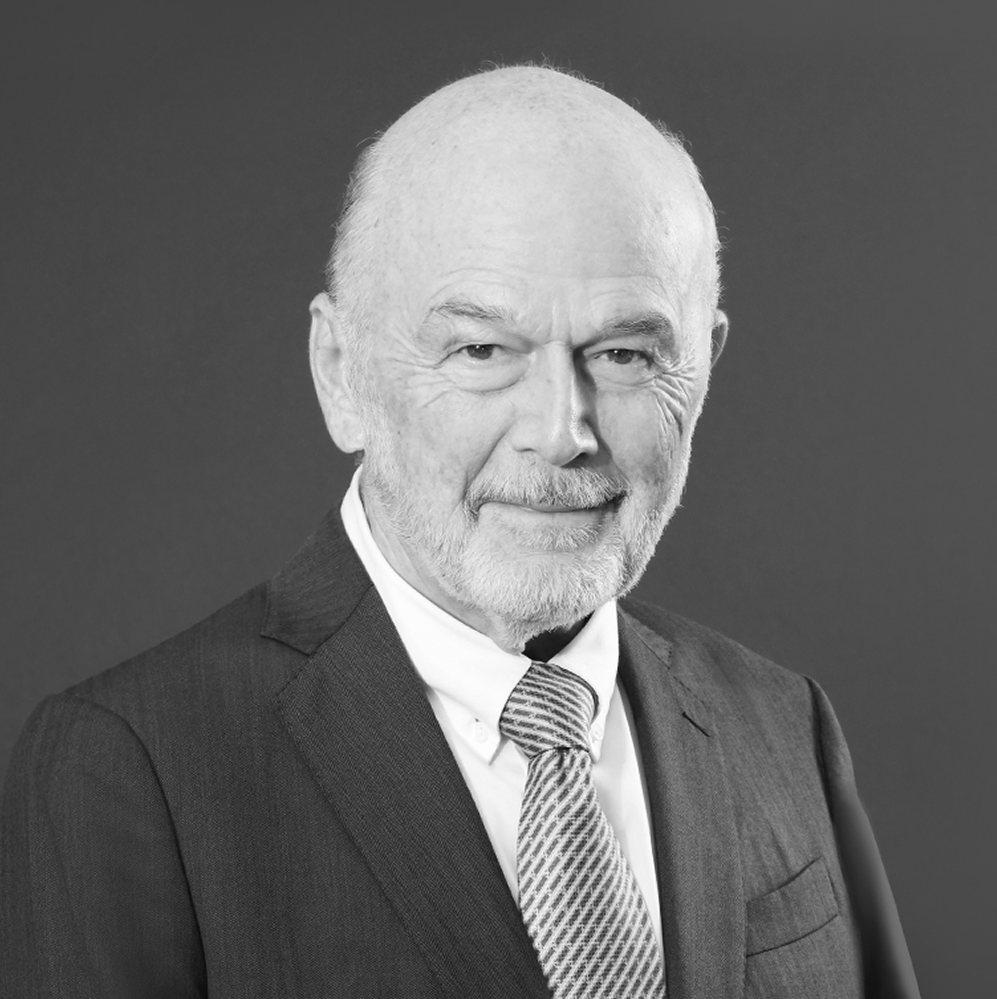
Merle Hinrich
Ana Swanson: Right. And so you said that Washington's readout presented this as kind of a win. It emphasized deals, right? This creation of a trade and investment board, sales of Boeing aircraft, whereas the Chinese presentation is a little different. So it stressed positive outcomes, mutual respect, equal mutual benefit. So just talk a little bit more for us about what you think both sides were after there and what are the different goals that Washington and Beijing were bringing to this meeting.
Merle Hinrich: The goals, of course, were the positions that each side would take. And Ana, I think you put your finger on it. For example, with regard to aircraft, Washington was talking about 200 Boeing aircraft that would be purchased or valued [at] something US$17 billion. But Beijing mentions aircraft and agriculture trade but gives absolutely no aircraft quantity. For example, [there] are no dollar amounts or no annual minimums. So that was true not only for this category of product, but it was also true for things in terms of the rare critical minerals. It was true in terms of agriculture. And so the outcome of this was, from a trade perspective, not really terribly beneficial. Now, maybe simply understood in that there was no intent. The intent of this discussion was for the two parties at a very, very high level, to come together to discuss larger geopolitical positioning that trade was either detracting from or adding to.
Ana Swanson: Right. And the two sides do have a series of meetings later this year. So it seems possible this was kind of a warmup in some respects, not necessarily the moment where both sides would show all their cards and commit to everything, maybe more of an opening gambit in the relationship. Would you agree with that or not?
Merle Hinrich: Yes, it was a positioning meeting, but those types of meetings typically do not take place when you have the two heads of each country meeting. Those are meetings with which would take place at a much lower level to prepare. So, as we've said, you would've expected far more, as I said in the beginning, much more specificity on indeed what the packages would include. So I think the outcome of the “Where do we go from here?” is, what commitments do they look to achieve? What actions that they wish and hopefully will take? What exact quantities? We have to get to that point to make this a beneficial trade discussion for both parties.
Ana Swanson: Definitely. And so I do want to talk more about the meeting and where you think the relationship is headed, but first, let's just step back a bit. So I wanted to ask you about the role that trade has traditionally played in the US-China relationship. I know that you yourself have had a long career in business in Asia. How have you seen trade between US-China evolve, and how would you describe the situation today in comparison to that history?
Merle Hinrich: Well, it wasn't until China [acceded] to the membership of the WTO [World Trade Organization] in 2001 that things really started to change. But as you know, there were some 15 years prior to that of negotiations for China's entry into the WTO. And the critical part of that was for China, in particular, to receive the most-favoured-nation status, where Congress would not be looking at that every year as to whether or not that they would extend it because it would be permanent and it would be institutionalized. But as you want to basically summarize this, in the initial few years, basically the West provided the demand for Chinese exports, and those exports were derived not just from Chinese entities, but they were derived from major foreign-directed investments of multinational companies, everyone from MMM to Caterpillar, to HP, to all of the majors, including the auto industry as well.
So these multinationals, both European, Japanese, and American invested heavily in China for two primary reasons. One is to improve, of course, the cost efficiency, initial cost efficiency, taking advantage of a low labor market price, and ultimately benefiting from the market that China was supposed to represent for these companies. Western governments, basically both European and American, actively encouraged their companies, their multinationals, to invest in China, or if [they] didn't encourage it, they sort of ignored it, and it continued to expand. So what we're faced with is that if we can characterize China as a student of these multinationals, [they] brought capital, they brought intellectual property, either by choice or by force, if you wish. They brought management, they brought distribution channels to China. What happened, of course, is that the Chinese learned how to manufacture all of the products and also the byproducts of these various industries and went from being a student, basically, to being the leader in these industries.
And now what we have, we have oversupply. So the reality today of 2026 is the situation where China basically produces more efficiently at better costs, largely in part because of the state-operated enterprise access to capital, or I should say the state subsidies, which have benefited both the shipping industry, the shipping manufacturing industry, the auto industry, the solar industry, wind industry. There are many industries which would never have reached the competitive level that they have had or that they have today if they would not have had the state support that they have. Now, on the other hand, of course, after China had agreed to many, many changes in their economy that the West did not hold and WTO really was not structured in a way to maintain or manage the evolution of that agreement. So there were a lot of things which were not fulfilled in intent or spirit in the telecommunications industry, for example, certainly in the financial industry. So we have today an environment with an oversupply from China. We have a situation where it has become very geopolitical, and the economies have become increasingly bifurcated.
Ana Swanson: Yeah, that's a very good explanation. So people have often said that business was the ballast in the US-China relationship. That was kind of the statement for many years, decades. Now, of course, as you're saying, the Chinese annual trade surplus is over a trillion dollars, just a really stunning amount of exports that are flooding global markets. Chinese companies are incredibly competitive. So given this competitive and strategic threat from Chinese industries, do you think that businesses are still kind of a ballast in the relationship, or is it a different situation depending on the business, depending on the market? What is the role that they're playing right now?
Merle Hinrich: Well, for more than a decade, the multinationals were lobbying US Congress [and], of course, administrations to sustain the relationship for very self-serving reasons, to improve profit, taking advantage of a lower-cost manufacturing base. It served the political interests of both the US and Europe, as it kept consumer prices down. It was deflationary. So it was a benefit politically to the US, and it was a benefit to the multinationals that were heavily dependent upon basically what they had depended upon for their manufacturing. And I'm talking about major industries, and pharmaceuticals are one of them. So we are in a situation with both countries, which is a problem they both self-created. The environment in the US has been caused by the lack of political foresight and the lack of defaulting to multinationals with unquestionable influence on every administration since Nixon and probably before.
Ana Swanson: And where do you see this headed in terms of decoupling? I mean, the US and China have so many tensions and strategic risks in this relationship, but there's still a lot of mutual dependency. Where do you see that relationship headed?
Merle Hinrich: There are going to be three outcomes of this, in my view. One, of course, is the Western strategy, and we could probably characterize it as a tariff fortress and Europe is headed that way. The US is definitely headed that way, whether you're on the right or you're on the left. Protecting industries, whether it be national defense industries, or whether it be more critical industries like the pharmaceutical industry, they need a level of protection. How do you protect industries? Protect industries either through subsidies, which require some form of industrial policy, or, of course, you use tariffs and you protect them from external competition. And in this case, China is by far the largest competitor and threat to US and European industries that has ever existed. And this is not going to abate anytime soon. The China strategy, of course, is going to be to circumvent, to bypass.
And one of those criteria, one of those objectives will be to increasingly invest in outlet countries, whether they be the United States, whether it be Europe, or whether it be Mexico that has access through the USMCA [US-Mexico-Canada Agreement] to gain entry to the world's two largest markets and growing markets. So China will also dominate the demand in Southeast Asia and Africa because they will be producing the most competitive and, indeed, in many cases, the most innovative and quality products in these various categories, the auto industry being a good example. So the non-aligned countries will benefit from it, and countries, of course, that do not have that affiliation will not. The US and European consumers will pay for increased costs, and it will be inflationary. Hopefully, there will be other elements within the economy that can offset that inflation, inflation that is caused by Chinese-sourced products, but that is to be seen.
The third, I think, sort of evolutionary process will be [that] there has to be something of a multilateral approach. The WTO is not equipped to deal with this, but there's possibly an alternative multilateral organization that can be more effective at addressing the complexity of the situation and appease or to ease the circumstance.
Ana Swanson: And when you say an alternative multilateral organization, I mean, how do you envision that coming together, or where would that happen? Just like to hear a little bit more about that.
Merle Hinrich: Well, it has to deal more effectively with the impact of the consumer. This is not just about cross-border trade, but global trade is determined by domestic issues, whether the domestic issue [is] political, the domestic ... Just to step back for just a second, if you step back a few years, you can see how politics have played an increasing role in trade decisions, trade policy, and trade-related issues to today where it is of massive consequence. So going forward, let me just broadly say both [developed] areas, let's call it the EU [European Union] and the North American markets, represent the largest consumer markets and the more flexible markets, of the more, let's say, profitable markets than the third world would represent. So it is a market which has substantial demand. The issue is what about, and where do, the consumers, or I should say where the workers, have some level of protection from the competition that that represents.
A multilateral organization, unlike the WTO, but I would say there's aspects of it that are very similar, but that are really very focused upon the balancing of the economic issues that face these economies because if you don't have the domestic support for cross-border trade, you have a problem.
Ana Swanson: So do you see the kind of populism, trade skepticism that we have in the United States that has popped up in other countries? Do you see that as something that will continue until you have these kinds of mechanisms to fix it? Do you think the pendulum is already kind of swinging back in the other direction? We obviously have a lot of opposition to tariffs in the United States as well. Where do you see that trend of populism headed?
Merle Hinrich: Well, I think you put your finger right on the issue. Politically, what you're seeing in Europe, populist movements, et cetera, which you're seeing in the United States, is an outcome, or in part an outcome, of not having adequately addressed the international trading issues. And we have to be able to address these problems politically in a democratic environment through the toing and froing. And I'm sorry to say this, but I think that the pendulum has, needless to say, gone far too far and will probably have to return to a more normal, focused benefit to the overall economies of these areas. So I do not have a political answer to your question, Ana, and see that it is evolutionary and until we get to some ... And there will be pain. It will be painful to get back to that balance because of the influence, the international influence of China on these economies.
Ana Swanson: Right. Yeah, that's really fascinating. I just wanted to go from that kind of framework back to thinking more about the US-China relationship. What role do you think the US and China can specifically play to deal with some of these global imbalances that are being proven so disruptive for people? And do you think that the two countries are adequately stepping up in their relationship to deal with what the real trade problems are here, or is there another path that needs to be taken going forward?
Merle Hinrich: One, I don't have a crystal ball.
Ana Swanson: That would be very interesting for the episode though, right?
Merle Hinrich: Two, I think the level of distrust that exists is [palpable]. Unfortunately, it is going to take small steps. We're going to have to identify areas [in] which there would be far greater collaboration, commitment, and concessions made, and that may be areas with which [are] seen to have an effect on all mankind. I would say one, of course, is the need to address the viral problems, the COVID problems, the Ebola problems. These problems could bring together a clearly focused theme, a central theme for all economies and all political influences and all scientific minds to come together with one intent. But I do not see necessarily the collaboration at the automobile industry level today because it is hugely bifurcated. It represents a major, major employment category, and there are a lot of political issues on both sides. As an example, there are many other industries that face the same issues.
Ana Swanson: And I do think it also relates back to your article as well. I mean, one thing you emphasized in your piece was about the situation of low trust between the countries and the issue with compounding any distrust between the countries. So would you say that it's quite important to strengthen that foundation of trust? How do you go about doing that? I mean, if you were advising the Trump administration, how would you strengthen trust in this relationship right now?
Merle Hinrich: Again, there is no magic wand to achieve that end. There has to be a willingness to do it and that willingness would look to be absent because both are, all are, struggling for their political identity. They're struggling for the votes. They're struggling for their political positions. And this is causing serious issues of trust because it's much easier to blame a foreign entity or a foreign problem than it is to deal with your domestic issues. And both, and all of them, every jurisdiction, put it that way, has some very serious domestic issues with which need to be addressed before they can take on relationships. That's a very general comment, but I fundamentally think that there has been too much left to guess, if you wish, or self-interest at both economic and political levels that have jeopardized the ability to work together across broader situations.

Ana Swanson: And there was a lot of pomp and circumstance and statements of friendship with President Trump's May visit to China, but do you expect that kind of warm feeling to last, then, given all of these tensions and the environment of distrust that you are describing? How long could this kind of truce last in this environment?
Merle Hinrich: Well, in the public domain, there's a theory of warmth and brotherhood and good feelings and intent. In practicality, there are votes, there is inflation, and there is huge bifurcation within the domestic environments which need to be seriously addressed. As I said earlier, trust is difficult to build and easy to destroy, and it's going to take time to rebuild the relationships, which justifiably, in some cases, are put into suspect. But it's going to take longer to recalibrate, yes, the global economy to support, of course, the domestic environment. But it's also equally important that the domestic environments in these various jurisdictions not only focus on the theoretical aspects, but focus upon the practical aspects of what needs to be addressed, which is not going to be always comfortable to get it right. Sacrifices are indeed going to have to be made.
Ana Swanson: And I guess in a moment, I'll ask you if you have any concluding thoughts, but I did also want to ask about the situation with certain critical industries. So it seems to me that one of the most notable events over the past year was China's rollout of this rare earth export control system, the kind of shockwaves that center around the United States, the pressure that has put on the US. Where do you see those kinds of restrictions headed? And is that a force toward decoupling on both sides, or is it kind of evidence to both countries that we can't live without each other and we need to find stability and a stable economic relationship in some fashion?
Merle Hinrich: It is a negotiating card with geopolitical implications, no more [and] no less. And until the geopolitical issues can be somewhat resolved, you're not going to be resolving the supply and the demand requirements of products, from rare earths to the issues of the automobile industry or the pharmaceutical industry.
Ana Swanson: Thank you so much for your time. Do you have any closing thoughts to share? I know we covered a lot of ground. We went from very small scale in the US-China relationship to the global trade situation [and] back to US-China again. Is there anything that you feel we missed that you'd like to share?
Merle Hinrich: I think we could spend a lot of time on almost every subject we've touched upon now. So we'll leave it to your listeners to filter and work it out.
Ana Swanson: Well, thank you so much for being here with me, Mr. Hinrich.
Merle Hinrich: Thank you, Ana. Take care.
Ana Swanson: We appreciate you being here with us on the Foreign Press Podcast.