
Lockheed Martin's Craig Martell and the Age of AI Development

The Association of Foreign Press Correspondents (AFPC-USA) hosted a recent episode of our Foreign Press Podcast featuring Craig Martell, the CTO of the global defense technology company Lockheed Martin. He was previously the Chief AI Officer for Cohesity and served as the first Chief Digital and AI Officer (CDAO) for the U.S. Department of Defense.
He discussed his role and where Lockheed Martin stands now as a research and technology leader in the age of AI development in a conversation with journalist Jennifer Freedman, who for more than two decades has contributed reporting on trade and global markets for different outlets.
AFPC-USA is solely responsible for the content of this podcast episode.
Freedman asked Martell to reflect on how his career across academia, Silicon Valley, government, and the defense industry has shaped his understanding of innovation. Martell described these sectors as the three essential points of a triangle, with academia representing fundamental research and the generation of new technology, government representing the customer perspective, particularly because the government is a major customer for defense technology, and industry serving as the link that turns research and technology into usable products.
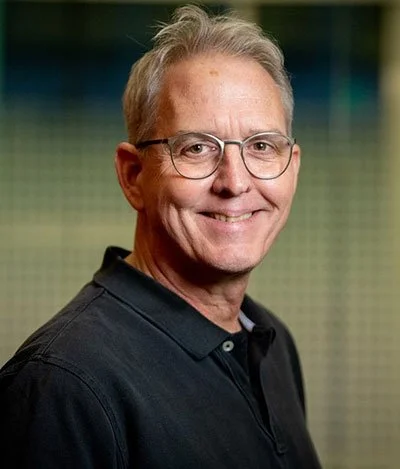
Martell said that producing research is not the same thing as producing impact. As a professor, he initially believed that publishing a paper meant the work was finished and that once the research was published, he could move on to the next project. That mindset followed him into industry when he joined LinkedIn after becoming a tenured professor. He recalled receiving a five out of five for leadership but only a two for execution in his first-year evaluation at LinkedIn. In retrospect, he considers the low execution score completely justified because he had brought an academic mentality into an industrial environment. He had to learn that innovation is not complete when a technology or research result exists. Instead, innovation becomes meaningful when it is delivered to a customer and addresses an actual need.
Martell’s Thoughts on Lockheed Martin’s Long-Term Tech Investments
When asked how he approaches long-term technology investments as CTO of Lockheed Martin, particularly when technologies may take years to produce tangible results, Martell said the CTO organization essentially has to determine where the “puck” will be in roughly 10 years and then determine what investments need to be made today so the company is positioned to reach that future. He described this as the responsibility of the CTO’s office to ask the “future question.” Lockheed Martin does this through a future council and by consulting a broad network of stakeholders, including universities, partners, customers, and other experts and institutions. The company considers what warfare, defense, space exploration and GPS might look like a decade from now and works backward to determine what technologies need to be developed today. Martell shared that Lockheed Martin currently invests across 14 technology domains, including areas such as artificial intelligence, quantum technology and engineered biology. Some of these areas may not have an obvious immediate application, but the company invests because they could become important in the future.
Martell described Lockheed Martin’s strategy as a kind of “cone.” Early in the research process, the company invests broadly across many possibilities. As technologies mature, the company continually evaluates them and narrows its focus. The goal is eventually to determine whether a technology can transition into an actual product or capability that benefits customers. He said he has to remember that today was once the future. The technologies available today are often the result of investments made years earlier. Lockheed Martin therefore divides responsibilities between teams looking in opposite directions. Technology domain program managers focus on what lies ahead and identify emerging technologies worth investing in. Capability development managers look backward at existing investments and determine which technologies are sufficiently mature to begin transitioning into products and customer capabilities.
Martell used quantum technology to illustrate how this process works. Lockheed Martin has invested in quantum for roughly 10 to 20 years, despite periods when it was unclear whether those investments would ultimately pay off. That long-term investment is now beginning to produce technologies that can move toward commercialization. Martell identified quantum sensing as an area that has reached a stage where it can begin to be productized. Quantum positioning, navigation and timing are also approaching the point where relatively short-term investments could help turn the technology into a usable product or capability. Martell ultimately described innovation strategy as a constant tension between immediate needs and long-term investment. He said that companies must spend money in both directions: investing in the future while simultaneously examining past investments to determine what can be brought to customers now. That balance is complicated by the fact that resources are finite. Martell described dollars as “zero sum,” meaning that shifting resources toward today's priorities necessarily leaves fewer resources for future-oriented investments, and vice versa.
On Autonomous Defense Systems and Lockheed’s Approach to Research and Collaboration
When Freedman asked Martell about the “future of increased autonomy across defense systems,” he said the goal should not be “a truly autonomous future,” but rather a future built around human-machine teaming, with as much autonomy as people can safely and comfortably trust. He argued that autonomy is most appropriate when errors are either inconsequential or “easy to detect and correct.” He uses his self-driving car as an example. The vehicle can make thousands of decisions per second without requiring him to intervene in each one, but he remains part of the “macro loop”: he has developed justified confidence in the system while retaining the ability to take control when necessary. He believes this is a useful model for autonomous warfare as well. In military systems, humans therefore do not need to oversee every individual decision, but they must retain the ability to detect problems, exercise judgment and override the technology. Even when an autonomous system has technically made the correct decision, a human pilot or operator may determine that the action should not be taken. Martell said that maintaining that human authority is why “human-machine teaming is extremely important.”
On the subject of Lockheed Martin’s approach as an ecosystem spanning universities, startups, international partners and other major technology companies, Martell noted that Lockheed invests heavily in universities, both to support fundamental research that can seed future technologies and to maintain a talent pipeline. It also has a ventures fund that recently increased from $400 million to $1 billion, allowing the company to invest in startups tackling difficult defense problems and leverage innovation across the broader industry. International collaboration is another major part of the ecosystem. Martell brought up Lockheed's laboratory in Australia, where researchers bring a different perspective on global challenges and customers, as well as partnerships with Fujitsu and IBM on quantum computing. He highlighted a new quantum computing center in Switzerland established jointly with IBM, and mentioned Lockheed’s European operations and efforts to identify promising universities and startups in places such as Europe and Japan. Martell said his broad network is ultimately a way of hedging against uncertainty. Because predicting the future means some investments will inevitably fail, Lockheed cannot expect to make every technological bet correctly. By investing across a diverse ecosystem and tapping different sources of creativity and expertise, the company can spread its risk rather than relying on a single internal perspective. He acknowledged that “We’re not going to get everything right,” making the broader ecosystem essential to finding the technologies needed to solve future problems.
Martell said he expects autonomous systems to be deployed in national security, although he prefers the term “autonomous subsystems” when humans remain responsible for supervising them. He believes autonomy can improve safety by reducing the number of people exposed to dangerous situations, but systems must first be empirically tested to establish an acceptable “error envelope.” Commanders need to understand what kinds of mistakes a system might make and decide whether those risks are acceptable. He compared this to using a mortar: through training, operators learn the weapon’s range of possible outcomes and understand when it is appropriate to use. Autonomous systems should be treated similarly, he stressed. Repeated testing can build “justified confidence” in a system, while, ideally, operators retain the ability to override it if necessary.
Thoughts on Quantum Technology
When Freedman asked what the AI industry’s experience can teach about quantum technology, Martell said the biggest lesson is to “de-hypify” emerging technologies and focus on empirical evidence rather than sweeping predictions. He rejects portraying AI as either something that will destroy everything or a universal solution, describing it instead as “a collection of statistical tools” that work extremely well for some applications and poorly for others. He said the same discipline should apply to quantum computing, particularly amid claims that combining quantum and AI will transform everything. While some applications are already well understood (such as the threat quantum computing poses to public-key cryptography and the development of quantum-resistant approaches) many potential uses remain uncertain. Lockheed is therefore researching specific questions, including whether quantum computing could eventually solve currently intractable problems in computational fluid dynamics. Rather than assuming quantum will transform everything, Martell said the company is developing algorithms and testing where quantum might provide a meaningful advantage. “For most questions that we care about, we don’t know the answers to these yet,” he said, summarizing his approach simply: “Dehypify.”
While Martell acknowledged Lockheed Martin is making a major bet on quantum technology, he distinguished between different applications. The company is investing more heavily in quantum sensing and quantum positioning, navigation and timing than in quantum computing itself. He said that quantum’s impact may come less from conventional quantum computers and more from using quantum phenomena in other technologies. For example, quantum effects could improve sensors by filtering out noise, allowing systems to extract useful information from less data. He also sees potential for extremely precise inertial sensing, which could dramatically improve dead reckoning and navigation, particularly for systems such as submarines that need to determine their position without relying on external signals.
Thoughts on “Hype” Surrounding New and Evolving Technologies
One of the hardest parts of communicating emerging technology is translating technical reality without losing the audience, Martell said. As an engineer and scientist, his instinct is to correct hype by explaining exactly what is and is not happening, but he says that approach can quickly turn a conversation into a graduate-level lecture. Instead, he has learned to find “the right story,” a simple framing that conveys the important properties of a technology while helping people avoid exaggerated claims. He called AI “statistics at scale” and although he acknowledges that the phrase is technically incomplete, he finds it useful because it gives nontechnical audiences a familiar framework that AI uses data to build complex models that make predictions, and those predictions can be wrong. Understanding AI this way helps people recognize that errors can result from problems with the data, the model or changes in the world, rather than treating AI as an intelligent entity that necessarily knows the answer. Martell sees effective technology communication as finding a narrative that gives people “the right perspective” and a practical framework for distinguishing what a technology actually does from the hype surrounding it. He describes that as a “fascinating and hard” problem to have.
Martell believes the key to moving technology from the lab into the real world is listening closely to the customer. He said that companies often develop impressive technologies that solve problems customers do not actually have. He has therefore developed a strong appreciation for product management, which he describes as the function that connects a customer’s actual needs with the technologies an organization has available and determines whether those pieces can be assembled into something the customer will value and buy. He pointed out that customers often know they have a problem without knowing exactly what solution they need. That makes the “productization layer” between technological innovation and customer demand essential. Industry is particularly well positioned to bridge that gap because it must work within real-world constraints while turning technology into something practical. Martell shared that this represents a major change in his own thinking. Earlier in his career, he was an engineer who believed that if you built something sufficiently impressive, “they will come.” He no longer believes that. The technology world is full of innovations that, in hindsight, may have been better than the products that ultimately succeeded, but marketing and product development matter. His career has taught him that building the technology is only part of the process and that understanding the customer and successfully bringing the product to market are equally important.
As his conversation with Freedman came to a close, Martell stressed that AI and other technologies should be treated as tools rather than something fundamentally new or autonomous because “they’re all just technologies.” At the same time, organizations should take potential dangers seriously, asking what risks a technology creates and how those risks can be mitigated. He recommended that rather than adopting a technology because it is fashionable and assuming it will solve an organization’s problems, leaders should identify specific use cases, establish measurable ways to determine whether those problems have actually been solved, and then test whether the technology delivers the desired results. Martell observed that this pattern has repeatedly appeared under different names (“Blockchain,” then “Big Data,” now “AI,” and potentially “Quantum” next) with organizations tempted to believe that adopting the latest technology will solve their broader problems. He said that this reverses the proper process which is to define the problem, establish how success will be measured, and then determine whether the technology works for that particular use case. He concluded that we need to “tone down the hype.”