
The Working Clothes Inside a Gee’s Bend Quilt
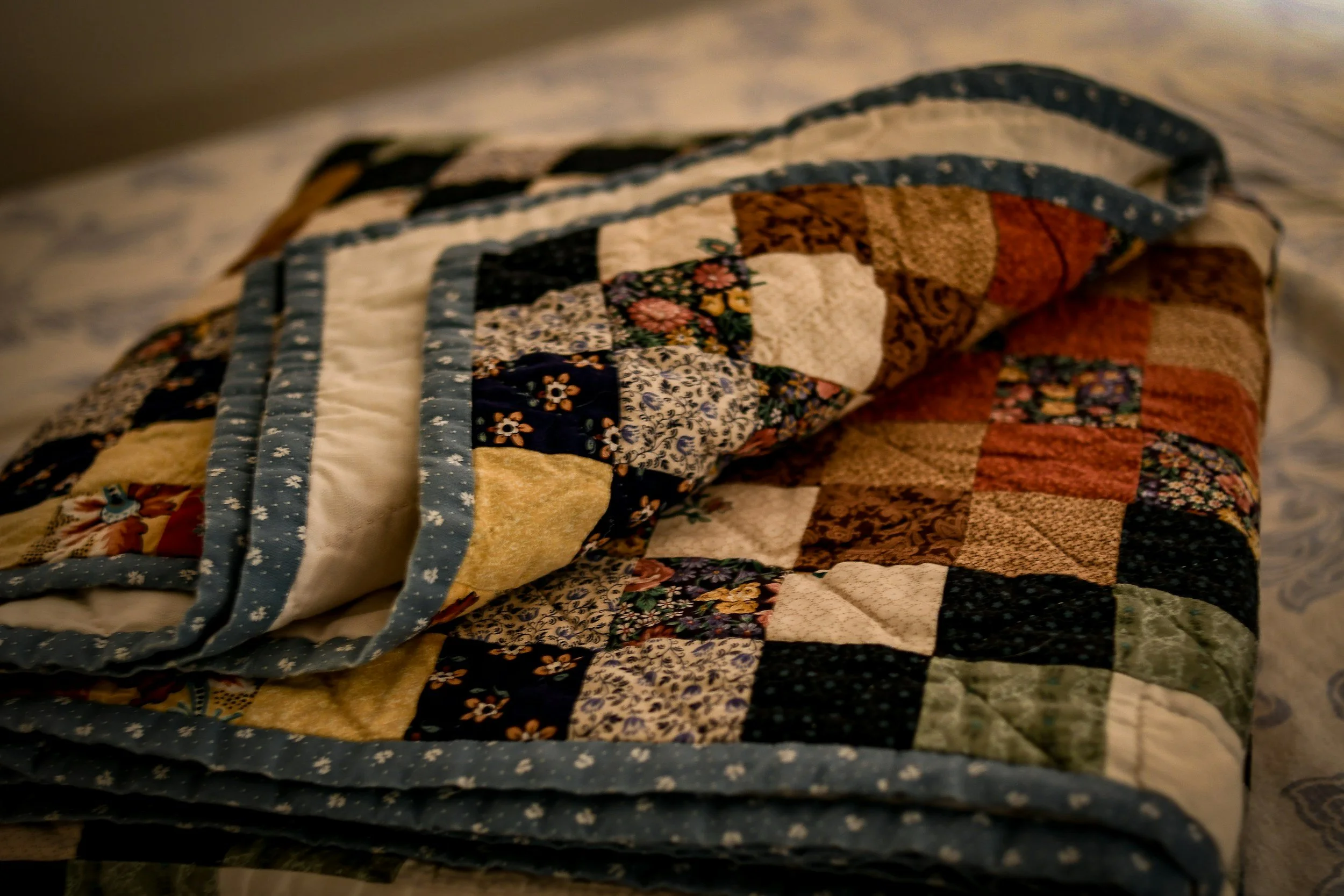
Denim keeps an uneven record of the person who wears it. A knee wears pale. The cloth inside a seam stays dark. Cut the garment up and the differences survive even after the shape of a pair of trousers has disappeared. In quilts made in Gee's Bend, Alabama, worn fabric could provide a palette a bolt of uniform new material could never supply.
The Metropolitan Museum of Art holds a Lazy Gal Bars quilt by Loretta Pettway. The name of the pattern suggests a simple proposition, strips arranged in relation to other strips. Look longer and the proposition becomes more interesting. A bar has a width, a length and a position. The fabric within it may already carry variations. Two strips nominally the same color can lead the eye in quite different directions.
The decisions inside a pattern
A pattern supplies constraints. It does not answer every question that arises when a maker spreads pieces in front of her. Where should a short length end? Should a conspicuous change of shade be given a prominent place or held against something that reduces its force? Joining smaller pieces introduces extra lines. Each seam is both an attachment and a visual event.
Seen in a gallery, a quilt's composition can recall abstract painting. That comparison can help an unfamiliar viewer notice rhythm or shifts of scale. It can also divert attention from decisions painting does not require. A quilter works with material that already has dimensions and a history of wear. She must join it, use it to make a textile of useful size and consider how the result feels as well as how it looks from across a room.
An artist with a name
The phrase “Gee's Bend quilts” identifies a community with a rich history of making. It can also become a convenient way of praising a group without learning anyone's name. A museum label identifying Loretta Pettway permits a more exact encounter. This quilt embodies choices made by a particular artist within a tradition that other artists used in their own ways. One can return to another work by the same maker and look for differences.
The Alabama community's history includes enslavement, sharecropping and struggles over land and income. The reuse of clothing belongs within that history, yet thrift supplies an incomplete explanation for the visual decisions in any individual quilt. Give two skilled people the same pile of cloth and the resulting compositions will differ. Limited materials do not limit the importance of authorship.
The best reward for looking closely is the ability to see a piece of fabric in two times at once. It once had a position on a body or in a household. It now has a position inside a design. A patch that began as work clothes carries an earlier life into a wholly deliberate new one.
Sources
Loretta Pettway - Lazy Gal Bars quilt - The Metropolitan Museum of Art
Emma Lee Pettway Campbell - Blocks and Strips work-clothes quilt - The Metropolitan Museum of Art
Added to the Culture archive on November 24, 2026.