
Four Ways to Hurry at a Silent Movie
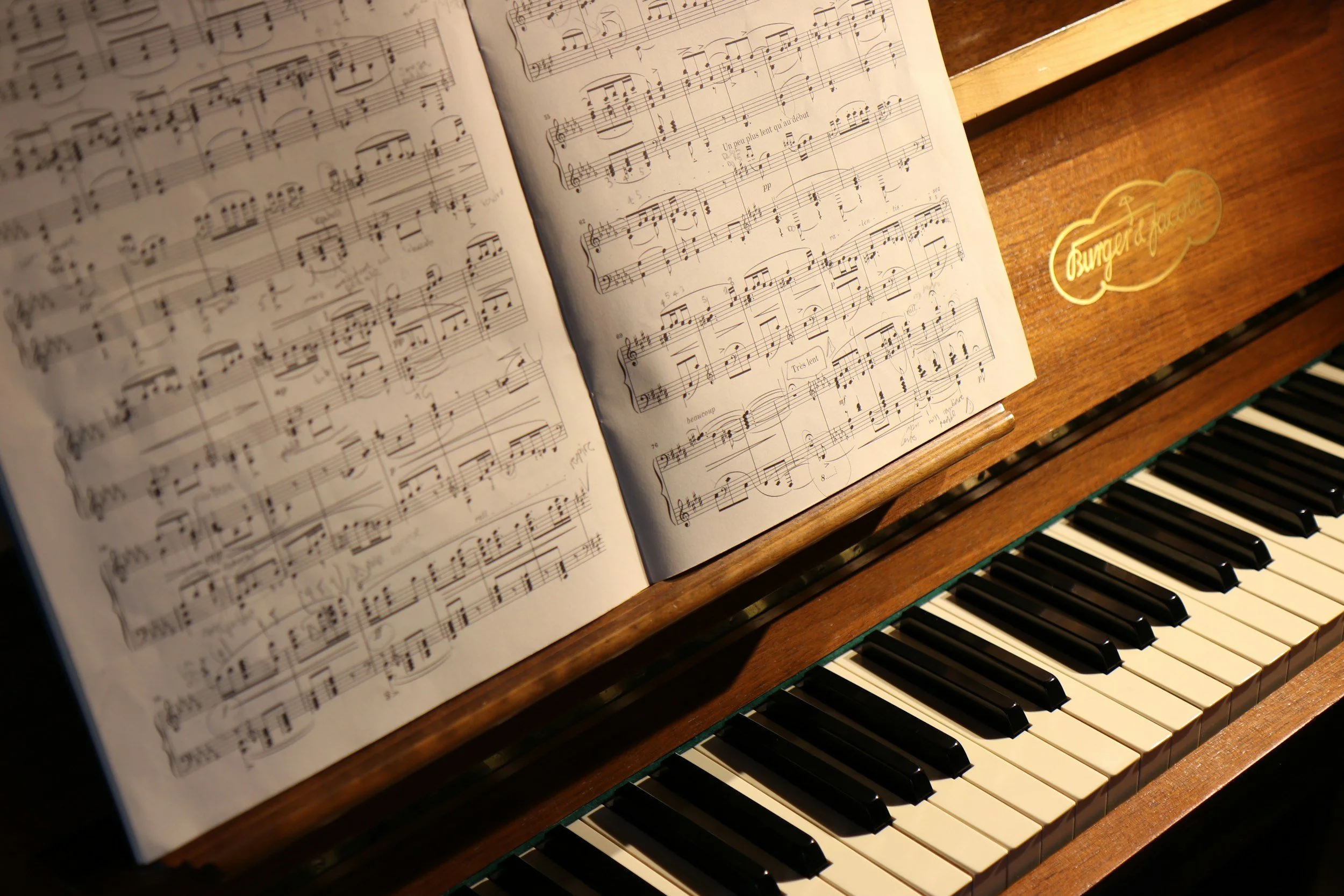
On the contents page of a piano book published in Cleveland, a musician has a choice of four ways to hurry. One piece is for a struggle, another for a duel. There is an all-purpose hurry, followed by a special one for a mob or a fire. They occupy consecutive places in J. S. Zamecnik’s first volume of Sam Fox Moving Picture Music. A cinema pianist scanning the list had to make a decision a modern audience rarely knows anyone ever made. What sort of hurry was happening on the screen?
The answer mattered because a moving image can leave quite a lot undecided. Picture a woman rushing toward a railway platform. Perhaps a child is in danger. Perhaps she is about to miss her train. Perhaps the joke is that the train is standing still and she has plenty of time. The feet and the platform can look much the same in each case. Whoever plays the first few notes helps the audience decide which version to believe.
A pianist’s working library
The Silent Film Sound & Music Archive makes the Sam Fox volume available to browse and identifies its copy as a 1914 publication. Its twenty-two numbered entries include music for a storm, a sailor and a fairy. A funeral march and a death scene receive separate entries. There are even two pieces for a burglar. Browsing the contents makes early cinema sound like a world in which much malicious business took place after dark and a pianist could never have too much choice about how to accompany it.
A collection like this was called a photoplay album. Each piece could travel from one story to the next. A burglar might appear for two minutes in a comedy one week and turn up as a genuine threat in a drama the following week. The player could use a familiar piece wherever the onscreen action seemed to call for it. To the audience, the music belonged to the scene before them. To the player, it also belonged to a shelf.
Other papers on that shelf served different purposes. A score could be written for a particular film. A cue sheet gave the musician a set of prompts, sometimes including just the opening notes of a suggested selection so the player could recognize it. Orchestral parts divided the sound among different players. Music written for a salon orchestra could find another life accompanying a film. Those distinctions, set out in the Library of Congress research guide, are audible differences in how a picture could reach an audience.
A small experiment in suspense
Try an experiment that requires no musical training. Picture two cuts. In the first, a hand pushes open a door. In the second, someone inside the room looks up. Hum a steady little figure under both shots. The person looking up seems to have heard the approach. Now begin the figure only after the cut to the face. This time the music seems to belong to the person inside. The two images are identical. The point at which the tune starts has moved the listener across the threshold.
Now return to Zamecnik’s four hurries. A duel has an arrangement a crowd lacks. Two opponents concentrate attention in a way a fire on a street seldom does. Giving these scenes separate headings recognizes that speed alone tells a viewer very little. There is an enormous difference between asking an audience to watch the distance between two people and asking it to take in everybody running at once.
The contents page is less perceptive elsewhere. It assigns individual pieces to broad national or ethnic categories and groups Mexican and Spanish music under a single heading. A struggle and a duel warranted separate treatment, yet two countries on different continents could share a musical shorthand. The page preserves a choice about whose actions deserved fine distinctions and whose identity a theater could announce in a few familiar notes. Modern listeners can hear that history even when they have no interest in reviving its assumptions.
The evidence that fits on a music stand
The Library of Congress holds more than 1,500 cue sheets for silent films. For some lost pictures, surviving musical material is among the few ways to study how the film might have unfolded. A change from a march to a plaintive piece offers a clue about a shift in mood. A succession of cues may give a researcher a rough order of events when the projected images themselves can no longer be consulted.
That evidence has limits worth listening for. A cue sheet records what someone proposed. It cannot by itself establish how loudly a player struck the keys, whether a pause drew laughter, or which musician knew a different piece that worked better that night. Nor can a score recover the face on the other side of the door. A reader can nevertheless recover a striking amount about the work of showing a film by paying attention to the choices left open on the page.
The Silent Film Sound & Music Archive also links a modern piano recording of Zamecnik’s collection. Listening without a picture briefly reverses the old arrangement. Instead of waiting for music to explain the action, the listener supplies an imaginary screen. Try guessing where a struggle ends and a duel begins before consulting the list. For a few minutes, the person with the difficult job in the theater is you.
Sources
Silent Film Sound & Music Archive · Sam Fox album and piano recording
Library of Congress · Silent film scores and cue sheets
Library of Congress · Music for silent film
Added to the Culture archive on November 24, 2026.