
What the Apprentice Sees at the Workbench
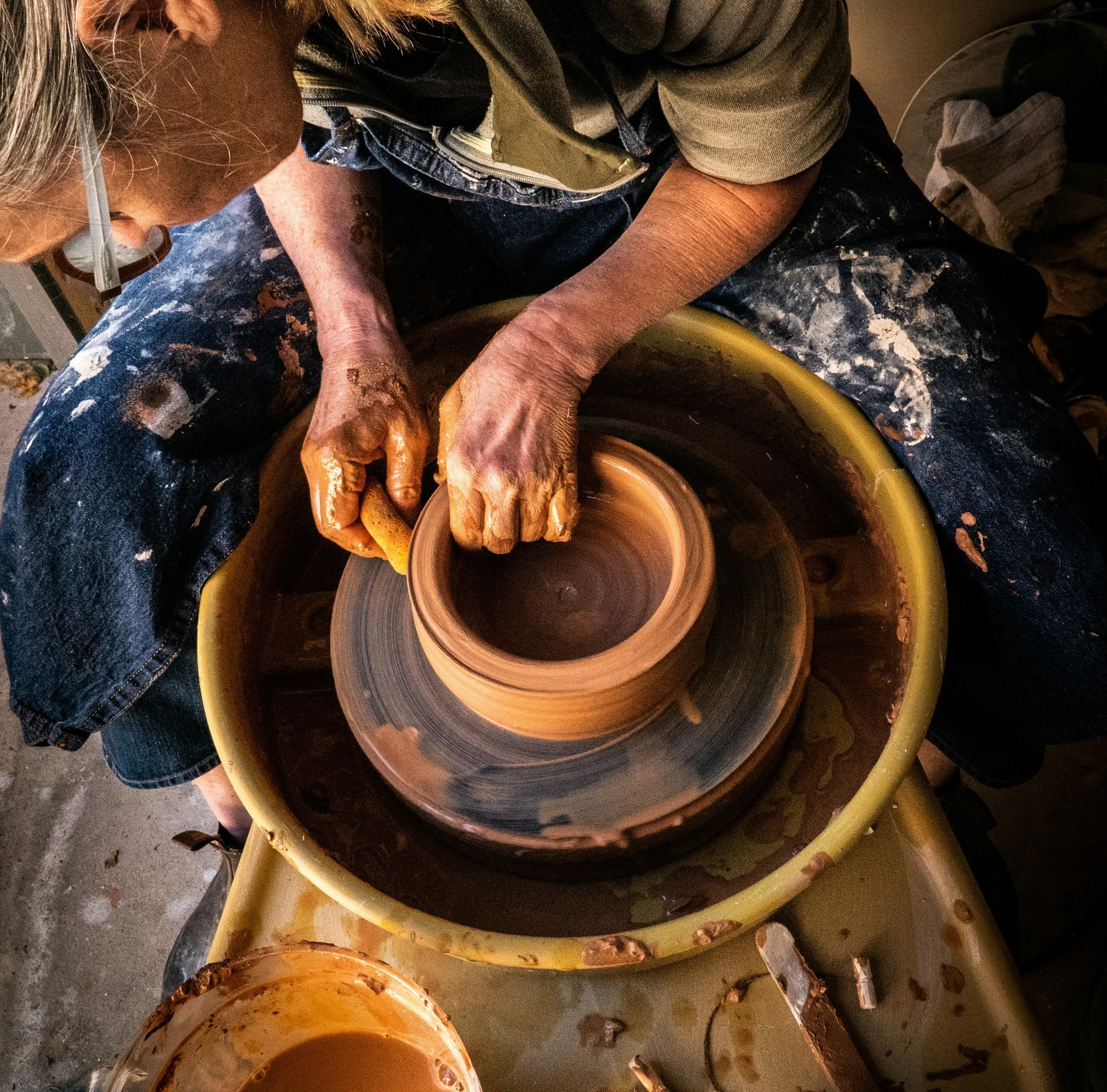
Suppose a basket lid rocks when an apprentice sets it down. A visitor might blame the lid. The teacher turns it a quarter turn and tries it again. Suddenly there are two things to look at, the lid and the rim it rests on, and a small mystery about where the unevenness begins. A correspondent could spend a morning in a workshop and come away with no better opening than that test. It puts the reader beside a person learning how to tell whether a piece of work is good.
Arrange to watch an ordinary lesson
When requesting a visit, ask what the apprentice expects to work on that day. A demonstration of a finished piece may be possible whenever guests arrive. A lesson in fitting a lid depends on there being a basket at the right stage, two people with time to work, and permission to stay while something goes wrong. A later visit might give you a better view of how the work is taught.
Explain the publication, its audience and the proposed use of photographs or recordings. Ask the teacher and the apprentice individually what you may observe, record, photograph and publish. Check whether a customer’s unfinished order, a design drawn by someone else or another worker in the room might enter the frame. Ask where to put your notebook and when a question might interrupt a task. The answers will vary by workshop.
The Smithsonian’s Folklife and Oral History Interviewing Guide asks interviewers to explain a project and seek permission for recording. It also invites questions about materials, tools and how people learned their skills. That combination is valuable in a working room. Someone may welcome a conversation about learning to weave and still want a particular pattern kept out of a photograph. Pass that limit along to the picture editor.
Stay for the second attempt
In the imagined lesson, the apprentice watches the teacher turn the lid. Now watch what happens when the apprentice takes it back. Does the learner sight along the rim, set the basket on another surface, or try the turn once more? During a natural pause, ask what each test could establish. An experienced maker may see something instantly that takes several tries to explain to a visitor.
Give the apprentice time to answer first. Ask what they expected to happen, what they actually saw and what they will try on the next basket. Ask the teacher what prompted the intervention and what would have happened if the work had continued. If the two give different accounts, keep both in your notes. The person doing a task and the person watching for a mistake occupy different positions.
Write down an observable standard of success in the maker’s own terms. Perhaps this lid needs to lift with one hand because the customer expects to be carrying a bag of purchases in the other. Perhaps a little movement is intentional. Ask who specified the intended use and what margin the maker allows. A reporter’s idea of a perfect fit could make an accurate account of the lesson impossible.
Trace the hours hidden in the object
A photograph of the hands at work seldom tells readers when the job began. Sketch a timeline with the apprentice. Include gathering or buying materials, preparing them, practicing an awkward movement, doing paid work and waiting between stages. Mark estimates as estimates and distinguish time spent on this basket from time spent learning to make one like it.
If someone says a basket took three days, ask what happened on each day. Perhaps one evening was spent preparing material for a whole batch, another morning on a single base, and the final afternoon on several lids. The answer can change your account of the price, the pace of a lesson and the availability of the teacher. A notebook, order sheet or dated work photograph may help establish the sequence if the maker offers to show it.
Ask about a stage you missed. If material preparation happened the previous week, attribute the description to whoever did it. When two available objects illustrate an earlier and a later stage, identify them as separate pieces. A series of photographs can imply that a single basket sprang up in one sitting unless the captions explain the passage of time.
Follow the craft into its present use
Give the object a destination. Who ordered it, who will carry it, and who will be asked to repair it if the rim wears through? An answer might take the story to a produce stall, a design shop, a family kitchen or back to the workshop shelves. Verify the destination of the particular piece you saw. It can give the reader an account of working relationships that a row of finished objects leaves invisible.
Ask about a change that the teacher remembers making. A tool may have arrived from a different trade. Customers may have asked for smaller baskets that fit on a particular shelf. Pursue one change through a dated example or a second person who remembers it. An apprentice may also bring a design idea, a different way of keeping track of orders, or a question that prompts the teacher to reconsider a familiar motion.
Check the terms you will use for the people and the work. A training arrangement may have a title in the local language, a set duration, a wage or a fee, or terms worked out informally. Explain the arrangement these two people describe. Give them their individual credits when naming the designer, the person who started the piece and the person who finished it.
Give the apprentice the last look
For a closing scene, return to something the learner can now judge. In the hypothetical lesson, that might be the moment the apprentice turns the basket while holding the lid still. Follow up after the visit to learn whether the piece was accepted, reworked or kept as a sample. Whatever the outcome, ask how the learner recognized it. The answer gives the reader a glimpse of a skill that will still be there after the basket leaves the bench.
