
Restored to What? Finding the Reference Behind an Ecological Claim
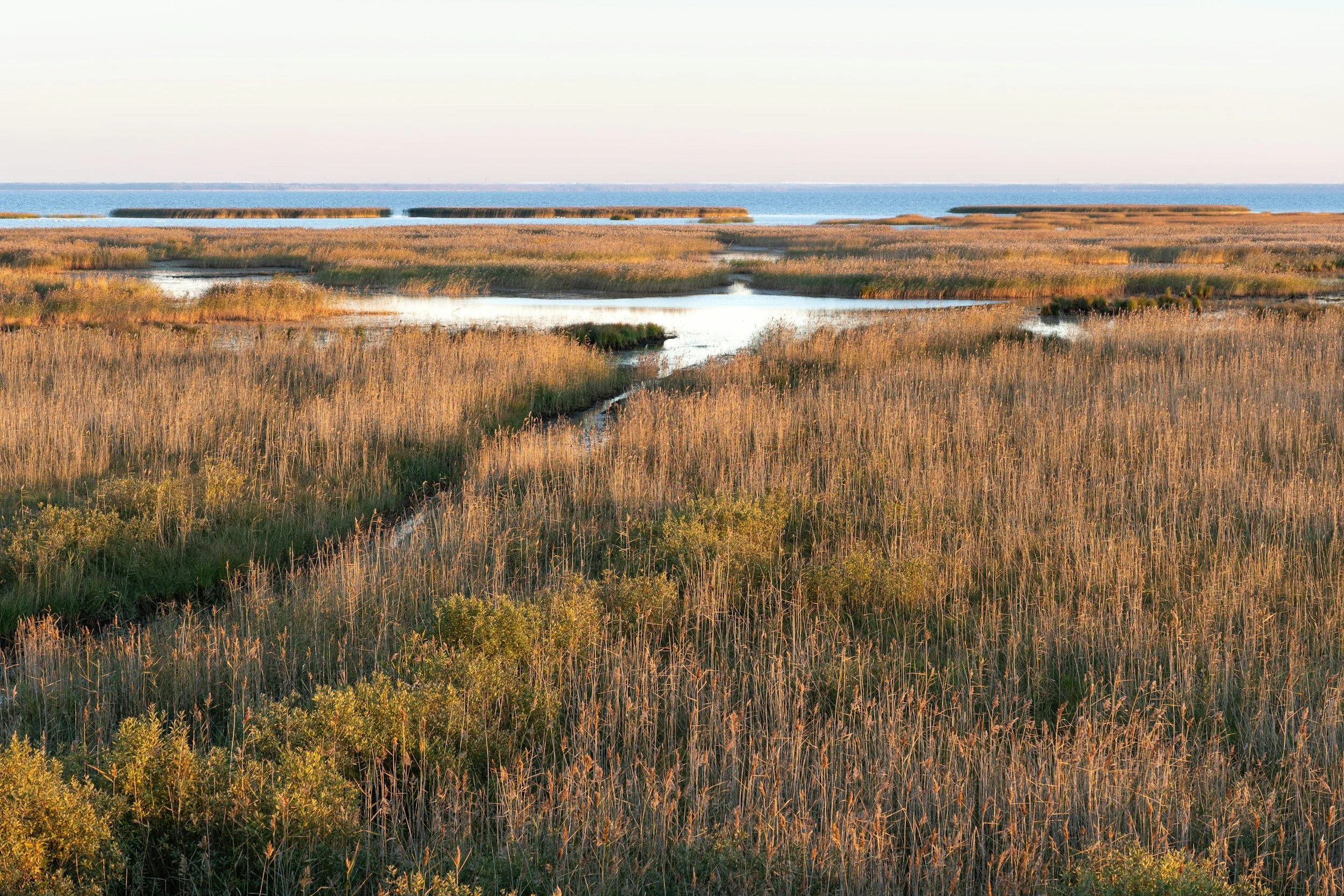
A ribbon cutting can establish that construction ended. It cannot, by itself, establish that an ecosystem recovered. When a wetland, stream corridor or grassland project is described as restored, the most useful reporting question is deceptively simple: restored to what? The answer identifies the reference against which change is being judged, the evidence needed to evaluate that change and the limits of the claim.
For international correspondents, the reference may be unfamiliar even when the landscape looks familiar. A photograph of green vegetation can suggest success to an audience abroad while revealing little about the intended habitat, water regime or species composition. Reporting the evaluation process makes an environmental feature educational without requiring readers to accept the project's publicity language.
Start with the intended condition
A reference condition is a basis for comparison. The National Park Service describes several possible foundations, including historical information, comparison sites, models and expert judgment. The appropriate foundation depends on the resource and the assessment. A reference does not automatically mean an untouched landscape or a single date before people arrived.
Ask the project team to provide its written objectives and the documents used to establish them. Identify whether the goal concerns plant communities, water movement, habitat structure or another measurable feature. If different documents describe different goals, establish which version governed the work being evaluated. A broad aspiration to improve nature is not yet a testable outcome.
For a hypothetical wetland project, an objective might concern seasonal inundation rather than permanent open water. A dry-looking photograph taken in one month would not settle whether that objective had been met. The reporter needs the stated target, its seasonal context and observations suited to measuring it. Do not substitute an attractive visual condition for the actual ecological goal.
Examine the comparison site
EPA's restoration principles discuss using reference sites while accounting for differences between locations. A nearby site can help explain what the project is aiming toward, but proximity alone does not make it a valid comparison. Ask why it was selected and which characteristics make it relevant to the restored area.
Request a map that places both sites in their landscape context. Ask about soil, hydrology, land use and the features being compared. These questions are prompts for the specialists responsible for the assessment, not a reporter's independent ecological certification. Record both similarities and acknowledged differences so the reference does not become an unexplained gold standard.
An interview can become more precise by asking the scientist to identify one feature for which the reference is useful and one for which it is less informative. That answer often produces a clearer explanation than asking whether the sites are generally alike. It also helps readers understand why successful restoration need not create an exact visual replica.
Separate construction outputs from ecological outcomes
Project documents may report acres treated, seedlings planted or material removed. Those are useful descriptions of work completed. They do not answer every question about subsequent ecological condition. Keep the categories separate in notes and graphics, especially when a press release places them beside a claim of recovery.
In an imagined project, a contractor could document planting 5,000 seedlings. To describe survival, the correspondent would need later observations, the counting method and the relevant denominator. To describe a changed habitat, additional indicators might be necessary. The article should not quietly promote a count of installation activity into proof of a broader ecological result.
Ask who gathered the outcome data and whether the methods were established before results were known. Request the monitoring protocol, not just the celebratory summary. If access is limited to a presentation, make that limitation visible in the wording: the team reported a result, rather than the publication independently confirming every underlying observation.
Give the monitoring period a role
Ecological assessments have a time dimension. EPA's principles emphasize monitoring and the importance of longer-term management. A first growing season, several years of observations and a single inspection are different evidence bases. The article should tell readers which one supports the stated result.
Build a small timeline for your own use: condition before work, construction dates, monitoring dates and the date of the claimed achievement. Check whether observations cover comparable seasons. A seasonal contrast may be real and visually striking without demonstrating the change attributed to the project. Ask the analyst how ordinary variation was handled.
Where a reference condition or monitoring method changed, request an explanation. A revised approach may improve the assessment, but comparisons across versions need care. Preserve the earlier definition in your reporting notes and ask which conclusions remain comparable. Readers need the relevant consequence of the revision, not an unexplained succession of technical documents.
Interview beyond the project announcement
Speak with someone familiar with the resource and methods who was not responsible for promoting the project. Give that person the objectives and monitoring evidence rather than asking for a verdict from a photograph. Ask whether the measurements address the stated goal and what additional observations would strengthen or narrow the conclusion.
A local observer can add valuable descriptions of changes over time. Attribute these accounts accurately and distinguish them from systematic monitoring. Someone's recollection of bird activity may provide an interview lead without substituting for a survey. The story can contain both kinds of evidence if it explains what each contributes.
Write an outcome with boundaries
A precise account might say that monitoring found a specified indicator moving toward the project's stated reference during a defined period. That sentence is more informative than declaring the entire ecosystem repaired. If some indicators improved while others remained unresolved, keep that variation rather than reducing the assessment to a single promotional label.
Choose a stock image that illustrates the habitat type without suggesting it documents the project. The caption should make the illustrative role clear. The most compelling reported image, when independently available with permission, would show the actual site at a known date; a generic photograph cannot supply that evidence.
The final feature should leave readers knowing what the project tried to achieve, how that condition was defined, what was measured and what remains uncertain. Those questions travel well across borders. They turn restoration from a reassuring word into an understandable process of setting goals, gathering evidence and evaluating change.
