
Justice in Real Time: How Ukraine Documents War Crimes While the War Still Rages
A few days after Russia’s full-scale invasion of Ukraine, Boris was going about his routine work as a security guard at a mid-sized farm of roughly 14,000 acres. He knew the situation was deteriorating, but nothing suggested what would come next.
In March, three Russian trucks arrived without warning. Soldiers handcuffed him and pulled a coarse, dark fabric bag tightly over his head, cutting off his vision and muffling sound, leaving him disoriented as the vehicle began to move. His captors drove him 30 kilometers north of Kharkiv, to Hoptivka, a military post repurposed into what would become one of the better-known torture facilities in the occupied territory. He was taken to the basement of a building that had been converted into a torture chamber.
He was not a soldier or a political figure, just an ordinary worker. Yet he was subjected to electroshocks on his fingers, waterboarding, and repeated beatings. He was confined with sixteen others in a space so small that no one could sit or lie down. There were no sanitary facilities. Prisoners were denied permission to relieve themselves, and with no room to move, some were forced to soil themselves or the floor beneath them, an indignity survivors describe as deliberate humiliation. For ten days, guards interrogated him relentlessly. “Tell me everything you know,” they demanded, though he had no idea what they wanted. The food was rotten. The humiliation was constant.
After ten days, Boris was released. Only later did he learn that the farm had been stripped of everything. Reports show that Russian forces routinely seize farms in occupied areas, transferring ownership to favored oligarchs or selling them to organized crime networks, with proceeds used to fund the war. Grain and other produce are stolen and exported through third countries, likely helping finance the invasion itself.
What happened to Boris was part of a systematic crime: pillage.
“Theft is the crime of pillage,” explains Cynthia Tai, Executive Director of Project Expedite Justice. “It happens in every war, usually against civilians. Sometimes soldiers are effectively paid by being told, ‘Take what you want.’”
Tai has an unusual specialty. She prosecutes war crimes, the kind committed in Yugoslavia and Rwanda, and now, in Ukraine. Yet she says Ukraine is unlike any conflict she has worked on before.
“It’s not because the crimes themselves are new,” Tai says. “It’s because we are documenting them while they are still underway.”
Investigators are assembling evidence in real time, drawing on open-source intelligence, satellite imagery, digital records, and increasingly, artificial intelligence. “The richness of evidence is unlike anything we’ve seen before,” she says.
That abundance comes with complications. Ukrainian police are responsible for documenting war crimes, but this was never part of their training. “They’re doing their absolute best,” Tai says, “but documenting war crimes is not what they were trained for before the war.” Prosecutors and judges remain equally disadvantaged.
When she first arrived in Ukraine shortly after the invasion, Tai recalls asking herself a simple question: what kind of help would I need if I were Ukrainian police? One day, law enforcement faces a predictable workflow. The next, everything is chaos. “It’s like a flower pot falling from a high windowsill onto your head,” she says. “Completely unexpected.”
Faced with overwhelming need, her organization made a deliberate choice to focus narrowly but strategically, on pillage, particularly as it affects Ukrainian farmers.
“We had to ask where the need was greatest,” Tai says, “and where help was not already flowing.” Farmers, she realized, were largely invisible, yet essential to Ukraine’s survival and eventual recovery. “They’re often on the front lines in rural Ukraine. If Ukraine is ever going to get back on its feet, agriculture has to survive.”
The work begins not with technology, but with listening. Farmers come forward with accounts of land seized, equipment stolen, and livelihoods destroyed. “Many have been dispossessed of their life’s work,” Tai says. “Some have been tortured. Their suffering is profound, and often unrecognized.”
Boris was one of those farmers’ employees whose case could be documented. In his case, one perpetrator, the acting head of a self-proclaimed “police” force in occupied Kharkiv oblast, was identified and convicted in absentia, receiving a 12-year sentence. Others remain unidentified. Victims may recognize tattoos or voices, but darkness, trauma, and fear make identification difficult.
“Some survivors are too traumatized to speak at all,” Tai says, her voice briefly heavy before turning matter-of-fact again. “We work with what we have.”
People often ask how she can do work so steeped in human suffering. Her answer is direct. “There is service, and there is joy attached to service,” she says. “When people trust me with their life stories, it gives me strength. And if we don’t record these stories, if we don’t name and shame, we send the message that this behavior is acceptable.”
After years prosecuting those most responsible for mass atrocity crimes at the International Criminal Court, Tai has come to believe that justice has historically been reserved for elites. Evidence was often collected too late or too poorly to be usable in court. Project Expedite Justice, now active in Ukraine, Ethiopia, and Sudan, was founded to change that by translating lived experience into legally usable truth.
“I do have hope for Ukraine,” Tai says. “Because justice here is not being postponed. It’s being built, painfully and imperfectly, but in real time.”
The outcome of the war remains uncertain. But because of work like this, accountability is already in motion. That matters, because justice, and the accountability that comes with it, is about lasting peace, deterrence, and in the case of Ukraine, survival. Readers interested in further reporting or in supporting survivor-centered accountability can visit Project Expedite Justice at www.projectexpeditejustice.org
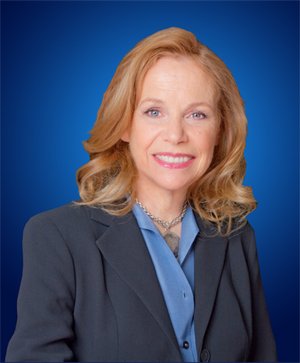
War Correspondent Mitzi Perdue writes from and about Ukraine. She is the Co-Founder of MentalHelp.global, an on-line program that will begin providing online mental health support in Ukraine, available on-line, free, 24/7.