
Covering Major Winter Storms in the United States: A Practical Guide for International Correspondents
A major winter storm affecting large parts of the United States, including New York, is more than a weather story. For international correspondents, it is a multi-layered reporting opportunity that intersects with infrastructure, public safety, climate trends, transportation systems, labor conditions, insurance exposure, and urban management. Covering such storms requires both meteorological understanding and institutional literacy. It also requires discipline to avoid exaggeration while conveying legitimate risk.
Winter storms in the United States vary widely in intensity and structure. Some are fast-moving snow events that disrupt travel for a day. Others are large-scale systems that stretch across multiple states, combining heavy snow, ice accumulation, coastal flooding, and severe wind. New York is particularly complex because it includes dense urban infrastructure in New York City, suburban commuter corridors, and upstate regions that regularly experience lake-effect snow. A single storm can produce drastically different conditions within the same state.
For international audiences unfamiliar with U.S. geography, correspondents must explain scale. The United States spans multiple climate zones. A storm system affecting the Northeast may simultaneously impact parts of the Midwest and Mid-Atlantic. Terms such as “Nor’easter” refer to powerful coastal storms that draw moisture from the Atlantic Ocean and produce heavy precipitation and strong winds. When covering New York, it is helpful to distinguish between New York City and upstate New York, as weather severity often differs.
Accurate terminology strengthens credibility. Snowfall totals are typically measured in inches in the United States. Wind speed is reported in miles per hour. Temperature is measured in Fahrenheit. International correspondents should consider providing metric conversions for global audiences. Explaining what a 12-inch snowfall means in practical terms—road closures, flight cancellations, school shutdowns—helps contextualize the data.
Infrastructure resilience is a key reporting dimension. In New York City, public transportation systems such as subways and commuter rail lines are central to daily life. Severe winter weather can disrupt service, delay trains, or suspend above-ground routes. Airports in the region, including John F. Kennedy International Airport, LaGuardia Airport, and Newark Liberty International Airport, frequently experience delays or cancellations during heavy snow or ice. Reporting should clarify whether disruptions stem from snowfall, ice accumulation, or wind conditions.
Power outages are another critical factor. Ice storms can bring down power lines, leaving thousands or even millions without electricity. Correspondents should monitor updates from local utility companies and emergency management agencies. Explaining how long restoration may take—and which areas are most affected—provides tangible information rather than abstract numbers.
Emergency management systems in the United States operate at multiple levels. Governors may declare states of emergency, allowing access to additional resources and regulatory flexibility. Municipal governments coordinate snow removal, road treatment, and shelter operations. Federal agencies such as the Federal Emergency Management Agency may become involved if damage exceeds state capacity. For international readers, clarifying these layers of authority prevents confusion about who is responsible for what.
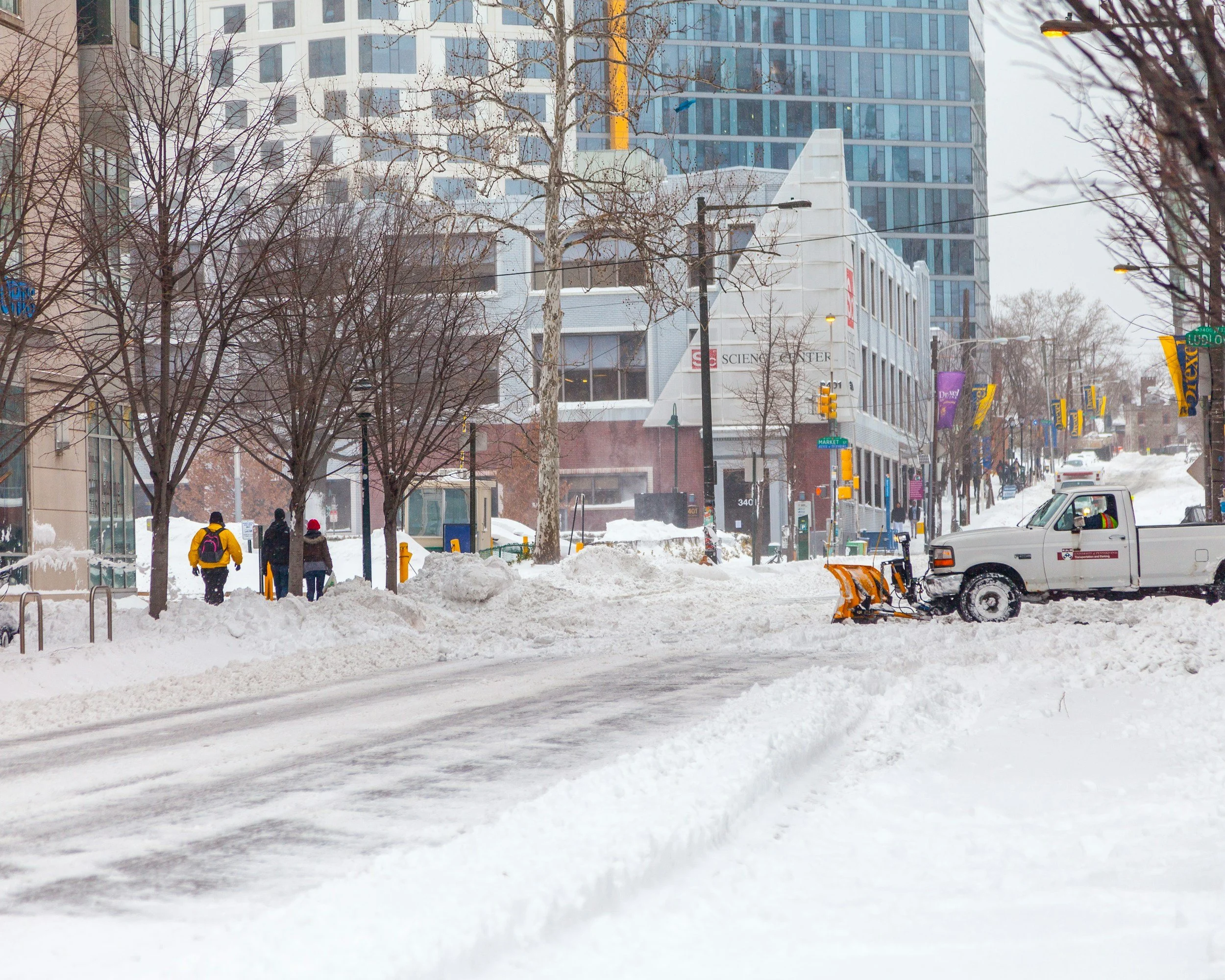
In New York City, snow removal is a major logistical operation. Thousands of sanitation workers and plows are deployed to clear streets. Salt and brine solutions are applied to prevent ice formation. Coverage can examine how quickly primary roads are cleared compared to residential streets. Urban density complicates snow management, particularly when vehicles are parked along narrow streets.
Economic impact is another important angle. Winter storms can halt construction projects, delay shipments, close retail stores, and disrupt financial markets. Wall Street institutions may operate remotely during severe weather, reflecting broader trends in hybrid work models. Airports and airlines incur significant costs from cancellations. For correspondents, quantifying economic disruption requires careful sourcing and avoidance of speculative estimates.
Insurance exposure is particularly relevant when storms cause property damage. Roof collapses due to heavy snow, burst pipes from freezing temperatures, and coastal flooding in low-lying neighborhoods can lead to claims. Explaining how homeowners’ insurance policies address winter-related damage provides educational value. International audiences may not realize that insurance structures differ widely between countries.
Public safety messaging during winter storms often emphasizes travel restrictions. Authorities may issue advisories urging residents to avoid nonessential travel. In extreme conditions, certain highways may close temporarily. Reporting should clarify whether restrictions are mandatory or advisory. Sensational phrasing should be avoided; the goal is clarity.
Human-interest reporting can add depth without drifting into sensationalism. Stories about how hospitals maintain operations, how delivery workers navigate hazardous conditions, or how homeless shelters expand capacity during extreme cold provide insight into resilience. However, correspondents should avoid portraying normal winter adaptation as extraordinary crisis unless conditions truly warrant that characterization.
Climate context is increasingly part of winter storm reporting. While individual storms cannot be attributed directly to climate change, broader patterns—such as warmer oceans contributing to moisture intensity—are frequently discussed by scientists. Correspondents should rely on meteorological experts rather than draw conclusions independently. Precision matters. Audiences benefit from understanding the distinction between weather events and long-term climate trends.
Data visualization enhances reporting accuracy. Maps showing snowfall distribution, wind gusts, and temperature drops help audiences grasp regional variation. However, maps should be sourced from reputable institutions such as the National Weather Service. Social media graphics without clear attribution should be avoided.
Digital misinformation can spread quickly during severe weather. Outdated images from previous storms are sometimes recirculated as current footage. International correspondents should verify timestamps and geolocation before publishing user-generated content. Credibility is especially important during emergency situations.
Transportation ripple effects extend beyond New York. Major storms in the Northeast can disrupt national supply chains. Delayed freight trains, grounded cargo flights, and port slowdowns may affect goods distribution. Reporting can connect localized weather to broader economic systems without overstatement.
Educational institutions frequently close during heavy snowfall. Explaining how school closure decisions are made can be informative. Districts consider road safety, public transit availability, and forecast severity. Remote learning infrastructure may mitigate disruption compared to past decades.
Urban vulnerability varies by neighborhood. Low-income communities may face greater heating insecurity or slower snow clearance. However, correspondents must approach such disparities carefully, relying on verified data rather than assumptions. Responsible reporting highlights structural realities without oversimplifying.
For international correspondents new to U.S. winter conditions, understanding cold-related risks is essential. Frostbite and hypothermia can occur quickly at very low temperatures, particularly when wind chill factors are high. Reporting should explain wind chill, which reflects how cold temperatures feel due to wind speed.
Photographic coverage during winter storms can be visually striking. Snow-covered landmarks in New York City often attract global attention. However, correspondents should balance aesthetic imagery with substantive reporting. Dramatic visuals should not overshadow critical information about safety and recovery.
Recovery coverage is as important as immediate impact reporting. How quickly public transportation resumes normal schedules, how municipalities manage snow removal costs, and whether additional federal support is requested are follow-up angles that provide depth beyond the initial event.
Mental preparedness is also relevant for journalists covering extreme weather. Working long hours in cold conditions requires proper equipment and planning. Waterproof clothing, insulated footwear, backup power sources, and safe transportation arrangements are practical considerations. Personal safety should not be compromised for footage.
For global audiences, winter storms in the United States can appear dramatic due to scale and media visibility. International correspondents play a key role in contextualizing severity. Not every snowfall constitutes a crisis. Distinguishing between routine seasonal events and truly historic storms prevents alarmism.
Ultimately, covering a winter storm in the United States—and particularly in New York—requires more than reporting snowfall totals. It involves understanding infrastructure resilience, institutional coordination, economic implications, and community adaptation. Educational reporting provides audiences with insight into how a large, complex society manages severe weather.
By prioritizing verified information, institutional clarity, and contextual depth, international correspondents can deliver coverage that informs rather than amplifies fear. Winter storms are recurring events. Professional, disciplined reporting ensures that each one is documented with accuracy, proportion, and responsibility.