America at 250: A Fourth of July Reflection for the Foreign Press
On July 4, 2026, the United States marks a milestone of rare historic significance: the 250th anniversary of the Declaration of Independence. For Americans, Independence Day has always been more than a national holiday. It is a civic ritual, a moment of celebration, remembrance, debate, and renewal. For foreign correspondents covering the United States, this anniversary offers something equally important: an opportunity to examine America not only as a country, but as an unfinished democratic experiment whose meaning continues to evolve.
Two hundred and fifty years after 1776, the United States remains one of the most closely watched nations in the world. Its politics, economy, culture, technology, military power, and democratic institutions influence lives far beyond its borders. Decisions made in Washington often shape markets in Europe, security calculations in Asia, migration patterns in the Americas, conflicts in the Middle East, and debates over freedom of expression across the globe. To report on the United States is, in many ways, to report on a country whose domestic story is inseparable from the international order.
Yet America’s 250th anniversary should not be viewed only through the lens of power. It should also be understood through the lens of ideals. The Declaration of Independence introduced a radical promise: that government derives its legitimacy from the consent of the governed, and that human beings possess rights that no authority should arbitrarily deny. Those words did not immediately apply equally to all. The country was born with profound contradictions, including slavery, exclusion, inequality, and the denial of rights to women, Native Americans, Black Americans, and many others. But the power of the American experiment has often rested in the fact that its founding ideals created a language through which generations could demand change.
That tension between promise and reality remains central to the American story. It is visible in the country’s most celebrated achievements and in its deepest divisions. It can be seen in the civil rights movement, in struggles for voting rights, in debates over immigration, in the fight for press freedom, and in the continuing effort to define what equality and citizenship mean in a diverse society. The United States at 250 is not a finished monument. It is a living republic, still arguing with itself, still testing its institutions, and still asking whether it can live up to the principles it proclaimed at its birth.
For foreign correspondents, this is precisely why America remains such a compelling assignment. The United States is not easy to cover because it cannot be reduced to one narrative. It is a country of extraordinary innovation and deep inequality, immense opportunity and persistent anxiety, global leadership and internal polarization. It is a nation where patriotism can mean celebration, protest, military service, civic activism, religious faith, artistic expression, or a demand for accountability. The task of the foreign correspondent is to capture these complexities with accuracy, independence, and context.
This anniversary also reminds us of the essential role of journalism in democratic life. The American constitutional tradition places a special value on a free press, not because journalism is always perfect, but because democracy cannot function without scrutiny, transparency, and informed public debate. For international journalists working in the United States, the responsibility is even broader. They explain America to the world, but they also explain the world to America. Their reporting helps international audiences understand not only what happens in the United States, but why it matters.
At a time when misinformation spreads rapidly, when public trust in institutions is under pressure, and when journalists around the world face intimidation, censorship, imprisonment, and violence, the mission of the foreign press is more important than ever. Covering America requires more than describing political conflict or election results. It requires listening to communities, understanding history, following policy consequences, and resisting simplistic narratives. It requires seeing the United States not only through official statements and national ceremonies, but also through the lives of ordinary people.
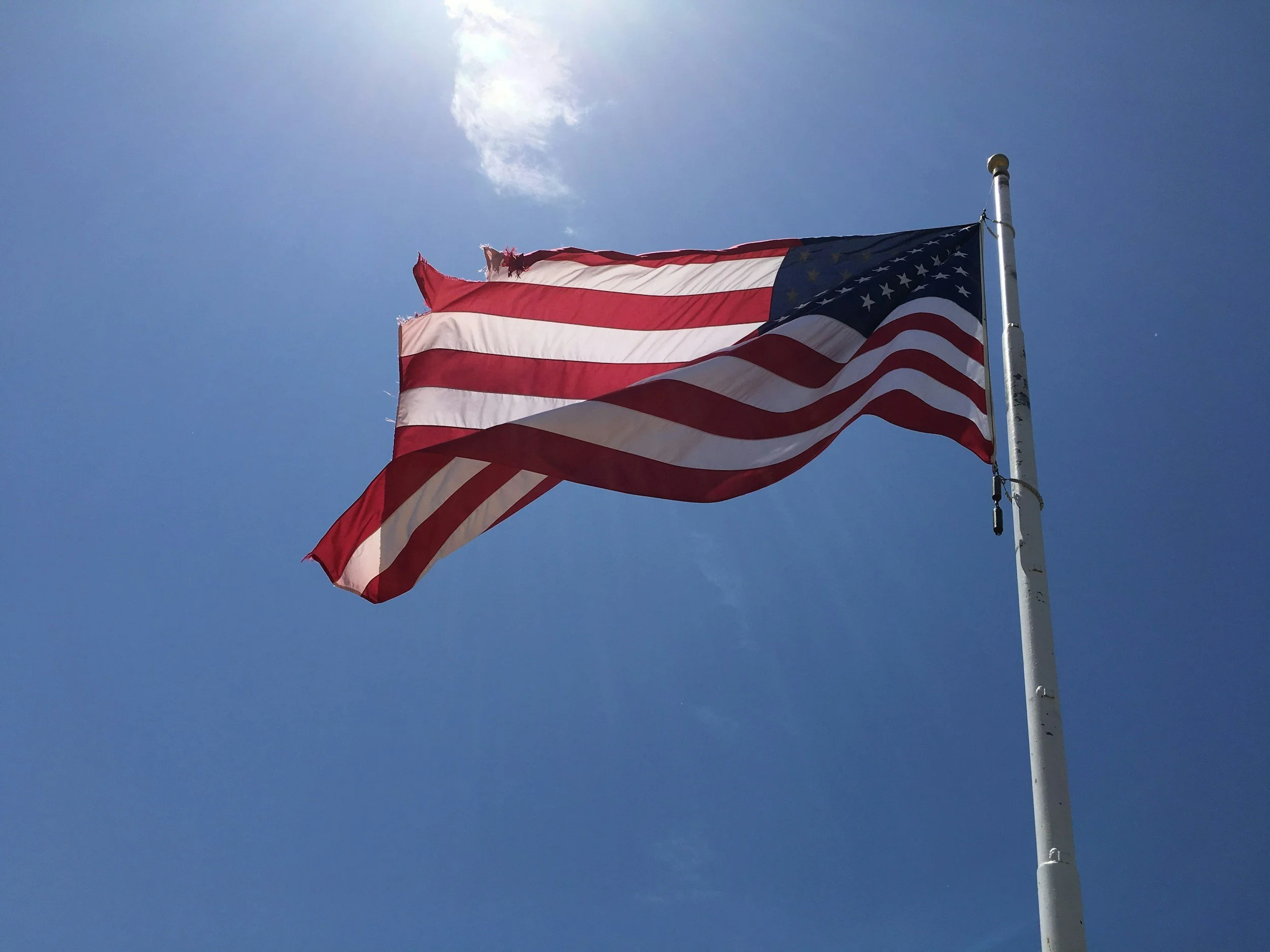
The Fourth of July has always combined celebration with reflection. Fireworks, flags, parades, and public gatherings express national pride. But the deeper meaning of the day lies in the continuing question that 1776 placed before the world: Can a society govern itself freely, correct its failures, protect dissent, and expand the promise of liberty across generations?
At 250, America does not offer a simple answer. Instead, it offers a story still being written. Its democracy has endured war, civil conflict, economic crisis, social transformation, and moments of profound division. It has also produced movements of renewal, reform, creativity, and resilience. The measure of the United States has never been perfection. It has been the capacity to confront imperfection and keep expanding the circle of freedom.
For the foreign press community, this anniversary is a reminder that reporting on America is not only about covering a powerful nation. It is about covering an idea—one that has inspired, disappointed, challenged, and influenced people around the world for two and a half centuries.
As the United States celebrates its 250th Independence Day, the world will be watching. Foreign correspondents will help shape how that moment is understood beyond America’s borders. Their work will provide context where there is noise, perspective where there is division, and truth where there is confusion.
That is not only journalism. It is a service to democracy itself.