
A Museum Owns the Object. Does That Mean It Is on View?
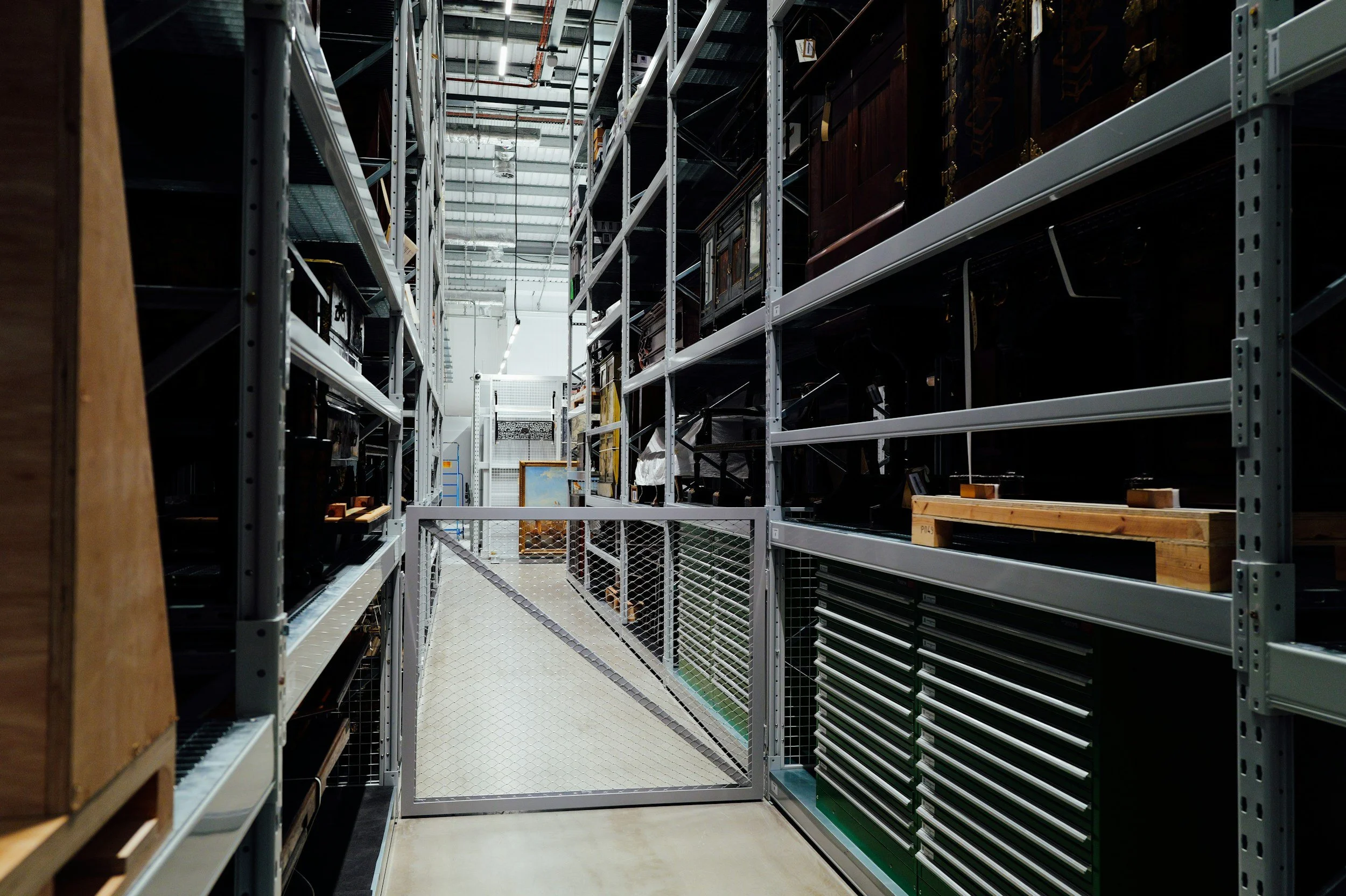
A museum announces an addition to its collection. A correspondent writes that visitors can now see the object, and an overseas reader plans a trip around it. The announcement did not necessarily promise display. Ownership, formal collection status, cataloging and exhibition are related processes, but a reporter needs evidence for each rather than treating them as a single moment.
Imagine a hypothetical local museum receiving a group of handmade tools. The donor describes a gift, the museum refers to an acquisition and the online database later adds an accession number. None of those facts alone tells you whether the tools are in a gallery, awaiting documentation or available only through a research arrangement. Follow the object's status through the institution's own records.
Ask what the announcement actually confirms
Read the release for its verbs and dates. Has the museum agreed to accept an object, completed the transaction, recorded it in the collection or announced an exhibition? If the wording is broad, ask the registrar or collections staff to identify the stage. A donor's intention and an institution's completed action should not be collapsed into one statement.
The Smithsonian's collections-management directive distinguishes acquisition from accessioning and defines both within its institutional framework. The distinction is useful for reporting, but terminology can vary among institutions and collection types. Ask the museum you are covering how it uses the terms. Attribute the explanation rather than assuming that every museum follows identical administrative steps.
In the hypothetical tool collection, ask whether the announcement concerns all the offered objects or a selected group. A gift may contain several categories of material. Obtain a count with a clear unit: individual objects, sets, boxes or accession transactions. One accession record can describe a group, so the number of records should not automatically become the number of objects.
Read the collection policy for context
Find the museum's collections-management policy or ask for a public explanation of it. The American Alliance of Museums identifies scope, acquisition, documentation, care and access among the matters such policies should address. This helps a correspondent understand which institutional questions to ask without treating a professional standard as proof that every decision followed a particular procedure.
Ask how the new material fits the collection's scope. The answer can make a more useful educational story than a simple announcement of possession. Perhaps the tools fill a gap in a teaching collection or provide evidence about a local trade. Check that explanation against the policy and relevant collection records, while clearly attributing curatorial interpretation.
Distinguish a permanent collection from material used for handling, education or other purposes when the institution makes that distinction. Avoid implying that every object inside a museum building carries the same status. The category matters because it can affect how staff describe care, research access and use in public programming.
Use the accession number as an identifier
Copy the accession or object number exactly, including punctuation and suffixes. Keep it with the title, maker if known, description and dimensions. A number is a reliable route back to a record, but its format should not be decoded by guesswork. Ask whether a year-like component represents acquisition, accession or something else in that institution's system.
Check whether the online record is complete or still being developed. A missing field is not proof that the museum has no information. Conversely, a confident database description may summarize research that deserves a closer look if it anchors your story. Ask which details are established, attributed or provisional, and preserve those distinctions in the article.
For the hypothetical tools, compare identifying features rather than relying only on a generic title such as plane or saw. Several similar objects may appear in one photograph. Confirm which number belongs to the object being discussed before attaching a caption. Administrative precision protects the cultural story from a small but consequential mix-up.
Confirm display as a separate fact
Ask whether the object is currently on view, in which gallery and for what period. A collection database can remain online while an object is in storage, conservation or another location. Do not translate searchable online into physically accessible. If the story includes visitor information, reconfirm it near publication and state the relevant date.
If an exhibition is planned, describe it as planned and ask what has been confirmed. An acquisition announcement may precede decisions about installation or interpretation. Avoid inventing a display timetable to make the piece feel more complete. The work of documenting or studying an object can itself be an informative subject when explained accurately.
Ask about research access separately from gallery display. A museum may have procedures for examining material that is not exhibited. Explain the actual arrangement without promising access to every reader. If staff demonstrate an object during your interview, make clear that the demonstration was part of the reporting visit rather than an ordinary visitor experience.
Describe care without guessing a diagnosis
Objects can be absent from display for many reasons. Ask staff rather than assuming that storage means neglect or that conservation means damage. If treatment is central to the story, speak with the responsible conservator and request a plain-language explanation of what was examined and done. Attribute technical judgments to the people and records supporting them.
Do not infer condition from a photograph alone. Lighting, protective supports and the limits of the image can change what appears visible. If you describe a crack, repair or missing component, confirm its significance with the institution. A physical observation and an interpretation of its history should remain distinguishable.
Check the reader's likely expectation
Read the headline as someone planning a visit. Does it promise a public display when the story establishes only an acquisition? Does it imply that a group of objects is a single masterpiece, or that a catalog entry guarantees complete documentation? Revise the wording to fit the evidence.
Keep the final article focused on the path the objects have taken into the institution and what that enables researchers or visitors to understand. Ownership is only one part of that account. By separating collection status, documentation and public access, an international correspondent can explain how museums work without turning an administrative announcement into a promise the museum never made.
Smithsonian Institution: Collections Management Directive SD 600
