
A Forest Inventory Is Not a Walk Past Every Tree
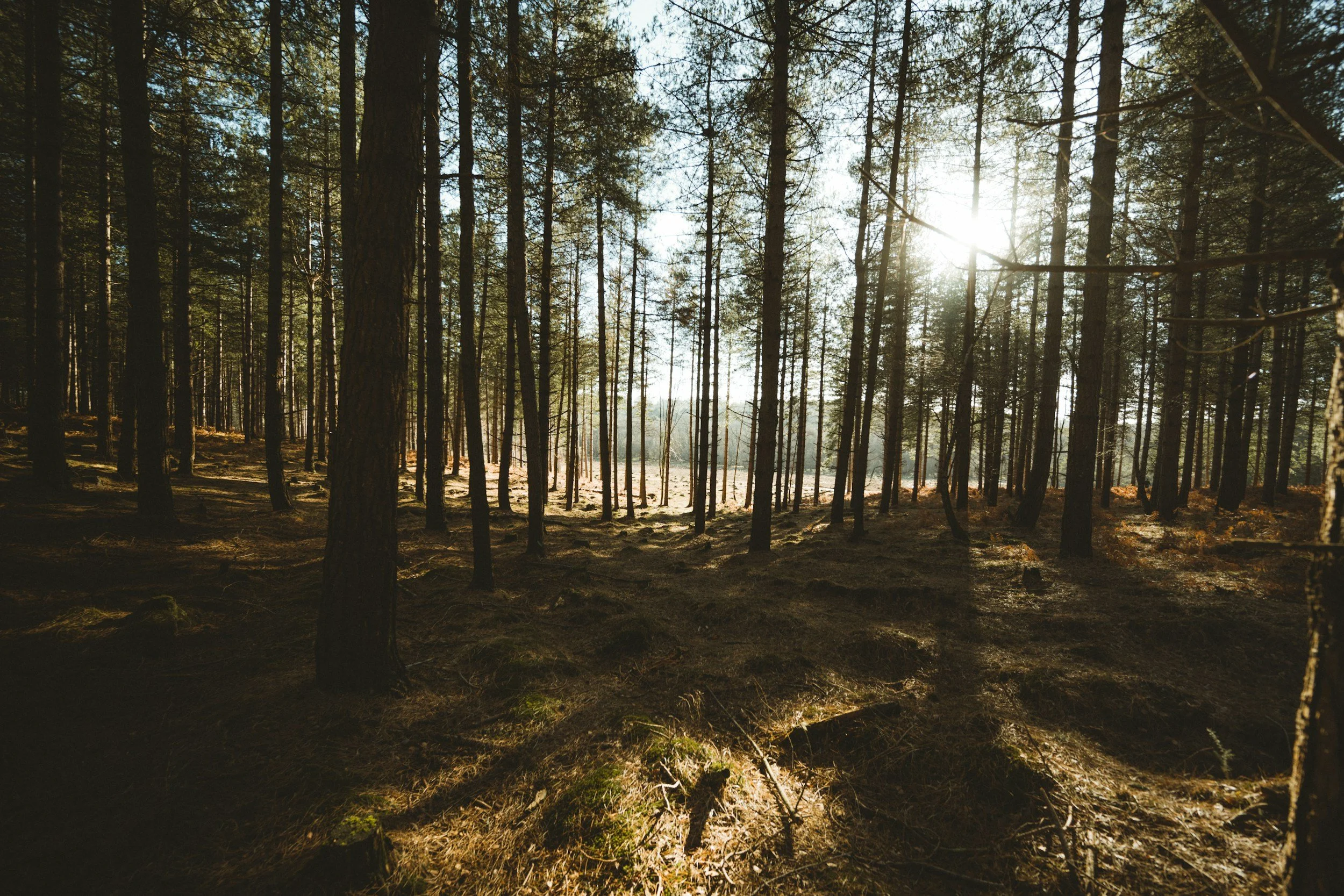
On a reporting visit, a forest crew measures a small group of trees while a statewide report describes millions. The difference in scale can puzzle an overseas audience. Did someone count every tree? Can this one patch really represent the state? A useful feature explains the sampling system behind the estimate while preserving the field visit as one observed scene. The trees beside the reporter are part of the evidence, not a miniature copy of every forest in the region.
Begin with the inventory's purpose
The USDA Forest Service's Forest Inventory and Analysis program gathers information about the extent, condition and change of forests. Its public tools produce population estimates and associated sampling errors. That means a reporter should distinguish the number of trees measured in sample plots from the larger estimated number the analysis describes. The two quantities belong to different stages of the work.
Ask the analyst which report and estimation unit support the proposed story. Record the inventory years, geographic area and definition of the resource being estimated. Forest land, a particular tree group and another selected category may produce different totals. A broad word such as forest should not replace the dataset's specific definition without checking what would be lost in translation.
Watch a measurement without enlarging its meaning
During a field visit, ask the crew to explain one measurement from start to finish. What feature is being measured, which instruction governs the procedure and how is the observation recorded? These details can make an engaging scene while showing readers that the process is repeatable. Describe what the reporter actually sees rather than filling gaps with a generic account of forestry work.
Keep the demonstration's scope clear. A tree measured for a camera may illustrate the method without being part of the analytical sample. Ask whether it is a demonstration and label it accordingly. Do not seek or publish confidential plot locations; the Forest Service explains that exact inventory coordinates are protected to preserve landowner privacy and the sample's integrity.
For the overseas desk, identify the broader region and setting at a level the program can appropriately share. A photograph of trunks and measuring equipment can communicate the fieldwork without revealing a precise protected location. The article's evidentiary value comes from the documented method and estimate, not from exposing a plot's coordinates.
Separate sampling uncertainty from measurement quality
The Forest Service's statistical guidance distinguishes sampling error from errors associated with observing and recording attributes. A sample-based estimate can differ from a complete enumeration even if every field measurement is perfect. Conversely, careful sampling design does not make every individual observation immune to measurement problems. Keep those ideas separate when asking about the reliability of a result.
Request the uncertainty information for the actual estimate used in the story, along with the definition of the reported interval or error measure. Do not attach a confidence label from another report. Ask an analyst to explain what the uncertainty permits the newsroom to say, especially if two estimates are close together.
Compare like definitions across inventory periods
A hypothetical report might show a larger estimated area in one category than an earlier edition. Before calling it growth, check whether the category, boundaries, evaluation years or estimation method changed. Record those choices in a comparison sheet. A label that looks identical on two covers can conceal differences in what observations were included.
Ask whether the published estimate combines observations across several years. If so, a newly released report is not necessarily a snapshot of conditions on its release date. Explain the observation period in the article and avoid attributing the entire difference to an event that occurred near publication. The timing of measurement and the timing of announcement are separate facts.
When the story involves growth, mortality or removals, obtain the program's definitions for those measures. Do not infer one from a change in a total alone. A forest can change through several processes, and a simple before-and-after difference may not identify which process produced it. The analyst can point the reporter to the measure designed for the question.
Respect the scale of the estimate
A statewide estimate should not be presented as a precise description of one small town or woodlot. Ask whether enough observations support the narrower geographic claim and what happens to uncertainty as the area shrinks. A detailed map can create an impression of local precision that the underlying analysis does not warrant.
For a hypothetical county feature, use the county estimate only if the source considers it suitable for the comparison. Otherwise, report the broader result and explain how the local visit illustrates a process rather than proves a county trend. This approach still gives readers a place and people to follow without forcing the data into a geographic scale it cannot support.
Avoid ranking areas solely by point estimates when the differences are small or the methods differ. Ask for a defensible comparison and show uncertainty where it matters. The story may concern contrasting forest types or measurement challenges rather than a league table of winners and losers.
Make the field scene and the estimate work together
The final feature can move from one measured tree to the sampling design and then to the broader estimate. Each transition should name the change in scale. Explain who collected the observations, who performed the analysis and which report readers can consult. A source list should lead to the specific inventory documentation rather than only to an agency homepage.
Before publication, check the verbs. Counted, measured, estimated and modeled are not interchangeable. A precise account of those steps helps readers understand why a small field sample can contribute to a large estimate while still carrying uncertainty. The forest crew's work becomes more interesting when the article shows both what it establishes and the analytical steps required to reach beyond the trees in view.
USDA Forest Service: Nationwide Forest Inventory
USDA Forest Service: Statistics and Quality Assurance, NRS-210
